
TL;DR:
- Labor-only moving provides professional labor for small jobs inside your home without requiring a full-service move.
- It is billed hourly with a minimum of two to three hours and is ideal for tasks like furniture rearranging and single-room moves.
Professional movers can absolutely help with small moving jobs in your home, and you do not need to book a full-service relocation to get that help. The industry term for this is labor-only moving, a service where a trained crew handles the physical work while you manage transportation. Whether you need a heavy sectional moved to another room, a single bedroom loaded into a rented truck, or a few bulky items shifted before a renovation, labor-only moving gives you professional muscle without the full-service price tag. This guide covers exactly how it works, what it costs, and how to prepare so you get the most out of every hour.
Can movers help with small moving jobs in your home?
Yes, and the service model that makes it possible is labor-only moving. Labor-only movers provide a trained crew for the physical labor, including a walkthrough, careful loading or unloading, and proper handling technique, but they do not supply a truck or drive your belongings anywhere. You arrange the container, rental truck, or PODS unit, and the crew does the heavy lifting.
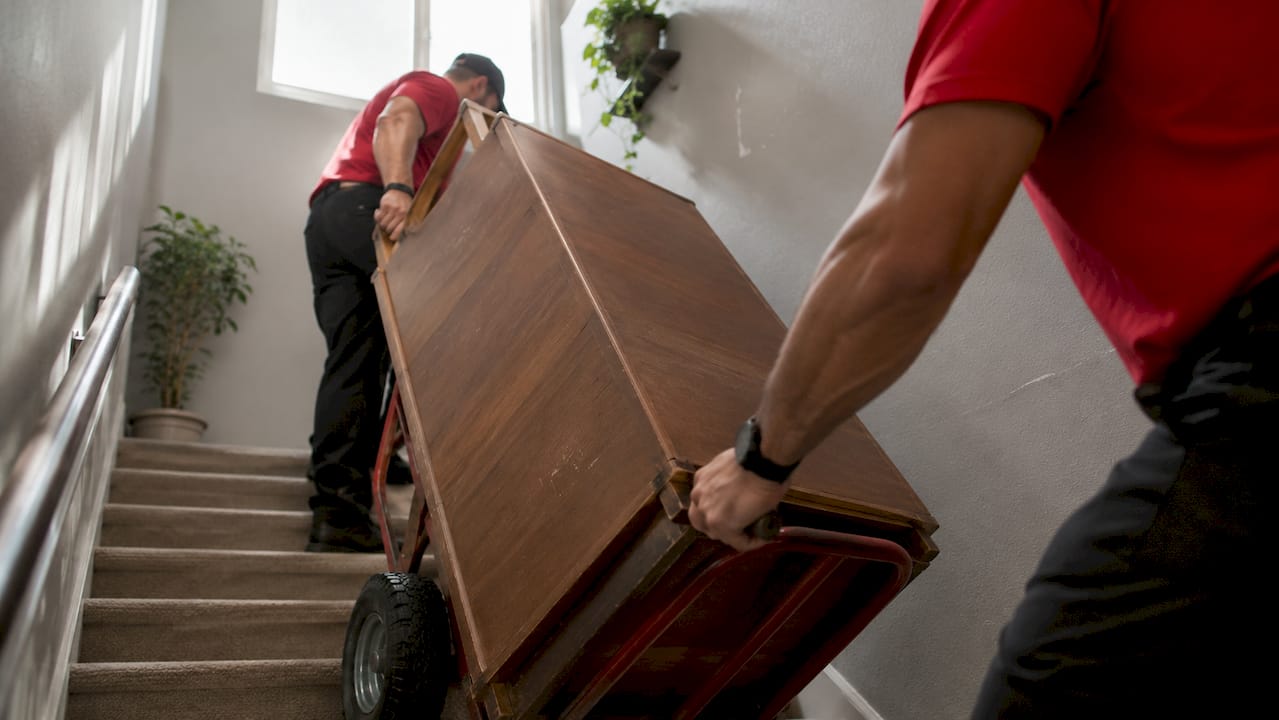
This model fits a wide range of situations that do not require a full relocation package. Renters moving from one apartment to another in the same building often use it. Homeowners rearranging furniture before a remodel use it. People who have already rented a truck but need two or three experienced hands use it. The common thread is that the job is physically demanding but logistically simple.
The service typically follows a clear sequence. The crew does a quick walkthrough to assess the job, then works methodically through loading or unloading, protecting floors, doorframes, and the items themselves. Fragile or oddly shaped pieces get extra attention. When the job is done, you have the transport side handled on your own terms.
Pro Tip: If your job involves only one or two rooms, describe each item by size and weight when you call for a quote. A crew that knows what to expect arrives prepared with the right equipment, which keeps the job moving efficiently.
How much do small moving jobs with professional movers typically cost?
Pricing for labor-only moving is almost always hourly, and hourly rates vary by crew size: a two-person crew typically runs $80 to $130 per hour, a three-person crew runs $120 to $180 per hour, and a four-person crew runs $160 to $240 per hour. Location and job complexity push rates toward the higher end of those ranges. That means a two-hour job with two movers in a mid-sized New England city could cost between $160 and $260 before any add-ons.
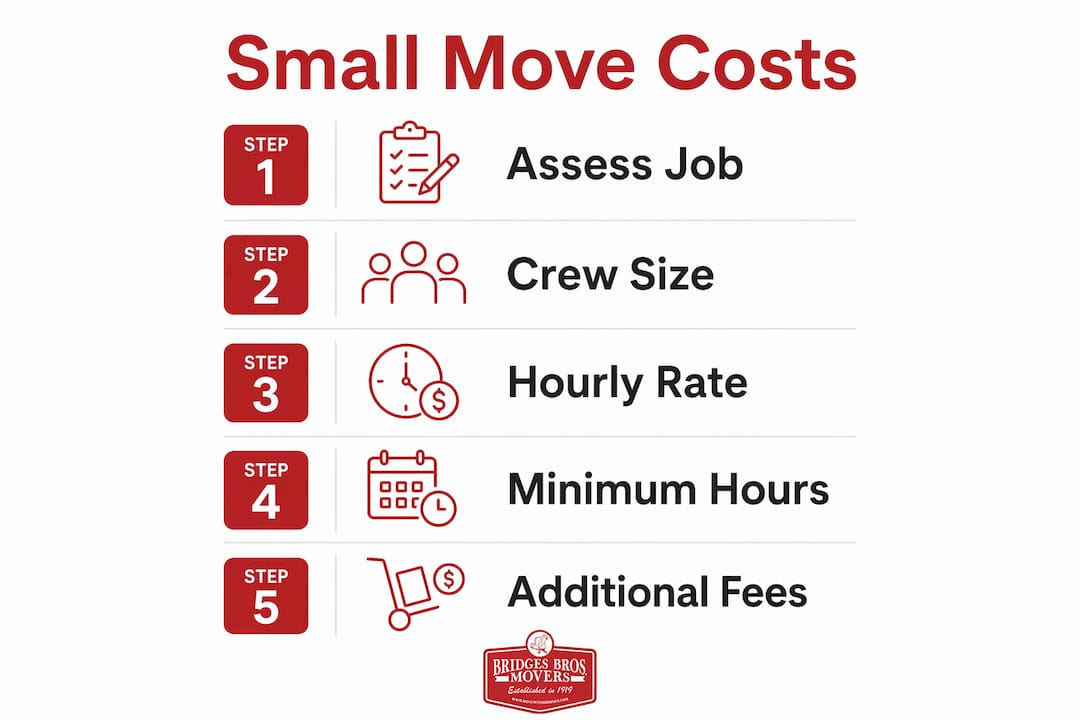
The detail most people miss is the minimum booking requirement. Most companies require a minimum of two to three hours even when the actual work takes less time. This is a base cost you cannot negotiate away, so a job that physically takes 45 minutes still gets billed at the two-hour floor. Knowing this upfront prevents sticker shock when the invoice arrives.
Several factors push the final number higher. Stairs, long carries from a parking area, elevator reservations, and items that require disassembly all add time to the clock. A piano or a gun safe may require specialty equipment or an extra crew member. The more accurately you describe these conditions when requesting a quote, the more reliable your estimate will be.
| Crew size | Typical hourly rate | Best for |
|---|---|---|
| 2 movers | $80 to $130/hr | Single rooms, light furniture, studio apartments |
| 3 movers | $120 to $180/hr | Multi-room jobs, heavier items, tight staircases |
| 4 movers | $160 to $240/hr | Large furniture, pianos, complex access situations |
Pro Tip: Before you call for a quote, write down every item that needs to move, the number of flights of stairs involved, and whether any piece requires disassembly. Treating your quote request like a mini scope-of-work document gives the company enough information to price accurately, and it protects you from unexpected charges on moving day.
What types of small moving tasks can movers help with inside your home?
The range of tasks that fall under small moving services is broader than most people expect. Movers typically handle loading and unloading, furniture rearranging, and moving heavy or bulky items, though packing, assembly, and specialty item handling are often separate arrangements. Here is a practical breakdown of what you can reasonably expect:
- Loading and unloading: Moving boxes and furniture into or out of a rental truck, PODS unit, or storage container parked at your home.
- Furniture rearranging: Shifting sofas, beds, dressers, or bookshelves to different rooms or positions within the same home.
- Heavy item handling: Moving appliances, large gym equipment, or oversized furniture that two people cannot safely carry without risk of injury or property damage.
- Single-room moves: Clearing out one bedroom, a home office, or a basement without touching the rest of the house.
- Apartment moves: Moving companies for apartments often offer labor-only options specifically for renters in multi-floor buildings where elevator access and tight hallways make DIY moves difficult.
Packing is generally not included in a standard labor-only booking unless you specifically request it and the company offers it as an add-on. The same applies to furniture assembly and disassembly. If you need those services, ask about them when you book so the crew arrives prepared. Bridges Bros Movers, for example, offers packing services that can be paired with labor-only help for a more complete solution.
How to prepare for hiring movers for small moving jobs
Preparation is the single biggest factor in whether a small moving job runs smoothly or runs over budget. Labor-only moving assumes your items are already packed and staged. When a crew arrives and finds unpacked boxes, loose items scattered across rooms, or furniture that needs disassembly before it can move, they spend billable time on tasks you could have handled beforehand. That adds cost with no added value.
Follow these steps before the crew arrives:
- Pack and label everything. Boxes should be sealed, labeled, and stacked near the door or in the room where the crew will start. Loose items slow the process significantly.
- Clear pathways. Remove rugs, floor lamps, and anything else that creates a tripping hazard between the items being moved and the exit point.
- Reserve elevators in advance. If you live in a building with a service elevator, book it for your moving window before the crew arrives. A crew waiting for elevator access is a crew billing by the hour.
- Communicate access details clearly. Tell the company about stairs, narrow hallways, low ceilings, or parking restrictions when you book. Describing job complexity factors like stairs and disassembly needs is critical for getting an accurate quote and avoiding hidden fees.
- Be present for the walkthrough. Walking the crew through the job at the start takes five minutes and prevents misunderstandings about what moves and what stays.
Pro Tip: If you have items that are staying put, mark them with a piece of blue painter’s tape or a sticky note that says “do not move.” It takes two minutes and eliminates the risk of the crew accidentally moving something you wanted to keep in place.
Comparing labor-only moving to other small move options
Understanding where labor-only moving fits relative to other options helps you choose the right level of service for your situation. The trade-offs between labor-only moves, full-service movers, and DIY come down to cost, control, scope, and how much effort you want to put in yourself.
Full-service moving is the most hands-off option. The company supplies the truck, the crew, the packing materials, and the labor. For a large household move, that convenience is worth the premium. For a single-room job or a furniture rearrangement, it is often more than you need and more than you want to pay.
DIY moving costs the least upfront but carries real risks. Injuries from improper lifting, damage to floors and doorframes, and the time cost of recruiting friends are all factors that rarely appear in the initial mental math. For heavy items like a king-size bed frame or a large sectional sofa, DIY is genuinely risky without the right equipment and technique.
| Option | Typical cost | You provide | Best for |
|---|---|---|---|
| Labor-only moving | Hourly rate, 2-3 hr minimum | Truck or container | Small jobs, furniture moves, single rooms |
| Full-service moving | Higher flat or hourly rate | Nothing | Full household relocations |
| DIY moving | Truck rental only | All labor and equipment | Very light loads, short distances |
Local movers also bring neighborhood knowledge that national chains cannot match. In New Hampshire and Massachusetts, that means familiarity with narrow colonial-era staircases, building access rules in Boston apartment buildings, and coastal community quirks that affect parking and access. That local expertise reduces surprises on moving day.
Key takeaways
Labor-only moving is the most practical and cost-effective way to get professional help with small moving jobs inside your home without paying for services you do not need.
| Point | Details |
|---|---|
| Labor-only moving defined | A crew handles physical labor without supplying a truck; you manage transport. |
| Minimum booking cost | Most companies require a 2 to 3 hour minimum, setting a base cost regardless of job length. |
| Hourly rates by crew size | Two movers run $80 to $130/hr; three movers run $120 to $180/hr depending on location. |
| Preparation reduces cost | Packing and staging items before the crew arrives prevents billable delays. |
| Local movers add value | Area knowledge of New England neighborhoods improves access planning and quote accuracy. |
Why I think most people underestimate the value of labor-only moving
Most people I talk to assume that hiring movers means booking a full truck and a full day. That assumption leads them to either overspend on services they do not need or, more often, to attempt a move themselves and end up with a pulled back or a gouged hardwood floor.
The labor-only model is genuinely underused, and I think the reason is that it is not marketed as loudly as full-service packages. But for a homeowner who needs a bedroom set moved before new flooring goes in, or a renter who has already rented a truck and just needs two experienced people to load it, it is the right tool for the job.
What most people also overlook is the preparation side. I have seen jobs that should take two hours stretch to three because items were not staged or pathways were blocked. That extra hour is real money. Spending 30 minutes the night before to pack, label, and clear the path is the single highest-return investment you can make before a labor-only crew arrives.
My honest recommendation: use the step-by-step hiring guide to understand what to ask before you book, and treat your quote request like a document, not a phone call. The more specific you are about stairs, item sizes, and access conditions, the more accurate your estimate will be. Surprises on moving day almost always trace back to incomplete information at the quoting stage.
— Patrick
How Bridges Bros Movers can help with your small move
Bridges Bros Movers has served New Hampshire, Maine, and Massachusetts since 1919, and small moving jobs are a regular part of that work. The team is licensed, insured, and familiar with the access challenges that come with New England homes, from narrow staircases in older colonials to elevator logistics in Boston apartment buildings. If you need moving help for small items, a single-room load, or furniture rearranging without a full relocation package, Bridges Bros Movers offers flexible labor-only options sized to your actual job. You can explore the full range of residential moving services and request a quote online. Transparent pricing, clear communication, and a crew that shows up prepared are what Bridges Bros Movers has built its reputation on for over a century.
FAQ
What is labor-only moving?
Labor-only moving is a service where a professional crew handles the physical work of loading, unloading, or moving items without supplying a truck or transportation. You provide the vehicle or container, and the movers provide the labor and expertise.
How much does a small moving job typically cost?
Most small moving jobs are priced hourly, with two-person crews running $80 to $130 per hour and a minimum booking of two to three hours. The final cost depends on crew size, job complexity, and access conditions like stairs or elevator use.
Can movers assist with packing for a small job?
Packing is not always included in a standard labor-only booking, but many companies offer it as an add-on service. Ask specifically about packing assistance when you request your quote so the crew arrives with the right supplies and time allocated.
What should I do before the movers arrive?
Pack and seal all boxes, clear pathways through your home, and stage items near the exit point before the crew arrives. Unprepared items increase billable time because the crew ends up sorting and packing on the clock instead of moving.
Do I need a full-service move for a single room or heavy item?
No. Labor-only moving is specifically designed for situations like single-room moves, heavy item handling, and furniture rearranging. A small job moving service gives you professional help scaled to the actual scope of your task without the cost of a full relocation package.