
TL;DR:
- Decluttering before moving reduces stress, lowers costs, and helps you settle into your new home faster. Starting 3 to 8 weeks ahead with a structured plan and the 4-bin sorting system ensures efficient decision-making and prevents overwhelm. Involving family members early and scheduling donation pickups promote smooth progress, making your move lighter and more manageable.
Moving is one of those experiences that almost everyone underestimates. You pack a box, realize you own far more than you thought, and suddenly the whole process feels overwhelming. Survey evidence suggests fewer people actually declutter before moving than say they will, meaning most of us arrive at our new homes dragging along years of unused, unnecessary items. This guide gives you a realistic, step-by-step plan to declutter before your move so you pack less, spend less, and settle in faster, whether you’re relocating across Portsmouth, Portland, or Boston.
Table of Contents
- Why decluttering before you move matters
- When to start: Recommended decluttering timeline
- The 4-bin system: How to sort efficiently
- Room-by-room decluttering: Tips and realities
- Donation, recycling, and disposal strategies in New England
- Our perspective: Decluttering is a decision, not a task
- Ready to move lighter? Bridges Bros Movers can help
- Frequently asked questions
Key Takeaways
| Point | Details |
|---|---|
| Start early | Begin decluttering at least 3–8 weeks before your moving date. |
| Use the 4-bin method | Sort everything into keep, donate/sell, trash, or storage for efficient progress. |
| Tackle one room at a time | Reduce decision fatigue by beginning in less sentimental spaces and progressing room by room. |
| Schedule donation exits | Arrange pickups or drop-offs quickly to prevent unwanted items from piling back up. |
| Communicate in shared spaces | Set family rules for joint areas and respect each person’s boundaries. |
Why decluttering before you move matters
The connection between clutter and moving stress is more direct than most people realize. Every item you choose not to deal with becomes something your movers have to handle, something you have to pack, something you have to unpack, and something you have to find a home for in your new space.
“Decluttering your space can increase your sense of control and measurably reduce stress,” according to Greater Good at UC Berkeley. That sense of control is especially valuable when the rest of your moving timeline feels out of your hands.
The practical benefits are just as compelling:
- Lower moving costs. Most moving companies calculate pricing based on volume and weight. Fewer items means a smaller truck, less time, and a lower final bill.
- Faster packing. When you only pack what you actually want, every box serves a clear purpose. You stop second-guessing yourself mid-tape.
- Smoother unpacking. Arriving with only what you need means your new home takes shape quickly rather than sitting full of boxes you dread opening.
- A cleaner start. Moving is a natural reset. Bringing only intentional items into your new space makes it feel like home much sooner.
Still, most people want to declutter but fewer actually follow through before moving day. The reason is usually timing, not motivation. People wait too long, get overwhelmed, and end up packing everything just to make the deadline. Planning ahead is the real solution, and if you’re thinking about downsizing for a move, starting early is even more critical.
When to start: Recommended decluttering timeline
Understanding the benefits, the next question is when and how early you should begin.
Many professional organizers recommend starting the decluttering process 3 to 8 weeks before your move date. For larger homes, households with multiple family members, or anyone who has lived in the same place for more than a decade, professional guidance suggests starting as early as six months ahead.
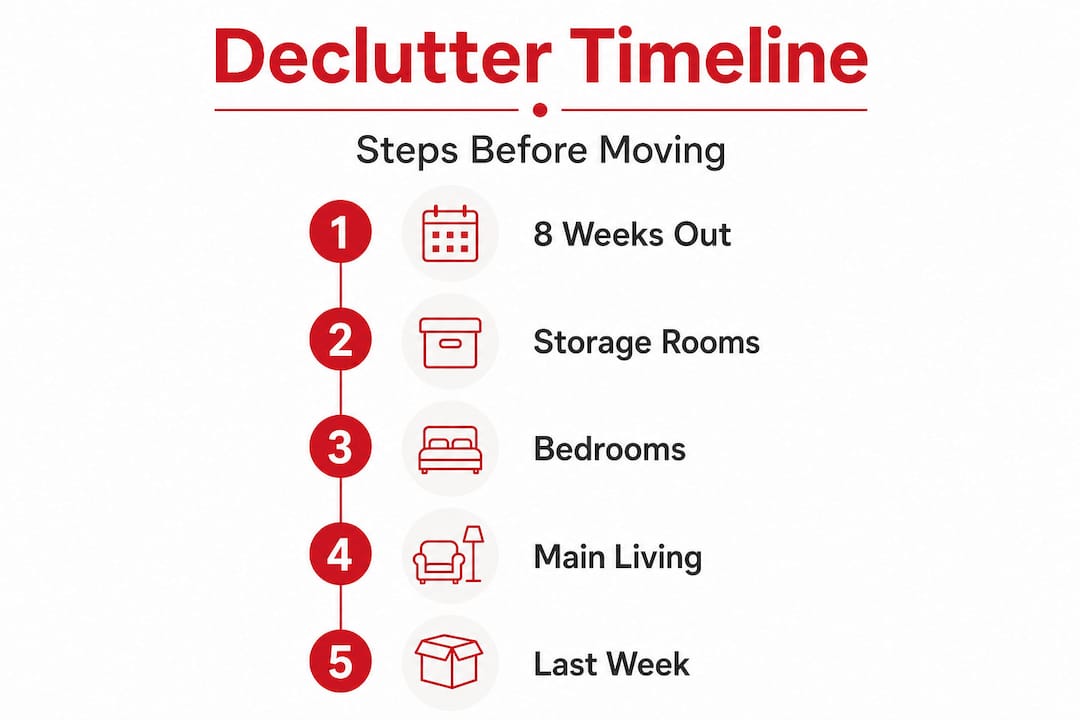
Here is a practical timeline you can adapt to your situation:
| Timeframe before move | Recommended focus |
|---|---|
| 6 to 8 weeks out | Attic, basement, garage, storage rooms |
| 4 to 6 weeks out | Guest rooms, home office, hobby areas |
| 2 to 4 weeks out | Kitchen, living areas, main bedrooms |
| 1 to 2 weeks out | Final pass, donation drop-off, packing begins |
The logic behind this sequence is intentional. Storage areas and rarely used rooms tend to hold the least emotionally charged items, which makes decisions easier. Starting there builds momentum and confidence before you reach the harder spaces.
Pro Tip: Set a recurring 90-minute block on your calendar each week specifically for decluttering. Treating it like an appointment makes it far more likely to actually happen, especially with everything else on your plate during a move.
Short, focused sessions also protect you from decision fatigue. Making hundreds of keep-or-toss calls in a single afternoon leads to poor choices and burnout. Spreading the work across several weeks keeps your thinking clear. For more guidance on building a timeline that works, check out these stress-free move tips and resources on planning your move in New England.
The 4-bin system: How to sort efficiently
Your timeline is set. Now comes the question of method. The 4-bin system is a proven favorite among professional organizers and frequent movers alike.
A widely used approach is the 4-bin system: keep, donate or sell, trash or discard, and storage or maybe. Each item you pick up gets assigned to one of these four categories without lingering too long in the decision.
Here is how each bin works in practice:
| Bin | What goes here | Action required |
|---|---|---|
| Keep | Items used regularly or genuinely valued | Pack and move |
| Donate or sell | Good condition, no longer needed | Schedule pickup or drop-off |
| Trash or discard | Broken, expired, or unusable | Dispose of responsibly |
| Storage or maybe | Unsure; revisit before move date | Reassess in 1 to 2 weeks |
The “storage or maybe” bin deserves a word of caution. It is useful for handling genuine uncertainty, but it should not become a catch-all for avoidance. Set a hard deadline to revisit those items, and if you still cannot decide, the answer is usually donate.
Here is a numbered process to work through each room effectively:
- Clear a sorting space first. Pull items out and put them on a table or the floor where you can see everything.
- Work quickly on obvious items. Anything you haven’t touched in a year goes straight to donate or trash without debate.
- Handle one zone at a time. One shelf, one drawer, one closet section. Finish it before moving to the next.
- Fill the donate bin immediately. Do not set items aside in a loose pile. Bins create commitment.
- Do not mix packing and decluttering. These are two separate tasks. Combining them slows both processes down considerably.
Pro Tip: Start with the bathroom. It has almost no sentimental value, decisions are fast, and finishing a whole room quickly builds real momentum for tougher spaces ahead.
For specific guidance on what to keep versus let go, the deciding what to donate or toss resource from Bridges Bros Movers walks through common dilemmas clearly. Once you’ve sorted, you can get a head start with packing tips designed for local New England moves.
Room-by-room decluttering: Tips and realities
Once you know how you’ll sort, executing well means focusing on one area at a time and managing shared-space realities within your household.
Starting in low-emotion areas reduces decision fatigue and sets a productive tone for the rest of the process. Here is a recommended room sequence for most households:
- Bathroom. Expired products, duplicate toiletries, sample-size items that have been sitting untouched for months.
- Garage or shed. Old tools, seasonal equipment, sports gear for hobbies you no longer pursue.
- Guest room or home office. Old electronics, outdated paperwork, furniture that has become a storage surface.
- Kitchen. Duplicate gadgets, appliances used once, expired pantry items, mismatched containers.
- Living room. Books, media, decorative items, furniture you’re not taking.
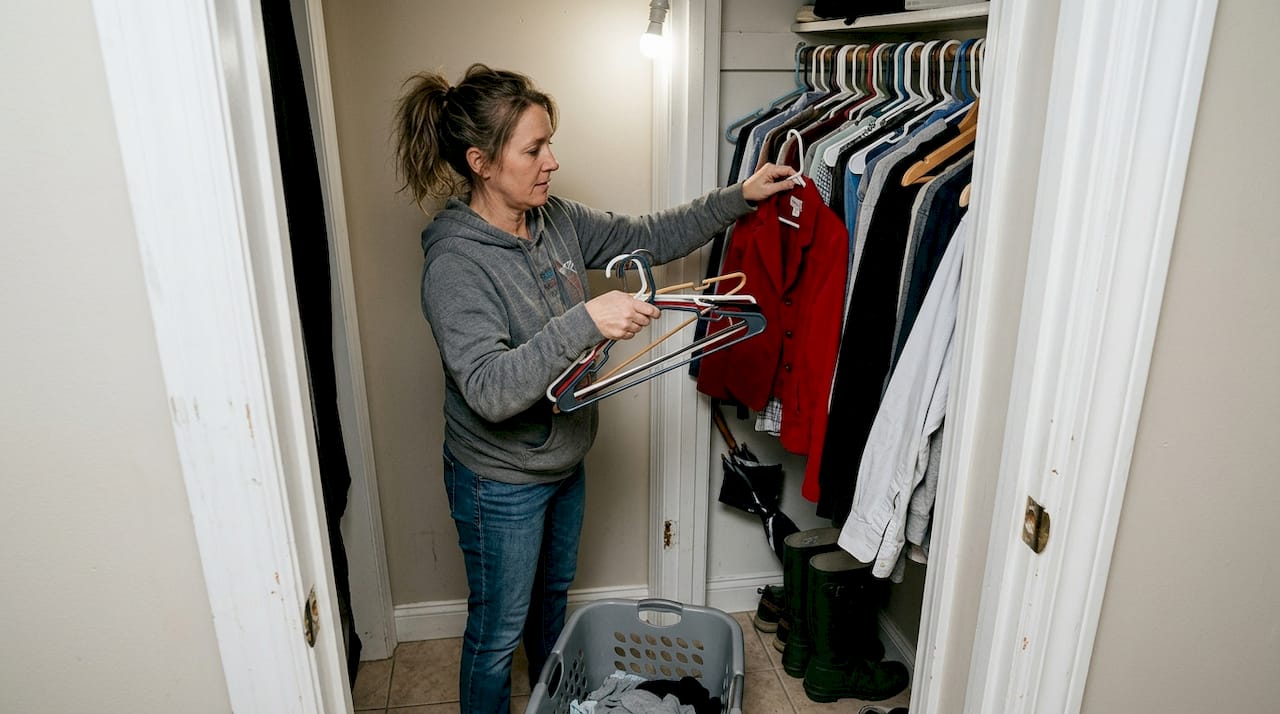
- Primary bedroom and closets. Clothing (the one-year rule applies), sentimental items, jewelry. Save this for last.
The bedroom and closets tend to be the most emotionally loaded spaces, and tackling them when you’re fresh from easier wins makes the process far smoother.
Family households add a layer of complexity. Avoid decluttering others’ belongings without their consent and instead use family meetings to establish shared agreements about what stays and what goes in common areas.
This matters more than people expect. Nothing derails a decluttering session faster than one person tossing something another person cares about. Hold a short family meeting early in the process. Agree on rules for shared spaces like the living room or garage. Keep children involved in decisions about their own belongings. This reduces conflict and gets everyone invested in the outcome.
Small, consistent sessions beat marathon efforts. Two hours every weekend beats a single frantic all-day push that leaves you exhausted and surrounded by half-sorted piles. If you’re managing a move that involves older family members, the guide on helping parents downsize offers thoughtful, practical advice for that specific situation.
Donation, recycling, and disposal strategies in New England
After room-by-room sorting, the last real-world hurdle is getting items out of your home the right way.
Schedule donation pickups early so items don’t sit in your hallway and create new clutter. This is a mistake many movers make. They sort diligently, fill bags and boxes, and then leave everything stacked near the door for two weeks. That pile starts to feel permanent, and items sometimes get pulled back out. Getting donations out the door quickly is just as important as sorting them.
Here are some practical options for New England households:
- Habitat for Humanity ReStore locations accept furniture, appliances, and building materials. Locations in New Hampshire and Maine schedule free pickups for larger items.
- Goodwill and Salvation Army have drop-off locations throughout the Seacoast, Greater Manchester, and southern Maine regions.
- Vietnam Veterans of America offers scheduled home pickups in many New Hampshire communities, which is ideal for furniture and bagged clothing.
- Local Facebook Marketplace and Buy Nothing groups move items quickly and keep them in the community, often within 24 to 48 hours of posting.
- Freecycle networks work well for items charities won’t accept but someone nearby can use.
Accepted-item rules vary widely between organizations, so always verify before loading your car. Many charities in New England will not accept upholstered furniture, mattresses, televisions, or items with stains and tears, even if they appear otherwise functional.
It’s also worth knowing that some food pantries and thrift shops in New Hampshire have seasonal hours or closures, particularly in rural areas. Calling ahead prevents wasted trips during a week when your schedule is already packed.
For items that cannot be donated, check with your town’s transfer station about bulk disposal days or permits. Many municipalities in New Hampshire and Maine hold seasonal cleanup weekends, and scheduling around those can save you significant disposal fees. Electronics recycling is available at most transfer stations, and many towns offer free appliance pickup for metal items.
For a broader look at navigating a stress-free New England move, including logistics like disposal and scheduling, that resource covers the full picture.
Our perspective: Decluttering is a decision, not a task
Here is something most moving guides won’t tell you directly. Decluttering doesn’t fail because people lack time or energy. It fails because people treat it as a logistical task rather than a series of decisions that require intention and a clear standard.
We’ve seen this pattern across decades of helping families move throughout New Hampshire, Maine, and Massachusetts. A homeowner sorts diligently through their garage, donates three carloads, and feels great. Then they hit their bedroom closet and pack virtually everything because they’re tired and the decisions feel harder. The result is a moving truck that’s 30% larger than it needed to be, and a new home with closets full of clothes that never get worn.
The uncomfortable reality is that most people have already made their decisions about most of their possessions, but they haven’t committed to those decisions yet. You already know you don’t use the bread maker. You already know those jeans haven’t fit in four years. Decluttering is just the act of catching up to what you already know.
Setting a clear personal standard helps. Something like, “If I haven’t used this in 12 months and I don’t have a specific plan to use it in the next 6, it leaves.” That kind of concrete rule removes the mental negotiation that slows everything down.
The other insight worth sharing: the items people most regret moving are rarely the ones they donated. They regret packing the junk they couldn’t quite bring themselves to let go of, only to toss it six months later from their new home anyway. Giving yourself permission to make the decision now, rather than postponing it one more time, is genuinely one of the most freeing parts of moving.
Ready to move lighter? Bridges Bros Movers can help
Decluttering sets the foundation, but a smooth move still requires the right team behind you. Bridges Bros Movers has served families across New Hampshire, Maine, and Massachusetts since 1919, and we understand what it takes to make a move feel manageable rather than chaotic. Whether you need full-service packing, junk removal to clear what’s left after sorting, or reliable residential moving on a schedule that works for your family, we’re here to make it happen. Reach out for an online quote or schedule an in-home or virtual consultation. We’ll help you put the final plan together so moving day feels like a beginning, not an ordeal.
Frequently asked questions
What is the fastest way to declutter before moving?
Start with less sentimental areas like the bathroom or garage, use the 4-bin method for every room, and schedule donation pickups as soon as your donate pile is ready so items leave your home immediately.
How far in advance should I start decluttering for a move?
Begin at least 3 to 8 weeks before your move date, or earlier if you have a large home, many years of accumulated belongings, or a busy household schedule to work around.
What should I do with items I can’t donate locally in New England?
Use your town’s recycling or transfer station programs, list items on local Marketplace or Buy Nothing groups, or consider a junk removal service. Donation guidelines vary locally, so calling ahead tells you exactly what each organization will accept before you make the trip.
How do I handle family members who don’t want to declutter?
Only declutter your own belongings without explicit agreement from others, start with spaces that are clearly yours, and hold a short family meeting early on to set ground rules for shared areas so everyone understands the expectations going in.