
TL;DR:
- Proper planning, inventory, and matching supplies to item types are essential for a successful move.
- Core supplies include various box sizes, packing materials, tape, labels, and furniture protection pieces.
- Professional supply kits and expert packing help reduce damage risk and simplify the moving process.
Picking the right moving supplies sounds simple until you’re standing in an aisle full of boxes, tape, and bubble wrap with no clear plan. Families relocating across New Hampshire, Maine, or Massachusetts and small businesses moving offices face the same challenge: buy too little and your belongings get damaged, buy too much and you waste money. The wrong tape fails mid-move. The wrong box size makes lifting dangerous. This guide cuts through the confusion with a practical, experience-backed framework for choosing, comparing, and using moving supplies the right way.
Table of Contents
- How to choose the right moving supplies
- Essential moving supplies: Examples and uses
- Comparing moving supply options: Store-bought vs. local mover kits
- Choosing special purpose supplies for unique items
- Expert perspective: Why most people overcomplicate moving supplies
- Get your move started with expert guidance and reliable supplies
- Frequently asked questions
Key Takeaways
| Point | Details |
|---|---|
| Know your needs | Start by assessing the size and special requirements of your move before buying supplies. |
| Essentials matter most | Focus on core items like boxes, tape, and padding to protect your belongings during any move. |
| Compare supply options | Weigh the benefits of store-bought supplies versus professional kits for convenience and value. |
| Don’t forget specialty items | Unique or fragile goods often need specialty packing or expert assistance to arrive safely. |
How to choose the right moving supplies
Before exploring specific supplies, it’s critical to know how to evaluate what you’ll truly need. The biggest mistake people make is shopping without a plan. Start by walking through your home or office and taking a full inventory of what needs to move. Group items by size, weight, and fragility. This single step prevents overbuying and helps you avoid showing up on moving day without the right materials.
Here’s a simple framework to guide your decisions:
- Inventory first. Count your furniture pieces, boxes of books, kitchen items, and fragile goods before buying a single roll of tape. A rough count helps you estimate box quantities accurately.
- Factor in distance. A local move across Portsmouth, NH requires less protective packaging than a long-distance move from Portland, ME to Boston, MA. Longer hauls mean more vibration and handling, so invest more in cushioning.
- Match supplies to item types. Fragile items like glassware need double-wall boxes and bubble wrap. Bulky furniture needs stretch wrap and furniture pads. Everyday clothing can go in wardrobe boxes or even garbage bags in a pinch.
- Decide what to buy versus rent. Dollies, hand trucks, and furniture pads can often be rented from your moving company rather than purchased outright. This saves money and storage space after the move.
- Set a realistic budget. Packing supplies typically run between $100 and $300 for an average household move, though specialty items add cost.
For guidance on choosing packing materials that fit your specific move, it helps to consult resources built for New England movers. U-Haul locations and local movers in NH, ME, and MA offer a broad range of supplies and boxes to cover most move types.
Pro Tip: Always add 10 to 15 percent more boxes to your estimate. You will almost always need more than you think, especially in kitchens and home offices.
Reviewing packing supply tips before you shop can also save you from buying items that don’t match your actual needs.
Essential moving supplies: Examples and uses
Now that you know how to choose, let’s break down the most important moving supplies with clear examples and real use cases.
Core supplies every move needs:
- Small boxes (1.5 cu ft): Best for books, canned goods, tools, and other heavy items. Keeping weight manageable prevents back injuries and box failure.
- Medium boxes (3 cu ft): The workhorse of any move. Use these for kitchen items, toys, small appliances, and folded clothing.
- Large boxes (4.5 cu ft): Ideal for pillows, bedding, lampshades, and lightweight bulky items. Never pack heavy items in large boxes.
- Dish pack boxes: Double-wall construction protects plates, bowls, and glassware. Worth the extra cost for any kitchen move.
- Wardrobe boxes: Tall boxes with a hanging bar let you transfer clothes directly from your closet without folding. Saves time and prevents wrinkles.
- Packing tape and dispensers: Use 2-inch heavy-duty tape. A dispenser makes the job faster and reduces frustration. Plan on one roll per 10 to 15 boxes.
- Bubble wrap: Wrap individual fragile items before placing them in boxes. Single-layer wrap works for most items; double-layer for anything irreplaceable.
- Packing paper: Unprinted newsprint protects surfaces without leaving ink stains. Use it to fill empty space in boxes and prevent shifting.
- Furniture pads and stretch wrap: Pads protect wood and upholstery from scratches. Stretch wrap holds drawers shut and keeps pad covers in place during transport.
- Labels and markers: Color-coded labels by room speed up unloading significantly. A black permanent marker for writing room names and contents is non-negotiable.
| Supply | Best use | Approximate cost |
|---|---|---|
| Small box | Books, tools | $1 to $3 each |
| Dish pack box | Glassware, plates | $4 to $7 each |
| Wardrobe box | Hanging clothes | $10 to $15 each |
| Bubble wrap (12 in roll) | Fragile items | $15 to $25 |
| Furniture pads (set of 6) | Wood and upholstery | $25 to $50 |
| Stretch wrap | Drawers, pad covers | $10 to $20 |
Local movers and retailers provide all basic supplies for local and long-distance moves. You can also browse packing materials directly through moving companies, which often bundle items at competitive prices.
Pro Tip: Ask your mover about packing service options before buying everything yourself. In some cases, having professionals pack your fragile items costs less than replacing damaged goods.
Comparing moving supply options: Store-bought vs. local mover kits
With the main items defined, the choice becomes where to source your supplies. Here’s a detailed comparison of the two main routes.
Store-bought supplies from big box retailers like Home Depot or Walmart offer flexibility. You can buy exactly what you need, when you need it, and often find lower per-unit prices on standard boxes and tape. The downside is that you’re responsible for selecting the right quality and quantity. Substandard boxes can collapse under weight, and generic tape may not hold in cold New England temperatures during a winter move.
Local mover supply kits from companies like Bridges Bros., Movers4Less, and Ray the Mover offer bundled moving supply kits that remove the guesswork. Kits are curated based on move size and include quality-tested materials. The convenience factor is significant, especially for families managing school schedules or businesses trying to minimize downtime.
| Factor | Store-bought | Mover supply kit |
|---|---|---|
| Cost | Lower per unit | Higher upfront, better value overall |
| Convenience | Requires multiple trips | One order, delivered or available at pickup |
| Quality control | Variable | Professionally vetted |
| Best for | Budget-focused small moves | Families, businesses, long-distance moves |
| Customization | High | Moderate |
Which option fits your situation?
- Families with young children benefit from mover kits because time is limited and errors are costly.
- Small businesses moving offices should prioritize kits to protect equipment and reduce staff time spent sourcing supplies.
- Budget-conscious individuals moving a studio apartment may find store-bought supplies perfectly adequate.
You can explore local packing kits to compare what’s included before making a decision. Understanding the role of packing services alongside supply kits can also help you decide how much to DIY versus delegate.
Choosing special purpose supplies for unique items
Some situations call for special measures. Here’s how to handle items that don’t fit in regular boxes.
- Artwork and mirrors. Standard boxes won’t cut it here. Use custom mirror boxes or picture boxes with foam corner protectors. Layer bubble wrap generously and mark the box clearly as fragile. Never lay flat during transport.
- Electronics. Televisions and monitors need anti-static foam or anti-static bubble wrap to prevent static discharge damage. Original manufacturer boxes are ideal. If unavailable, use TV boxes with foam inserts available from most moving companies.
- Legal and office files. File boxes with secure lids keep documents organized and protected from moisture. For businesses moving sensitive records, sealed and labeled file boxes reduce the risk of misplacement.
- Fragile displays and commercial equipment. Retail fixtures, glass display cases, and specialized machinery may require custom wooden crates. These are built to exact dimensions and provide maximum protection for items that cannot be replaced.
- Antiques and collectibles. Wrap each item individually in acid-free tissue paper before applying bubble wrap. Double-box valuable pieces by placing the wrapped item in a smaller box, then placing that box inside a larger one with cushioning material between the two.
“Expert movers in NH, MA, and ME offer specialty boxes and packing services for unique or fragile items, ensuring that even the most challenging pieces arrive safely.”
Knowing how to pack specialty items correctly reduces the risk of damage and the stress that comes with it. When in doubt, reach out to professional packing help rather than improvising with materials that weren’t designed for the job.
Expert perspective: Why most people overcomplicate moving supplies
With all options on the table, here’s a perspective from hands-on experience that might surprise you.
Most successful moves rely on just six to eight core supplies: the right box sizes, quality tape, bubble wrap, packing paper, furniture pads, and labels. That’s it. The rest is situational. Yet people consistently overbuy, filling their garage with specialty items they use once and then discard.
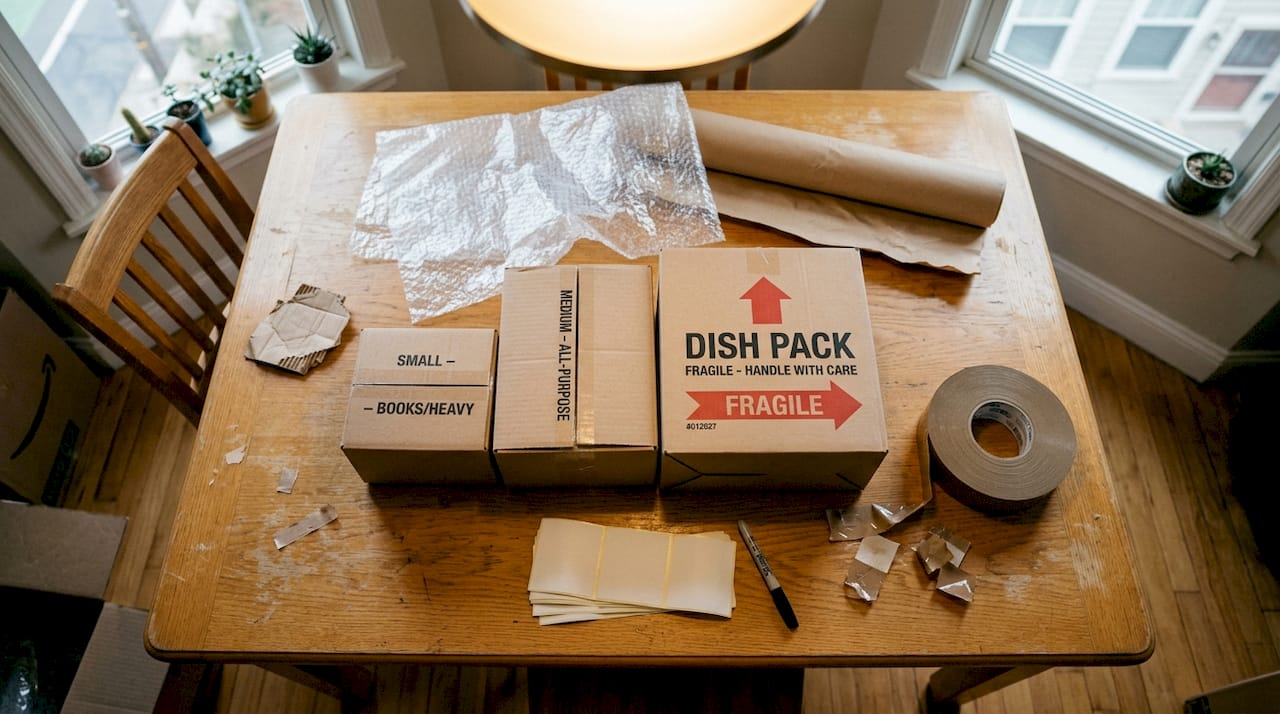
The real hidden cost isn’t in buying too much. It’s in buying the wrong things. A family that skimps on tape quality or uses undersized boxes spends more time repacking and more money replacing damaged items than they ever would have spent on better supplies upfront.
We’ve seen this pattern repeatedly since 1919. The moves that go smoothly are not the ones with the most supplies. They’re the ones where a few essentials are chosen well and used correctly. Good packing reduces moving stress more than any other single factor.
When professional supply kits or packing services are worth every dollar: long-distance moves, homes with significant fragile collections, and businesses that simply cannot afford damaged equipment or lost downtime.
Get your move started with expert guidance and reliable supplies
If you’re ready to put these insights to work, take the next step with resources tailored to New England families and businesses. Bridges Bros Movers has served NH, ME, and MA since 1919, and we know what it takes to move your home or business safely and efficiently.
Start by requesting a free moving quote to get a clear picture of your costs and options. Browse our full selection of packing materials and supplies to find the right kit for your move size. And if you’re planning a household relocation, explore our residential moving services to see how we can handle everything from packing to delivery. Our team is ready to help you move with confidence.
Frequently asked questions
Where can I buy moving boxes in New Hampshire, Maine, or Massachusetts?
U-Haul locations are widely available for supplies across NH, ME, and MA, and local moving companies throughout the region also sell boxes directly. Buying from a local mover often means getting better quality boxes suited to New England’s climate and terrain.
Do local movers provide everything needed for packing?
Yes, reputable local movers like Bridges Bros, Movers4Less, and Ray the Mover offer supply kits, boxes, and professional packing services on request. Many companies can handle the entire packing process if you prefer a hands-off approach.
What should I use for packing fragile or valuable items?
Use specialty boxes, ample bubble wrap, and anti-static materials for electronics. For artwork, antiques, or high-value items, movers offer supplies and help with unique or fragile pieces that standard retail packaging cannot adequately protect.
Are supply kits from movers better than buying at a store?
Bundled moving supply kits from companies like Bridges Bros offer convenience and quality assurance, while store-bought supplies can be cheaper but require more time and careful selection on your part. For most families and businesses, the time savings from a kit outweigh the slightly higher cost.
Recommended
- Packing tips for moving: expert steps for a stress-free move
- Packing Materials | Bridges Bros. Movers
- Why Use Storage During Moving: Stress-Free Solutions
- Interstate packing checklist for a seamless move
- Essential residential moving checklist: streamline your move