
TL;DR:
- Senior moves involve emotional, health, and logistical challenges requiring specialized handling.
- Qualified senior move managers coordinate logistics, downsizing, and emotional support beyond standard moving services.
- Combining certified move managers with experienced movers ensures a smooth, compassionate relocation process.
Moving is rarely simple, but relocating a senior loved one is a different challenge entirely. Families across New Hampshire, Maine, and Massachusetts often assume that any reputable moving company can handle an elderly parent’s move, but that assumption can lead to unnecessary stress, damaged heirlooms, and emotional strain. Senior moves involve decades of accumulated belongings, complex health and mobility considerations, and deep emotional ties to a home. Specialized movers and senior move managers exist precisely to address these needs. This article explains what makes senior moves unique, what these professionals actually do, how to compare your options, and how to choose the right team for your family.
Table of Contents
- What makes senior moves unique?
- The core roles of movers for seniors
- Senior move managers vs. standard movers: What’s the difference?
- How to choose the right moving service for your senior
- Our take: What families often overlook in senior moves
- Bridges Bros. Movers: Supporting senior moves across New England
- Frequently asked questions
Key Takeaways
| Point | Details |
|---|---|
| Specialized senior moves | Relocating seniors requires patience, creativity, and planning for emotional and mobility needs. |
| Move managers offer full support | NASMM-certified managers streamline downsizing, logistics, and emotional challenges. |
| Choose the right team | Families benefit most by combining experienced movers with certified managers for a low-stress transition. |
| Local expertise matters | Select movers familiar with New Hampshire, Maine, or Massachusetts for tailored moving support. |
What makes senior moves unique?
To understand the importance of experienced movers, first consider what makes senior moves different from other relocations.
Most standard moves involve packing boxes, loading a truck, and unpacking at a new address. Senior moves layer in a set of challenges that require patience, planning, and genuine compassion. Mobility-limited seniors face unique needs during a move that standard crews are rarely trained to accommodate. Navigating stairs, managing fragile health conditions, and adjusting schedules around medical appointments are just a few of the realities families deal with.
Then there is the sheer volume of possessions. Many seniors have lived in the same home for 30, 40, or even 50 years. That means sorting through a lifetime of furniture, clothing, documents, and keepsakes. Deciding what to keep, donate, sell, or discard is emotionally exhausting for both the senior and their family members. Our downsizing guide for seniors walks through this process in detail, but it is worth emphasizing here: downsizing is not just a logistical task. It is an emotional one.
The emotional weight of leaving a long-time home should never be underestimated. For many seniors, their home holds decades of memories. Leaving it can trigger feelings of grief, anxiety, and loss of independence. Families often feel this too, sometimes more intensely than they expect. A move handled without sensitivity can worsen these feelings significantly.
Here is a quick look at the most common challenges specific to senior relocations:
- Mobility and health limitations that affect packing timelines and physical safety
- Cognitive considerations, including memory challenges that require extra patience and clear communication
- Downsizing decisions that involve sorting through sentimental and valuable items
- Emotional adjustment for both the senior and their family members
- Coordination with care facilities, assisted living staff, or medical providers
“The process of moving is not just physical. For seniors, it often marks a major life transition that deserves careful, respectful handling.”
This is why choosing a mover with direct senior relocation experience is not a luxury. It is a necessity.
The core roles of movers for seniors
Building on these unique challenges, let’s look at what movers for seniors actually do.
Senior-focused movers go well beyond loading and unloading a truck. Their role is shaped around the specific needs of elderly clients, and the best ones treat each move as a personal transition, not just a job. Here is what you can expect from a qualified senior moving team:
- Careful packing and unpacking. Movers trained for senior relocations handle belongings with extra care, especially heirlooms, antiques, and fragile items. They use appropriate materials and take time to label boxes clearly so unpacking at the new home is straightforward.
- Safe transport of all belongings. Specialized movers understand how to protect items that carry both monetary and sentimental value. Furniture, artwork, and collections receive individual attention.
- Flexible scheduling. Senior moves often need to work around health appointments, energy levels, and care routines. A good senior mover builds that flexibility into the timeline from the start.
- Emotional patience. A senior may need to pause, revisit decisions, or simply take a break. Movers who work with elderly clients understand this and adjust without frustration.
- Coordination with other service providers. This includes junk removal, donation pickups, estate sale organizers, and care facility staff.
For families who are also helping with the decision-making process, resources like helping elderly parents downsize and where to start with downsizing can make a significant difference in how prepared you feel going in.
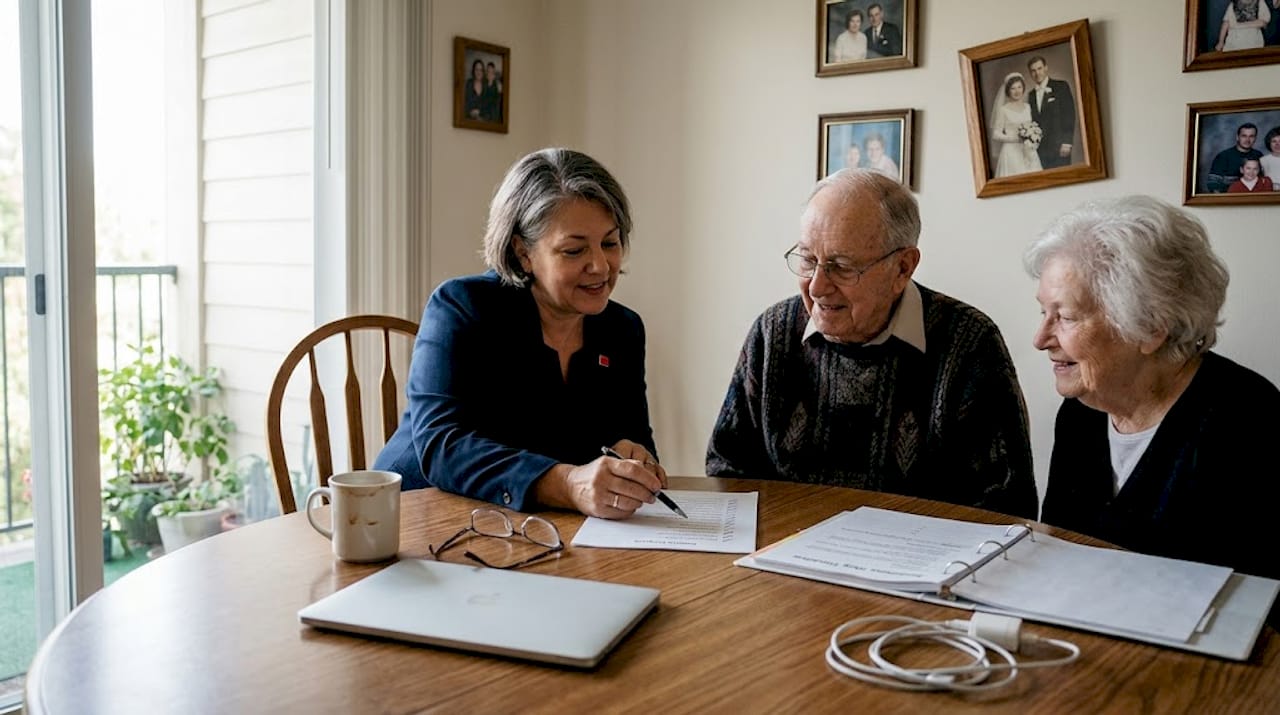
NASMM-certified managers coordinate logistics, downsizing, and vendor connections in ways that standard movers simply are not equipped to handle. NASMM stands for the National Association of Senior and Specialty Move Managers, and certification through this organization signals a commitment to senior-specific training and ethical standards.
Pro Tip: When interviewing moving companies, ask directly: “How many senior relocations have you completed in the past year?” A company with real experience will answer confidently and offer references.
Senior move managers vs. standard movers: What’s the difference?
Now that you know what movers do, it’s vital to understand the distinct roles of move managers versus standard movers.
Standard movers are trained to transport your belongings safely from one address to another. They are skilled at what they do, but their scope is limited to the physical move itself. Senior move managers operate differently. They take a holistic approach, managing the entire transition from start to finish.
Here is a side-by-side comparison:
| Service | Standard movers | Senior move managers |
|---|---|---|
| Packing and transport | Yes | Yes (with senior-specific care) |
| Downsizing support | No | Yes |
| Vendor coordination | Limited | Full (estate sales, donations, junk removal) |
| Emotional support | No | Yes |
| Floor plan planning | Rarely | Yes |
| NASMM certification | No | Often yes |
| Hourly cost (2026) | $80 to $150/hr | $50 to $150/hr |
As you can see, the two services are complementary rather than interchangeable. Combining movers with certified managers is often the best option for seniors because it covers both the physical and emotional dimensions of the move.
Some situations where a hybrid approach makes the most sense:
- Your loved one is moving from a large family home to a smaller apartment or assisted living facility
- There is significant sorting and downsizing to complete before the move date
- The senior has cognitive challenges or health conditions that require extra coordination
- Family members live out of state and cannot be present throughout the process
“Think of the move manager as the project coordinator and the mover as the skilled crew. Both are essential for a senior relocation done right.”
If you are working through the logistics of a larger transition, our step-by-step downsizing guide can help you map out the full process before you even contact a moving company.
How to choose the right moving service for your senior
Ready to decide which service will serve your family best? Here is a step-by-step guide for making the right choice.
Choosing the right team is one of the most important decisions you will make during this process. The wrong fit can add stress to an already emotional situation. The right fit can make the entire transition feel manageable.
- Verify senior specialization. Look for NASMM certification or documented experience with senior relocations. General moving experience alone is not enough.
- Evaluate local knowledge. A mover familiar with New Hampshire, Maine, and Massachusetts understands regional logistics, seasonal challenges, and local care facility requirements.
- Assess communication style. Your mover should be easy to reach, clear in their explanations, and willing to answer questions without rushing you.
- Check references and reviews. Ask for references from families who have used the service for a senior move specifically. Read online reviews and look for patterns in feedback.
- Confirm insurance coverage. Make sure the mover carries adequate liability and cargo insurance. This protects your loved one’s belongings throughout the process.
- Consider combining services. Prioritizing experienced senior specialists results in lower insurance claims and less stress overall. Pairing a qualified mover with a certified move manager gives you the most complete support.
Pro Tip: Ask the moving company if they offer an in-home or virtual consultation before providing a quote. Companies that take time to assess the full scope of a senior move upfront tend to deliver far fewer surprises on moving day.
If your family is also navigating the sale of a home as part of this transition, our guide on selling a home while downsizing covers the key steps and timing considerations you will want to know.
Our take: What families often overlook in senior moves
You have seen the facts. Now let’s talk about what is not on most family checklists but makes the biggest difference.
In our experience working with New England families, the most common mistake is not choosing the wrong mover. It is underestimating how much the move affects the senior emotionally and then scrambling to compensate at the last minute. Families often focus so heavily on the logistics that they forget to prepare their loved one for the transition itself.
Another overlooked factor is the family’s own emotional state. Adult children and caregivers carry significant stress during a parent’s move, and that stress can affect decision-making. Choosing the cheapest option or rushing the timeline to get it done quickly often backfires.
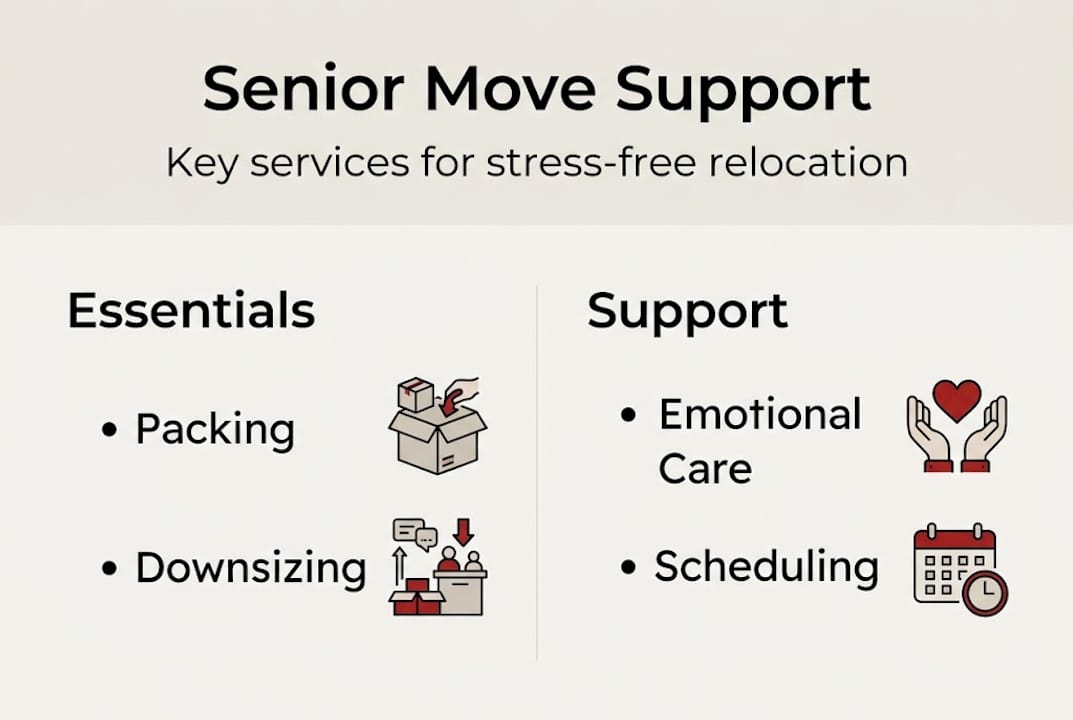
The real value of a specialized senior mover is not just in the careful packing or the flexible scheduling. It is in the calm, steady presence they bring to a situation that feels anything but calm. Resources like our guide on making moves easier offer practical tools, but the right support team is what actually carries families through.
Do not let cost be the only deciding factor. The right support system, one built on patience, experience, and genuine care, is what makes a senior relocation a positive transition rather than a difficult one.
Bridges Bros. Movers: Supporting senior moves across New England
If you are ready to ease the stress of senior moves, Bridges Bros. Movers specializes in helping New England families every step of the way. Since 1919, we have built our reputation on trust, care, and personalized service across New Hampshire, Maine, and Massachusetts.
Our senior moving services are designed with elderly clients in mind, from careful packing to flexible scheduling and compassionate communication. We also offer packing services for seniors that protect heirlooms and simplify the unpacking process at the new home. And if your family needs guidance through the downsizing process, our team provides compassionate downsizing help tailored to the unique emotional and logistical needs of seniors. Reach out today for a personalized quote.
Frequently asked questions
What does a senior move manager do?
A senior move manager helps coordinate every aspect of a senior’s move, including downsizing, packing, hiring vendors, and emotional support. Senior move managers coordinate logistics, downsizing, and vendor connections to provide truly full-service relocation support.
How are movers for seniors different from standard movers?
Movers for seniors have specialized training and patience for working with elderly clients, focusing on safety, compassion, and customized services. Experienced senior movers handle unique needs like mobility limitations and emotional support that standard crews are not equipped to address.
What is the typical cost for hiring a senior move manager?
Senior move managers usually charge $50 to $150 per hour, with rates varying by location and the scope of services needed. Cost data shows $50 to $60/hr in smaller markets and $90 to $125/hr in larger cities.
Should we hire both a mover and a move manager for a senior move?
For the smoothest transition, combining a mover and a senior move manager is often the best approach for seniors and their families. Combining movers with senior managers provides a truly full-service relocation that covers both logistics and emotional well-being.
Recommended
- Why hire professional movers? Safe, stress-free moves explained
- Helping Elderly Parents Downsize | A New Englander’s Guide to Compassionate Moves
- Best moving practices for stress-free New England 2026
- Top packing tips for local moves: stress-free relocation guide
- Trusted Moving Services | Aleks Moving
- How professional movers ensure a stress-free family relocation