
Most people think packing is just wrapping items and tossing them in boxes, but effective packing is a strategic process that directly impacts whether your belongings arrive intact, how much you spend, and how stressed you feel throughout your move. Understanding proper packing techniques becomes especially critical for families and small businesses across New Hampshire, Maine, and Massachusetts handling local or long-distance relocations. Mastering choosing the right packing materials transforms your moving experience from chaotic to controlled.
Table of Contents
- How Proper Packing Prevents Damage And Loss
- Emotional And Logistical Benefits Of Professional Packing Services
- Adapting Packing Strategies For Local Vs. Long-Distance Moves
- Common Misconceptions And Mistakes About Packing
- How Packing Influences Moving Costs And Efficiency
- Practical Tips And Professional Services For Effective Packing
- Conclusion: Packing As The Cornerstone Of Stress-Reduced, Safe Moves
- Discover Professional Packing Solutions Tailored For Your Move
Key takeaways
| Point | Details |
|---|---|
| Packing prevents damage | Strategic packing with quality materials reduces breakage and protects your investment during transit. |
| Professional services save time | Expert packers cut packing time significantly while reducing stress through optimized planning. |
| Distance affects approach | Local moves need lighter protection while long-distance relocations require reinforced materials and methods. |
| Myths cause mistakes | Common misconceptions about packing lead to damaged items and unexpected costs. |
| Quality impacts budget | Proper packing optimizes truck space and reduces labor hours, lowering overall moving expenses. |
How proper packing prevents damage and loss
Professional packing materials make a measurable difference in protecting your belongings during moves. Studies show that use of professional packing materials reduces breakage by 35% compared to DIY approaches using newspaper or random boxes. Reinforced boxes, bubble wrap, and purpose-built containers create protective barriers that absorb shock and prevent items from shifting during transport.
Layered packing methods amplify this protection dramatically. When you combine bubble wrap with packing paper and strategic box placement, breakage rates drop over 50%. This approach works because multiple cushioning layers distribute impact forces across surfaces rather than concentrating stress on single points.
Box weight distribution matters more than most people realize. Overloading boxes causes structural failure during stacking, leading to crushed items and collapsed containers. Proper distribution keeps boxes stable and prevents bottom-heavy loads that shift dangerously during transit.
Pro Tip: Always label fragile items clearly on multiple sides and pack them with extra cushioning on all surfaces, not just the bottom. This simple step alerts handlers to exercise care and provides protection from impacts in any direction.
Common packing mistakes include using worn boxes that lack structural integrity, under-packing items so they shift freely, or selecting unsuitable materials like thin plastic bags for heavy objects. Following professional packing practices eliminates these pitfalls and ensures your belongings travel safely.
Key materials that prevent damage:
- Reinforced double-wall boxes for heavy or fragile items
- Bubble wrap with large bubbles for delicate surfaces
- Packing paper to fill voids and prevent shifting
- Heavy-duty tape that maintains seal integrity throughout the move
- Specialized containers for electronics, artwork, and valuables
Emotional and logistical benefits of professional packing services
Professional packers manage complex logistics that overwhelm most DIY movers. They understand packing sequences, room-by-room strategies, and how to create systematic labeling that makes unpacking efficient. This expertise streamlines the entire moving process and prevents the chaos that erupts when you realize critical items are buried in unmarked boxes.
Research demonstrates that professional packing reduces moving stress by 40% and cuts packing time by 30% compared to self-managed approaches. This reduction happens because professionals handle the physical labor and mental burden of organizing, protecting, and tracking hundreds of items simultaneously.
Time savings extend beyond just packing hours. In-home consultations allow professionals to assess your specific needs, recommend tailored solutions, and create optimized packing plans before moving day arrives. This preparation eliminates last-minute scrambling and ensures you have the right materials and strategies for your unique situation.
Pro Tip: Schedule a consultation at least three weeks before your move date to allow professionals time to develop customized plans and avoid the rush that leads to mistakes. Early planning also secures your preferred moving dates during busy seasons.
Well-packed loads deliver benefits throughout the moving process. Loading and unloading proceed faster because properly packed boxes stack efficiently and remain stable during transport. This efficiency reduces labor hours and associated costs while protecting your belongings from the damage that occurs when items shift or topple during handling.
Professional packing services offer flexible options ranging from full-service packing to partial assistance for specific rooms or fragile items. This flexibility lets you balance budget concerns with the value of expert help where it matters most.
Logistical advantages of professional packing:
- Systematic room-by-room organization that simplifies unpacking
- Proper inventory tracking that ensures nothing gets lost
- Efficient use of packing materials that reduces waste
- Coordination with moving crews for seamless loading
- Insurance compliance that protects your investment
Adapting packing strategies for local vs. long-distance moves
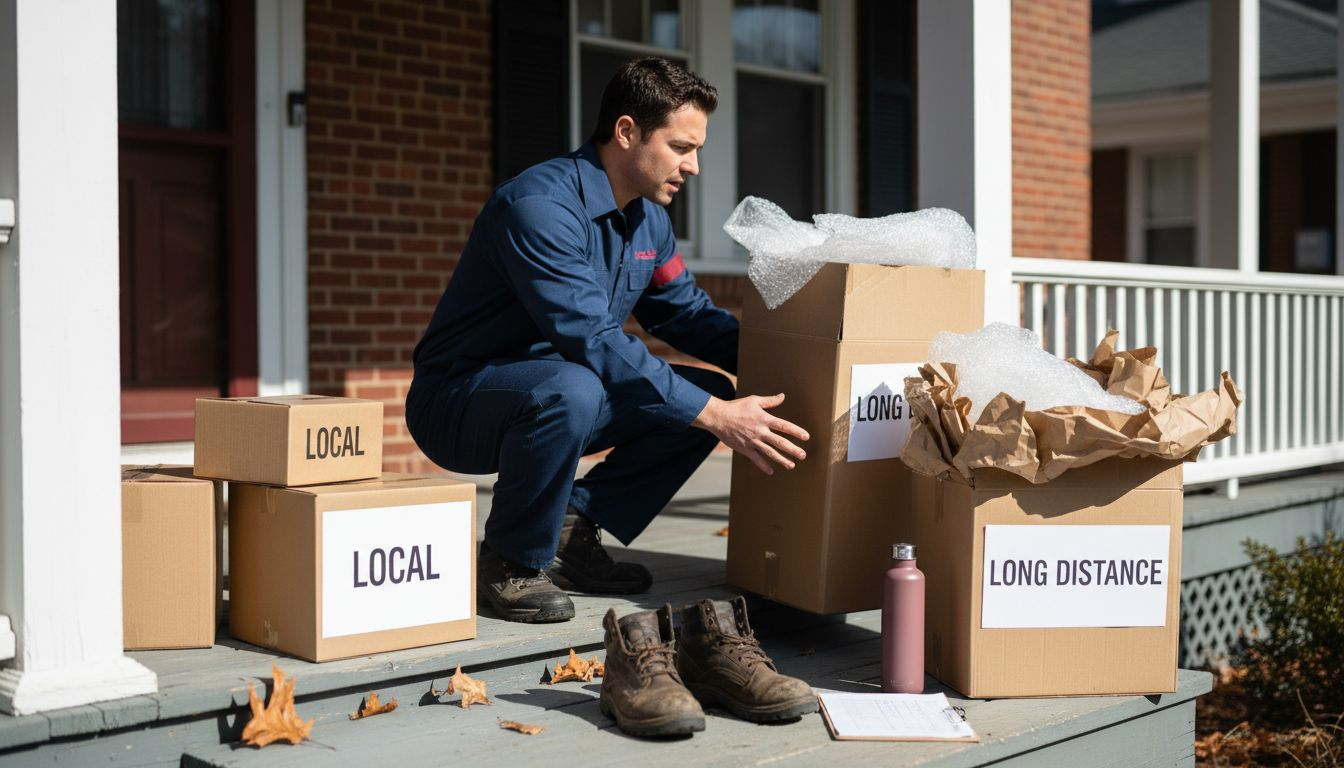
Local moves involve shorter transit times and typically fewer handling transfers, which means belongings endure less stress during transport. The American Moving and Storage Association notes that local moves require less protective packing than long-distance moves due to shorter transit and handling. This difference allows you to use lighter materials and simpler methods while still protecting your items adequately.
Long-distance relocations demand enhanced protection because items spend days or weeks in transit, experience temperature fluctuations, and undergo multiple loading and unloading cycles. Extra cushioning, reinforced boxes, and secure fastening methods become essential to prevent damage from extended vibration and repeated handling.
Distance influences every packing decision, from cushioning thickness to box selection. Local moves might succeed with standard single-wall boxes for clothing and linens, while long-distance moves require double-wall construction for the same items. Understanding these packing strategies for local vs long-distance moves helps you allocate resources effectively.
| Factor | Local Moves | Long-Distance Moves |
|---|---|---|
| Box strength | Single-wall adequate | Double-wall required |
| Cushioning | Moderate padding | Heavy cushioning |
| Sealing | Standard tape | Reinforced tape |
| Climate protection | Minimal | Weather-resistant materials |
| Fragile item packing | Basic wrapping | Multi-layer protection |
Best practices for local moves:
- Use lightweight protection for non-fragile items
- Pack same-day essentials separately for immediate access
- Label by room to expedite unpacking
- Consider reusable plastic bins for convenience
Best practices for long-distance moves:
- Invest in premium packing materials for all items
- Create detailed inventories with photos
- Pack climate-sensitive items with extra protection
- Use professional-grade boxes designed for extended transit
- Seal boxes with multiple tape strips for security
Understanding local and long-distance move differences helps you avoid over-packing for short moves or under-protecting for long journeys.
Common misconceptions and mistakes about packing
Many people believe packing is purely about protection, missing how it critically affects timelines, logistics, and stress levels throughout the move. This narrow view causes them to underestimate packing time, rush the process, and make preventable mistakes that create damage and delays.
DIY movers frequently misjudge packing volume, assuming they can pack everything in a weekend when the job actually requires a week or more. This underestimation leads to rushed packing on moving day, inadequate protection, and forgotten items that require additional trips. Starting early and working systematically prevents this common trap.
Box weight represents another frequent error. Excessively heavy boxes risk breakage, injury to handlers, and damage to items below them in the truck. Industry standards recommend keeping individual boxes between 30 and 50 pounds maximum to maintain safe handling and structural integrity.
Pro Tip: Weigh boxes using a bathroom scale as you pack to stay within safe limits and identify overloaded containers before they cause problems. Distribute heavy items across multiple boxes rather than concentrating them in single containers.
Common myths that lead to mistakes:
- Myth: Newspaper provides adequate protection for fragile items. Reality: Newsprint transfers ink and offers minimal cushioning compared to proper packing paper.
- Myth: Any box works if it is large enough. Reality: Used grocery boxes often have hidden damage and lack the strength for moving stress.
- Myth: Filling every gap wastes materials. Reality: Empty spaces allow items to shift and collide, causing damage professional packers prevent with proper cushioning.
- Myth: Professional packing costs more than DIY approaches. Reality: Damage from poor packing often exceeds professional service fees.
Avoiding these misconceptions requires understanding proper packing materials selection and following proven techniques rather than assumptions.
How packing influences moving costs and efficiency
Well-packed loads improve truck space utilization significantly, with proper techniques increasing capacity by 15 to 25 percent. This optimization reduces the number of trips required, cutting fuel costs and labor hours. Every efficiently packed box contributes to these savings by stacking securely and using space that poorly packed items waste.
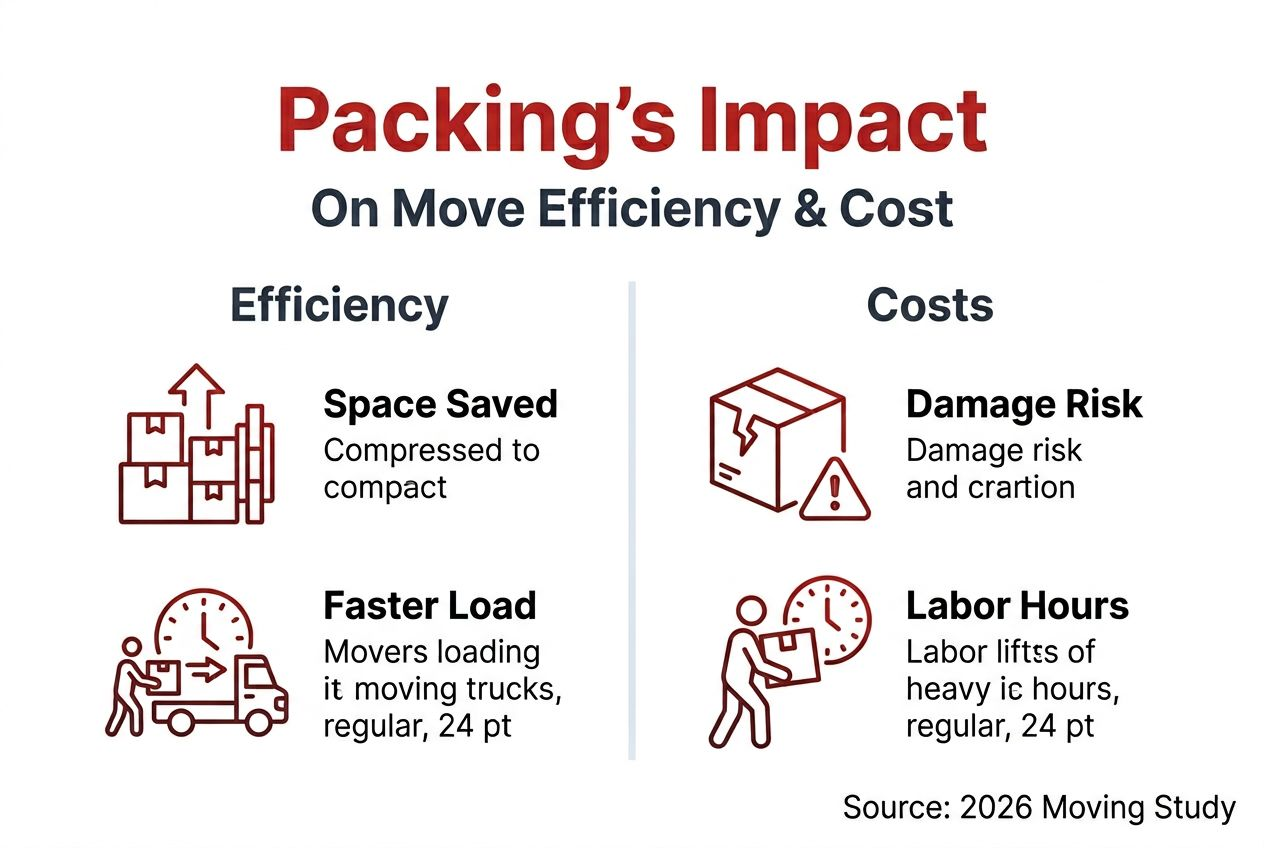
Quality packing can lower overall moving costs up to 20 percent through multiple mechanisms. Reduced damage means fewer insurance claims and replacement expenses. Faster loading and unloading decrease labor charges. Optimal space usage might eliminate the need for a larger truck or additional trips.
Poor packing creates hidden costs that erode your moving budget. Extended labor hours accumulate when crews must repack items, navigate unstable loads, or handle damage claims. Delays compound when improperly packed boxes collapse or items shift, requiring mid-move adjustments that add billable time.
| Outcome | Well-Packed Move | Poorly Packed Move |
|---|---|---|
| Truck capacity used | 85-95% | 60-75% |
| Loading time | 2-3 hours | 4-5 hours |
| Damage incidents | 1-2% of items | 8-12% of items |
| Labor cost | Standard rate | 20-30% premium |
| Material waste | Minimal | Significant |
Cost-saving packing strategies:
- Pack similar-sized items together to maximize box efficiency and stacking stability.
- Use smaller boxes for heavy items to keep weight manageable and prevent structural failure.
- Fill gaps with packing paper or bubble wrap to prevent shifting without wasting space.
- Label boxes clearly by room and contents to streamline unloading and reduce sorting time.
- Create a master inventory that tracks high-value items and ensures nothing gets lost.
- Coordinate with your moving company early to understand their requirements and avoid repacking fees.
Effective packing services deliver measurable ROI by preventing damage, optimizing efficiency, and reducing the total cost of your move.
Practical tips and professional services for effective packing
Reinforced boxes provide the foundation for safe packing, offering structural integrity that prevents collapse under weight. Bubble wrap protects delicate surfaces from impacts, while strategic cushioning with packing paper fills voids and prevents items from shifting during transport. These materials work together to create multiple layers of protection.
Professional in-home or virtual packing consultations deliver customized solutions tailored to your specific move requirements. Experts assess your belongings, recommend appropriate materials, and develop strategic packing plans that address unique challenges like fragile collections, valuable electronics, or bulky furniture.
Customized packing plans accommodate different move sizes and distances throughout New Hampshire, Maine, and Massachusetts. Whether you are moving a small apartment locally or relocating an entire business across state lines, professional planners optimize strategies for your situation and budget.
Pro Tip: Start packing non-essential items like seasonal decorations and rarely used kitchen items at least four weeks before your move date. Label each box with room destination and a brief contents list to simplify loading crews’ work and make unpacking systematic.
Local professionals offer flexible support ranging from DIY guidance to complete full-service packing. You might hire experts for fragile items only, request partial packing for specific rooms, or opt for comprehensive service that handles everything. This flexibility lets you balance hands-on control with professional expertise where it matters most.
Packing services and consultations provide expertise that transforms stressful moves into manageable projects. Access to specialized packing materials ensures you have the right tools for every packing challenge.
Essential packing techniques:
- Pack plates vertically on edge rather than stacked flat to reduce breakage
- Wrap glassware individually and use dividers to prevent contact
- Fill hollow items like pots with smaller wrapped objects to save space
- Pack books in small boxes to keep weight manageable
- Use wardrobe boxes for hanging clothes to prevent wrinkles
- Mark boxes containing essentials for first-day access at your new location
Conclusion: Packing as the cornerstone of stress-reduced, safe moves
Packing quality determines whether your belongings arrive intact, how much you spend on your move, and the stress level you experience throughout the process. Strategic packing prevents damage, optimizes costs, and creates smooth logistics that turn chaotic relocations into organized transitions. Professional packing services deliver tangible benefits in safety, efficiency, and peace of mind that DIY approaches struggle to match. Families and small businesses across New Hampshire, Maine, and Massachusetts can move confidently by applying proven packing strategies tailored to their specific situations and distances.
Discover professional packing solutions tailored for your move
Transforming packing knowledge into action becomes simple when you partner with experienced professionals who understand New England moves. Bridges Bros. Movers brings over a century of moving expertise to families and businesses throughout New Hampshire, Maine, and Massachusetts, offering customized packing services that protect your belongings and reduce stress on moving day.
Whether you need comprehensive support or targeted help with fragile items, our professional packing services adapt to your timeline and budget. Explore our residential moving solutions for families planning local or long-distance relocations, or discover specialized commercial moving services designed to minimize business downtime. Our team handles the packing logistics so you can focus on your new beginning.
FAQ
What packing materials are essential for protecting fragile items?
Bubble wrap, reinforced double-wall boxes, quality packing paper, and heavy-duty tape form the core materials for fragile item protection. Professional materials cushion items effectively and keep them separated during transit. Learning proper packing materials guide techniques helps you avoid common mistakes that compromise protection.
How does packing weight affect moving safety?
Boxes exceeding 30 to 50 pounds risk structural failure, handler injury, and damage to items stacked below them during transport. Proper weight distribution across multiple boxes ensures stability and prevents dangerous shifting. Even weight distribution throughout your load protects both your belongings and the people handling them.
When should I consider hiring professional packing services?
Hire professional packing services when your move involves fragile or valuable items, covers long distances, or you want to reduce stress and save significant time. Early consultations allow professionals to develop optimized packing plans that address your specific needs. Professional help becomes especially valuable for complex moves involving antiques, electronics, or extensive households.
How do local moves differ from long-distance moves in packing needs?
The American Moving and Storage Association confirms that local moves require less protective packing than long-distance moves because of shorter transit and handling. Long-distance relocations demand reinforced materials, extra cushioning, and climate protection to withstand extended transport stress. Understanding these local vs long-distance packing needs helps you allocate resources appropriately for your specific move type.