
TL;DR:
- Storage is a strategic tool that enhances moving flexibility, security, and staging efficiency.
- Types of storage include self-storage units, mobile containers, and warehouse facilities, each suited for different needs.
- Early planning and choosing reputable providers are key to a smooth, cost-effective moving experience.
Most people think of storage as a last resort, a place to stash things that don’t fit anywhere else. But nearly 79% of people use the same storage provider when moving, and the national average stay is 20 months. That’s not accidental overflow. That’s strategic planning. Whether you’re a family relocating between towns on the Seacoast or a business staging an office move in Boston, storage is one of the most practical tools you can add to your relocation plan. This article breaks down the types, costs, and timing of storage so you can move smarter.
Table of Contents
- Why storage matters in the moving process
- Types of storage solutions: Choosing what fits your needs
- When and how to use storage effectively during your move
- Storage costs and value: Planning your budget
- Tips for choosing a reputable storage provider in New England
- Our take: Why storage is the ultimate moving advantage most overlook
- Simplify your next move with expert storage and moving solutions
- Frequently asked questions
Key Takeaways
| Point | Details |
|---|---|
| Storage streamlines moves | Using storage creates flexibility and reduces stress during relocations for both families and businesses. |
| Option fit matters | Choosing the right storage type—self, mobile, or warehouse—depends on your specific timeline and access needs. |
| Budget for storage | Typical costs range $75/month for units and $1,000-$2,000 for containers in New England. |
| Choose providers wisely | Trust and reputation are key, as most movers stick with providers they know and like. |
| Proactive planning pays off | Early storage planning simplifies even complex home or office moves. |
Why storage matters in the moving process
Moving rarely goes in a straight line. Closing dates shift. Lease end dates don’t align. Renovations run late. Storage fills those gaps so your belongings stay safe and your stress level stays manageable.
“Storage isn’t a backup plan. For most families and businesses, it’s a core part of the move.”
For businesses, the advantages are even more pronounced. A phased office relocation, where one department moves at a time, depends on having somewhere to stage furniture and equipment without cluttering the new space or disrupting daily operations.
Nationally, 11% of US households rent self-storage, with average facility occupancy sitting at 85%. That demand reflects a real need, not a trend. People across New Hampshire, Maine, and Massachusetts are using storage solutions for moving to create breathing room in their timelines and protect their belongings during transitions.
Key benefits of using storage during a move:
- Flexibility to move out before your new home is ready
- Security for valuables during a long-distance or multi-week move
- Reduced move-day chaos by pre-loading non-essentials into storage first
- Easier staging for businesses managing phased relocations
Types of storage solutions: Choosing what fits your needs
Understanding the need for storage is step one. Choosing the right type is where many people get stuck. There are three main options, and each serves a different situation.
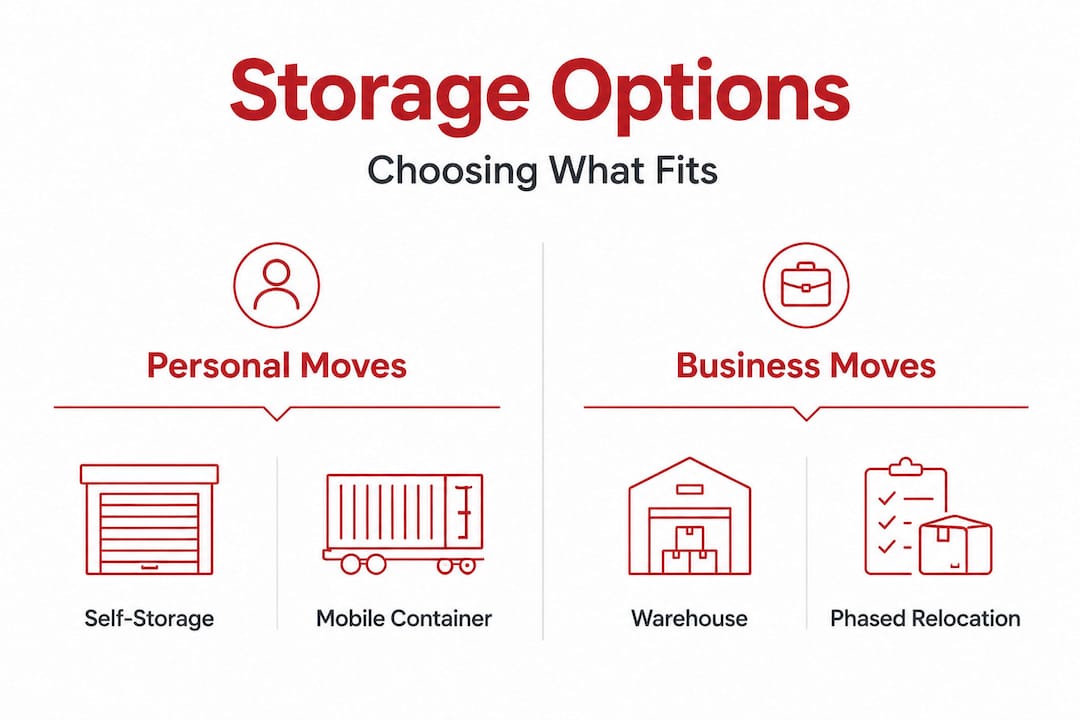
1. Self-storage units You rent a unit at a local facility, load it yourself, and access it on your own schedule. This is the most affordable option and works well when you need ongoing access or a longer-term arrangement.
2. Mobile storage containers A container is delivered to your door, you fill it at your own pace, and the company moves it to your new location or a storage facility. This is ideal for staged moves where you want to pack gradually without multiple truck trips.
3. Warehouse storage A full-service option where movers pack, transport, and store your items in a climate-controlled facility. Best for high-value items, antiques, or large-scale commercial moves where professional handling matters.
| Storage type | Best for | Avg. cost | Access |
|---|---|---|---|
| Self-storage unit | Long-term, DIY access | ~$75/month | On demand |
| Mobile container | Staged or door-to-door moves | $1,000–$2,000 per move | Scheduled |
| Warehouse storage | High-value or full-service needs | Varies by volume | By appointment |
The average monthly self-storage cost is $75, while mobile container moves for two to three-bedroom homes in Massachusetts, Maine, and New Hampshire typically run $1,000 to $2,000. Knowing your timeline is critical because a short-term container rental and a year-long self-storage lease are priced and structured very differently.
Understanding the difference between short-term and long-term storage helps you avoid paying for more than you need or locking yourself into a contract that doesn’t match your move schedule.
- Estimate how long you’ll need storage before signing anything
- Check whether the facility offers month-to-month contracts
- Confirm whether climate control is included or costs extra
- Ask about early termination fees before committing
Pro Tip: If you’re unsure how long you’ll need storage, start with a month-to-month self-storage contract. You can always extend, and you won’t be penalized for finishing your move ahead of schedule.
When and how to use storage effectively during your move
Now that you know your options, let’s look at how to time and use storage for the best results.
The most common scenario is a timing gap between your move-out and move-in dates. Even a week or two of overlap can create serious logistical pressure. Short-term storage solves this cleanly. You move out, load your belongings into storage, and move into your new space when it’s actually ready.
New Hampshire’s self-storage market is expanding rapidly due to increased relocation activity, which means units fill up faster than they used to. Booking early is no longer optional. It’s necessary.
For businesses, the strategy is slightly different. A phased move might involve relocating one department per week while others continue working. Storage allows you to move furniture and equipment in stages without stacking everything in a hallway or forcing employees to work around boxes. Understanding why storage matters during a commercial move can help office managers plan more effectively.

How to pack for storage efficiently:
| Item category | Packing priority | Notes |
|---|---|---|
| Seasonal items | Pack first | Least needed during transition |
| Furniture | Disassemble when possible | Saves space, prevents damage |
| Electronics | Bubble wrap and label clearly | Climate control recommended |
| Documents and files | Waterproof containers | Especially for businesses |
- Label every box with contents and destination room, not just “miscellaneous”
- Place items you’ll need soonest near the front of the unit
- Use uniform box sizes to stack safely and maximize vertical space
- Photograph high-value items before storing them
Good packing habits for local moves apply directly to storage as well. The same principles that protect your belongings in transit protect them in a unit for weeks or months.
Two common mistakes to avoid: storing prohibited items like flammables, food, or live plants, and skipping renters insurance. Most facilities require insurance, but even when they don’t, it’s worth having for peace of mind.
Pro Tip: Take a photo inventory of everything going into storage. If you ever need to file an insurance claim, that documentation makes the process far simpler.
Storage costs and value: Planning your budget
Smart use of storage isn’t just about space. Budgeting correctly means no surprises on moving day.
Average storage unit cost in New England is now $75 per month, down 24% since 2023, while mobile containers average $1,000 to $2,000 per move. That’s genuinely good news for families and businesses planning a move this year.
What drives the price up or down:
- Unit size: A 5x5 unit costs far less than a 10x20. Match the size to what you actually need.
- Climate control: Adds roughly 20 to 30% to monthly costs but is essential for wood furniture, electronics, and documents.
- Location: Urban facilities in Boston suburbs cost more than rural New Hampshire options.
- Contract length: Month-to-month is more flexible but often priced higher per month than a six-month commitment.
Tips for getting the best value:
- Ask about first-month promotions. Many facilities offer the first month free or at a steep discount.
- Rent slightly smaller than you think you need. Proper packing and stacking almost always creates more space than expected.
- Compare at least three providers before signing.
- Factor in drive time and access hours. A cheaper unit 45 minutes away can cost more in time and fuel.
Storage can also reduce your overall moving costs. By loading non-essentials into storage before moving day, you reduce the volume of items the truck needs to carry. Fewer trips mean lower labor costs. Investing in the right moving supplies upfront also protects your stored items and reduces the risk of damage claims.
Tips for choosing a reputable storage provider in New England
Once your budget is set, picking the right provider can make or break your experience.
79% of customers choose the same storage provider when they move again. That loyalty comes from trust built through good experiences. The goal is to find that provider before your first move, not after a frustrating one.
- Check security features. Look for gated access, surveillance cameras, and individual unit alarms. Ask whether staff are on-site during access hours.
- Inspect the facility in person. Cleanliness is a strong indicator of how well a facility is managed. Pest issues and water damage are common in poorly maintained locations.
- Read the contract carefully. Watch for automatic renewal clauses, rate increase provisions, and lien policies.
- Verify insurance options. Some facilities offer coverage through their own policy. Others require you to bring your own. Know which applies before you sign.
- Check online reviews. Look for patterns, not just individual complaints. A facility with consistent praise for cleanliness and customer service is a reliable signal.
- Ask about access hours. Some facilities allow 24-hour access. Others close early on weekends. Make sure the hours match your schedule.
Pro Tip: Ask the facility manager directly how they handle rate increases. Some providers lock in your rate for the contract term. Others raise rates with 30 days’ notice. Knowing this upfront prevents frustration later.
Explore the full range of moving and storage services available in your area before committing to a provider. A moving company that also offers storage can often coordinate both services more efficiently than two separate vendors.
Our take: Why storage is the ultimate moving advantage most overlook
After more than a century of helping families and businesses move across New England, our team has seen one pattern repeat itself constantly. The smoothest moves are almost always the ones where storage was planned early, not added as a fix when things went sideways.
Most people call us about storage after a problem has already developed. The closing date moved. The apartment isn’t ready. The new office isn’t painted yet. Storage becomes reactive instead of proactive, and that’s where the stress compounds.
The families and office managers who move with the least friction are the ones who treat storage as part of the original plan. They book their unit or container at the same time they book their movers. They pack non-essentials into storage two to three weeks before moving day. They arrive at their new space with only what they need immediately, and they retrieve the rest once they’re settled.
We’ve also seen how much the value of packing services multiplies when combined with storage. When professionals pack your items with storage in mind, using the right materials and labeling systems, you avoid the common nightmare of not knowing what’s in which box three weeks later.
The honest truth is that most movers who skip storage planning don’t regret the money they saved. They regret the chaos they created. Storage is not a luxury add-on. It’s one of the most reliable ways to protect your timeline, your belongings, and your sanity during a move.
Simplify your next move with expert storage and moving solutions
Bridges Bros. Movers has been helping families and businesses across New Hampshire, Maine, and Massachusetts move with confidence since 1919. Our local storage options are designed to work seamlessly alongside our moving services, so you’re never juggling two separate vendors or two separate timelines. Whether you need short-term storage between closings or a long-term solution while you renovate, our team can help you plan it right from the start. Our residential moving experts are ready to walk you through every option. If you’re still weighing your choices, our guide to solving your storage conundrum is a great next step.
Frequently asked questions
How much does self-storage cost during a move in New Hampshire or Massachusetts?
Typical costs start around $75 per month for a standard unit, while mobile storage containers range from $1,000 to $2,000 for a typical two to three-bedroom home move.
What items should not be stored in a storage unit when moving?
Avoid storing perishables, hazardous materials, flammable liquids, and anything listed as prohibited in your provider’s rental agreement, as violations can void your insurance coverage.
Can commercial offices use storage for phased relocations?
Yes, businesses frequently use short-term storage to stage furniture and equipment between departments, which significantly reduces downtime and keeps daily operations running during an office move.
How do I choose between self-storage and mobile storage containers?
Self-storage is more cost-effective for longer-term or self-access needs, while mobile containers offer door-to-door convenience that works best when you want to pack gradually and move everything in one coordinated trip.
Do most people keep using the same storage provider for future moves?
Yes, 79% of customers rebook with the same storage provider for their next move, which shows just how much trust and reliability matter when choosing where to store your belongings.