
TL;DR:
- Storage provides a crucial buffer to manage move delays, renovations, and timing gaps.
- Portable containers offer flexibility, while self-storage gives climate control and security options.
- Planning storage early improves move efficiency, reduces stress, and ensures a smoother relocation process.
Moving rarely unfolds the way you planned it. Your closing date shifts by two weeks, your new apartment won’t be ready until the first of the month, or the renovation you scheduled takes longer than expected. Suddenly, you’re stuck between two homes with a truck full of furniture and nowhere to put it. This is where storage becomes more than just a convenience. When you plan for it early, storage acts as a buffer that protects your belongings, reduces chaos, and gives you the breathing room to handle the unexpected without losing your mind.
Table of Contents
- Why storage is essential when moving
- Comparing storage options: Containers vs. self-storage
- Planning for timing, access, and safety
- Real-world storage strategies for New England families
- What most people miss about storage during moves
- Make your move easier with professional storage and moving support
- Frequently asked questions
Key Takeaways
| Point | Details |
|---|---|
| Bridges timing gaps | Using storage allows you to manage delays or mismatches between homes during moving. |
| Customizable solutions | Portable containers and self-storage each suit different needs—choose based on access and environment. |
| Regional strategies matter | New England moves often require storage that handles climate changes and high local demand. |
| Planning reduces stress | A clear storage plan prevents last-minute panic and helps protect your belongings. |
Why storage is essential when moving
With the stress of moving top of mind, let’s break down why storage isn’t just a convenience—it’s often a necessity.
Moving is rarely a single-day event. Most families face a gap of days or even weeks between leaving one home and settling into the next. That gap creates real problems: where do your belongings go? What happens when your new home’s floors need refinishing before you move in, or your buyer needs an extra week before vacating? These are not edge cases. They happen all the time, especially in competitive real estate markets like those across New Hampshire, Maine, and Massachusetts.
Storage bridges the gap and solves timing and access issues for families during moves, whether they’re relocating across town or across state lines. The stress-free storage benefits extend well beyond simply having a place to put your boxes.
Here are the most common situations where storage becomes essential:
- Delayed closings: Real estate transactions fall through or get pushed back. Having storage means your belongings are safe while you wait.
- Renovation overlap: If your new home needs work before you move in, storage keeps your furniture out of the way of contractors.
- Staging your current home: Decluttering and staging a home for sale is much easier when excess furniture is already in storage.
- Long-distance timing gaps: When you’re moving from Portsmouth, NH to Portland, ME, coordinating truck arrival and apartment availability rarely lines up perfectly.
- Temporary housing: If you’re staying with family or in a short-term rental while house-hunting, you need somewhere secure for the bulk of your belongings.
- Emergency flexibility: Life changes fast. A job offer, a lease complication, or a family situation can upend your timeline. Storage gives you options.
“The families who handle moves most smoothly are the ones who treat storage as part of the plan, not a backup option they scramble to find at the last minute.”
Pro Tip: Book your storage solution at the same time you book your movers. Availability for both fills up quickly during peak season (May through September), and coordinating them together prevents scheduling conflicts.
Comparing storage options: Containers vs. self-storage
Now that we understand why storage matters, it’s time to navigate your choices.
There are two primary types of storage you’ll encounter when planning a move: portable storage containers and traditional self-storage units. Each has real advantages, and the right choice depends on your specific situation, timeline, and budget.
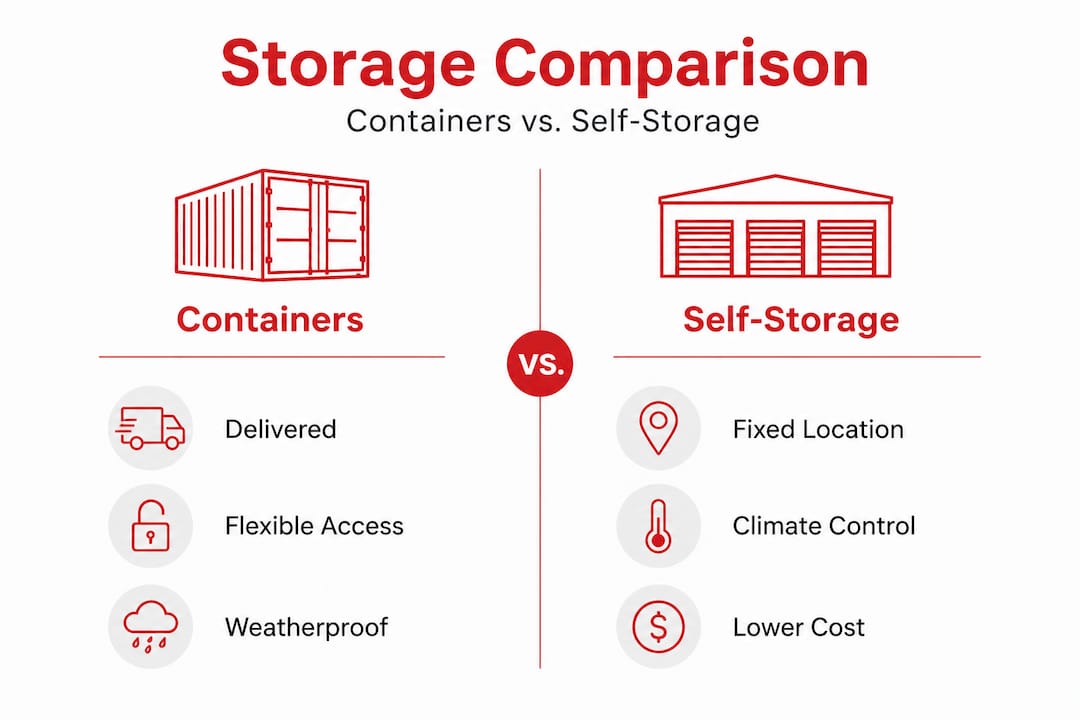
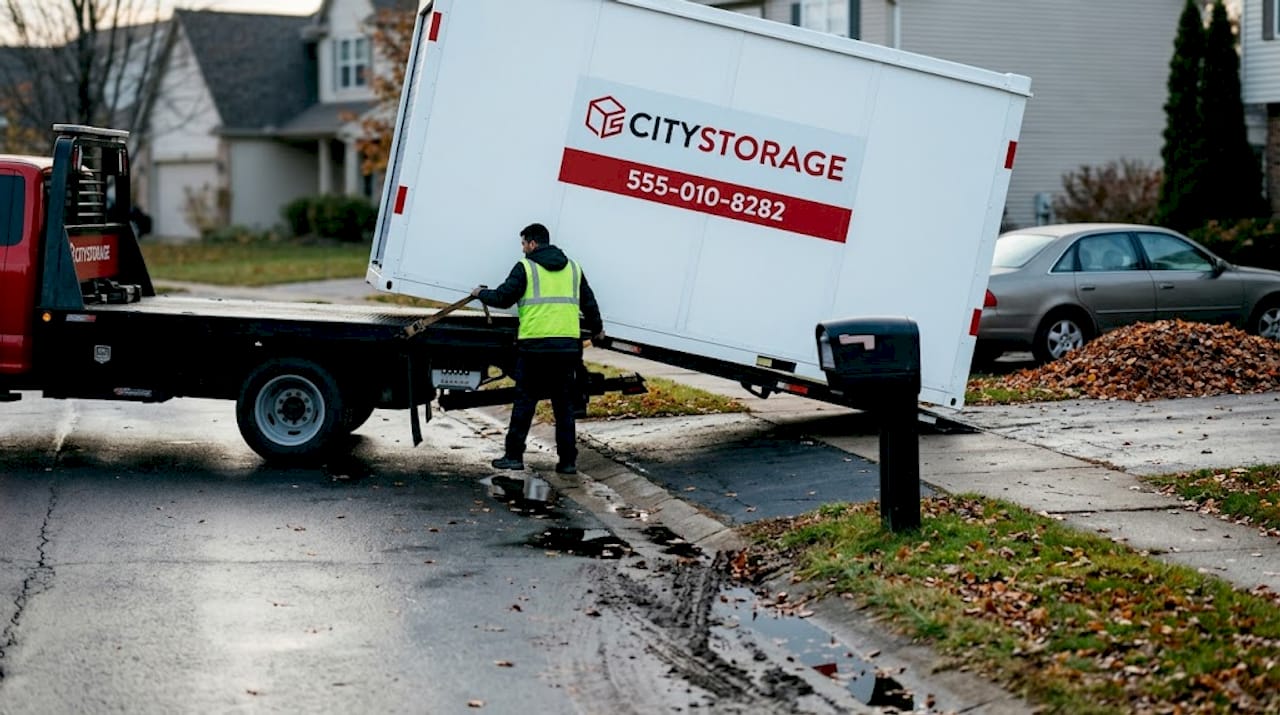
Portable storage containers (brands like PODS or U-Box) are large, weather-resistant units delivered directly to your home. You load them at your own pace, and the company either stores the container at a facility or transports it to your new address. Portable containers offer DIY flexibility and home delivery, while off-site self-storage provides environmental control and consistent access.
Traditional self-storage involves renting a unit at a fixed facility where you transport your belongings yourself or with movers. Many facilities offer climate-controlled units, 24-hour access, and enhanced security features.
Here’s a side-by-side look at how these two options compare:
| Feature | Portable containers | Traditional self-storage |
|---|---|---|
| Delivery to your home | Yes | No |
| Loading flexibility | Load at your own pace | Must transport items yourself |
| Climate control | Limited | Widely available |
| Access to belongings | Depends on container location | Usually 24/7 |
| Cost range | Moderate to high | Low to moderate |
| Best for | Long-distance moves, busy schedules | Local moves, longer storage terms |
| Security | Lock provided, varies by company | On-site security, cameras, gate access |
When comparing your storage options, think carefully about how often you’ll need to access your items and whether climate control matters for what you’re storing.
Pros of portable containers:
- No need to rent a truck or make multiple trips
- Flexible delivery and pickup scheduling
- Can double as a moving vehicle for long-distance relocations
- Great when you have limited time to load and unload
Cons of portable containers:
- Generally more expensive than self-storage
- Requires space at your home or driveway for placement
- Climate control is not always available
Pros of traditional self-storage:
- More affordable for longer storage periods
- Climate-controlled options protect sensitive items like wood furniture, electronics, and artwork
- Accessible on your schedule
Cons of traditional self-storage:
- You’re responsible for transporting items to and from the facility
- Requires a truck rental or additional moving help
Pro Tip: If you’re storing items for more than 30 days, traditional self-storage with climate control is usually the smarter choice. For short gaps of one to two weeks, a portable container keeps things simple and avoids the need for multiple truck trips. You can also explore container material options to make sure your belongings are properly protected inside either type of unit.
Planning for timing, access, and safety
Once you know your options, the real advantage comes from smart planning.
Key tradeoffs with storage include delivery timing, access to your belongings, and climate control. Understanding these tradeoffs before you commit to a solution saves you from costly surprises later.
Here’s a step-by-step approach to integrating storage into your move:
- Confirm your move-out and move-in dates. Even if they’re estimates, having target dates helps you calculate the storage window you need.
- Identify what needs to be stored. Not everything has to go into storage. Prioritize large furniture, seasonal items, and anything you won’t need immediately.
- Choose your storage type. Based on your timeline, budget, and access needs, decide between a portable container and a self-storage unit.
- Book early. Reserve your storage solution at least four to six weeks before your move date, especially during summer months.
- Pack strategically. Label boxes clearly and place frequently needed items near the front of the unit. Good packing to protect belongings makes retrieval much easier.
- Arrange insurance. Check whether your homeowner’s or renter’s insurance covers items in storage. If not, purchase additional coverage.
- Plan your access schedule. Know when and how often you’ll need to visit the unit, and confirm the facility’s access hours before signing a contract.
Here’s a quick reference for matching your scenario to the right storage type:
| Move scenario | Recommended storage type | Typical storage duration |
|---|---|---|
| Closing date delayed 1-2 weeks | Portable container | 1 to 3 weeks |
| Renovation before move-in | Self-storage (climate-controlled) | 1 to 3 months |
| Staging home for sale | Portable container or self-storage | 1 to 6 weeks |
| Long-distance relocation | Portable container | 2 to 4 weeks |
| Temporary housing while house-hunting | Self-storage | 1 to 6 months |
Safety is not something to overlook. Use a high-quality disc lock on your unit, avoid storing irreplaceable documents or valuables, and take photos of your items before placing them in storage. If you’re using a portable container outdoors, consider weather-resistant wrapping for anything sensitive to moisture or temperature swings.
Pro Tip: When storing during New England winters, always opt for climate-controlled self-storage for wood furniture, electronics, and musical instruments. Extreme cold and humidity fluctuations can cause serious damage to these items over even a short storage period.
Real-world storage strategies for New England families
With your plan in hand, let’s see how regional families achieve smooth transitions using these strategies.
New England presents some unique moving challenges that families in other parts of the country simply don’t face. The weather is unpredictable, the real estate market moves fast, and seasonal demand for storage spikes sharply in the spring and fall. Choosing the right storage type depends on local factors like climate, home size, and market timing, and nowhere is that more true than here in New Hampshire, Maine, and Massachusetts.
Here are some real-world scenarios that illustrate how storage solves local moving challenges:
- The delayed closing in Exeter, NH: A family selling their home in Exeter had a buyer who needed an extra two weeks before vacating. Rather than pushing back their own move, they placed their furniture in a portable container, stayed with relatives briefly, and moved into their new home on schedule. The Exeter storage solutions available through local movers made this seamless.
- The winter move in Portland, ME: A couple relocating from Portland to the Boston area in January used a climate-controlled self-storage unit to protect their antique furniture during a six-week gap. They avoided the damage that unheated storage would have caused during a particularly cold stretch.
- The staged home sale in Manchester, NH: A family decluttered their home for sale by placing half their furniture in storage. Their real estate agent credited the staged look with helping the home sell faster and above asking price.
- The long-distance bridge in Newburyport, MA: A family moving from Newburyport to Portsmouth used a portable container that served as both their storage unit and their moving vehicle. One pickup, one delivery, no truck rental needed.
“Families who plan storage into their move from the start, rather than scrambling for it at the last minute, consistently report smoother transitions and less anxiety throughout the process.”
New England’s peak moving season runs from late May through early September. During this window, both storage units and moving companies fill up fast. Region-specific storage methods vary, but the demand pattern is consistent across NH, ME, and MA.
Pro Tip: If you’re planning a summer move in New England, reserve your storage unit and moving company by March or April at the latest. Waiting until June often means limited availability and higher prices.
What most people miss about storage during moves
Here’s the perspective that most moving guides skip over entirely.
Most people treat storage as a last resort. It’s the thing you scramble to arrange when your closing falls through or your new landlord calls with bad news. That reactive mindset costs families money, time, and a significant amount of stress that could have been avoided.
We’ve worked with thousands of families across New Hampshire, Maine, and Massachusetts since 1919, and the pattern is clear: the families who plan storage proactively have better moves. Not marginally better. Noticeably, measurably better. They’re less rushed on moving day, they have more flexibility when things change, and they arrive at their new home without the frantic energy that comes from scrambling.
The conventional wisdom says: book your movers, pack your boxes, move your stuff. Storage is treated as an optional add-on. But that framing misses the point entirely. Storage is a planning tool. It gives you control over a process that is, by nature, full of variables you can’t predict.
Think about what storage actually does for you. It decouples the “leaving” from the “arriving.” Those two events almost never happen on the same day, and pretending they will is where most moving stress originates. When you understand why storage works as a strategic buffer, you stop seeing it as an expense and start seeing it as an investment in a calmer, more organized move.
The families who come to us already thinking about storage are the ones who finish their moves on time, within budget, and without the horror stories. That’s not a coincidence.
Make your move easier with professional storage and moving support
Ready to make your next move seamless? At Bridges Bros Movers, we’ve been helping families across New Hampshire, Maine, and Massachusetts plan and execute smooth relocations since 1919. We offer secure storage options that integrate directly with your moving plan, so you’re not juggling two separate vendors or two separate schedules. Our team can walk you through the right storage solution for your specific timeline, whether you need a few weeks of bridge storage or several months of climate-controlled care for your belongings. Pair that with our residential moving services and you have a single, coordinated team managing your entire transition from start to finish. Reach out for a free quote and let us help you move with confidence.
Frequently asked questions
What are the main benefits of using storage during a move?
Storage bridges timing gaps, protects your belongings from damage, and gives you the flexibility to handle delays or complications without derailing your entire move.
Which is better: portable containers or traditional self-storage?
Portable containers offer flexibility and on-site loading convenience, while self-storage provides better climate control and security. The best choice depends on your timeline, budget, and how often you need to access your items.
How do I coordinate the timing for using storage during my move?
Storage planning should consider your confirmed move-out and move-in dates, allowing extra time for container delivery, loading, and any unexpected delays in your real estate transaction.
Is it necessary to insure my belongings in storage?
Insurance is strongly recommended, especially in New England where temperature swings and weather events can affect even well-sealed storage units. Check your existing homeowner’s or renter’s policy first, then purchase supplemental coverage if needed.