
TL;DR:
- Technology accelerates moving quotes by automating inventory capture and applying consistent pricing within minutes. AI-powered virtual surveys improve accuracy and enable companies to process more estimates quickly, reducing costs and disputes. However, human review remains essential for complex moves to ensure precision and account for real-world variables.
Technology is the single biggest factor changing how moving companies generate quotes today. Platforms like HomeSurvey.ai and Movana now use AI-powered video walkthroughs and computer vision to produce detailed inventory lists in minutes, replacing a process that once took days. The industry term for this shift is automated moving estimation, and it covers everything from instant online calculators to full virtual survey tools. Understanding how technology helps in the quote process in moving gives you a real advantage when planning a residential or commercial relocation in New England or anywhere else.
How technology helps in the quote process in moving
The digital quote process in moving relies on four core technologies working together. Each one addresses a specific weakness in the old, manual approach.
- AI and computer vision: Platforms like Movana use vision AI to identify and classify items during a video walkthrough. The system generates a detailed inventory and professional summary automatically, with customers spending just 15–20 minutes submitting footage.
- Virtual video surveys: Instead of sending an estimator to your home, movers conduct live or asynchronous video calls. The estimator reviews your belongings remotely and feeds data into a quoting platform.
- Automated quoting software: Tools that pull from company-specific rate cards generate instant, accurate quotes and integrate pricing logic directly into CRM systems. This means a lead can receive a quote and book a job at 11 p.m. on a Sunday.
- CRM workflow automation: Once a quote is generated, CRM integration handles follow-up emails, booking confirmations, and scheduling without any manual input from the moving company’s staff.
Pro Tip: Before your video walkthrough, do a slow, room-by-room walk with good lighting. AI vision tools classify items more accurately when they can see full shapes and labels, which means a more precise quote for you.
You can learn more about how virtual surveys work and what to expect during the process before you schedule one.

How does technology improve moving quote speed and accuracy?
Speed is where the impact of tech on moving is most visible. Traditional in-home surveys take 30–45 minutes of an estimator’s time, plus travel. AI-powered virtual surveys compress that to under 30 minutes of total quote generation time, and estimator throughput multiplies by 5x. That means a moving company can process five times as many quotes in the same workday.
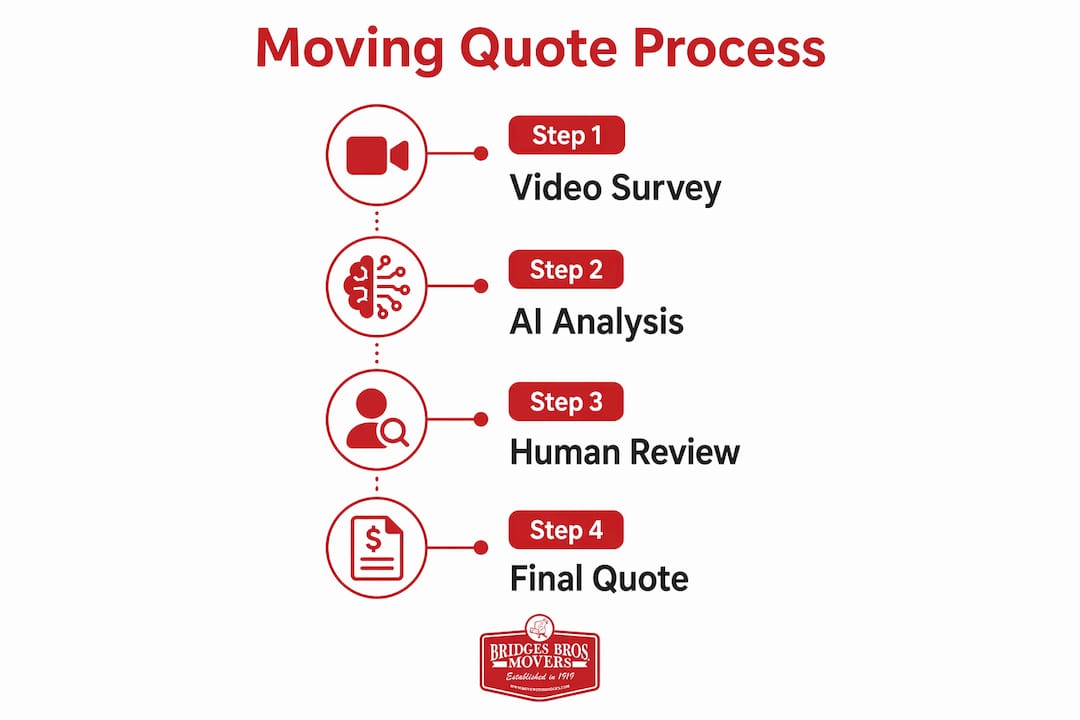
Accuracy improvements are just as significant. The table below shows how different quoting methods compare:
| Method | Typical accuracy | Customer time required |
|---|---|---|
| Instant online calculator | 75–85% | 5–10 minutes |
| AI-powered virtual video survey | Within 10–15% | 15–20 minutes |
| Traditional in-home survey | Highest (when done well) | 30–45 minutes |
The gap between an instant calculator and a virtual AI survey matters when you are planning a large move. An estimate that is off by 20% can mean hundreds of dollars in unexpected charges on moving day.
Speed also affects your chances of getting the mover you want. Moving companies respond to leads faster when automated quoting software handles the math instantly. That fast response catches you while your intent to book is highest, which is why companies using these tools report stronger lead conversion rates.
“A human-in-the-loop model balances efficiency with accuracy.” The best digital quoting systems let AI handle inventory and calculations while a human estimator reviews edge cases and finalizes the price. This keeps the process fast without sacrificing the judgment that complex moves require.
The human-in-the-loop approach is now considered the standard for reputable moving companies using AI tools.
What are the benefits of technology-driven quotes for customers and movers?
Technology in moving quotes delivers clear advantages on both sides of the transaction. For you as a customer, the most immediate benefit is transparency.
- Detailed cost breakdowns: Automated quotes pull from rate cards and show you exactly what you are paying for, including labor, truck fees, and any add-ons. There are no vague line items.
- Pricing consistency: AI-driven quoting applies identical pricing rules to every customer. You are not subject to a salesperson’s mood or memory on a given day.
- Faster responses: Automated systems generate quotes 24/7. You do not wait two business days for a callback.
- Fair comparisons: When all movers receive the same centralized inventory data, you get apples-to-apples comparisons across multiple bids. Without a shared dataset, one mover might quote 50 boxes while another quotes 30, making price comparisons meaningless.
For moving companies, the business case is equally strong. Companies using automated virtual walkthroughs complete up to three times more surveys daily than with traditional methods. That volume increase transforms estimators from data-entry workers into strategic sales advisors who focus on closing and customer relationships.
Pricing consistency also reduces disputes. When a customer sees a final bill that matches the quote, trust builds. When it does not match, disputes follow. AI removes the human memory errors that cause those mismatches.
What nuances and challenges remain in digital moving quotes?
Digital quoting is not perfect, and knowing its limits protects you from moving-day surprises. Here are the key challenges to understand:
- Accuracy ranges still exist. Even the best AI-powered virtual surveys carry a 10–15% deviation. For a $3,000 move, that is a $300–$450 swing. Always ask whether a quote is binding or non-binding before you commit.
- Complex pricing factors require company-specific rules. Generic digital forms fail to price stairs, long carries, elevator waits, and specialty items like pianos or safes accurately. Quoting software must incorporate company-specific rules for these variables, not just a generic rate card.
- Instant estimates are not binding quotes. Consumers regularly confuse a digital estimate with a guaranteed price. A binding quote requires the mover to confirm logistics, access conditions, and final inventory before locking in a number.
- Not all software is equally trained. A quoting platform is only as good as the data and rules built into it. A company using a generic off-the-shelf tool may produce less reliable quotes than one using a custom-configured system.
Pro Tip: Always request a not-to-exceed quote for moves over $2,000. This type of quote caps your final cost even if the actual weight or time runs slightly over the estimate, giving you a firm ceiling to budget against.
How can you use technology to get the most accurate moving quote?
Getting the most from the digital quote process in moving requires some preparation on your end. The technology is only as good as the information you feed it.
- Start early. The recommended timeline for requesting and comparing quotes is 4–8 weeks before your move, extending to 8–10 weeks during peak season from june through august. Reputable companies book 3–4 weeks ahead in peak months, so late requests limit your options.
- Use a centralized inventory tool. Platforms like Movana let you build one detailed inventory list that you share with multiple movers simultaneously. This eliminates the inconsistency problem and makes price comparisons reliable.
- Prioritize binding or not-to-exceed quotes. Non-binding estimates give movers room to charge more on moving day. A binding quote locks the price, provided your inventory does not change significantly.
- Compare the right details. Price is not the only variable. Check what each quote includes: packing materials, furniture disassembly, stair fees, and insurance coverage. A lower quote that excludes these items may cost more in the end.
Knowing how to compare moving quotes without missing key details is a skill that saves real money. You can also use a moving cost calculator as a baseline before you request formal quotes, so you walk into the process with a realistic number in mind.
If you are planning during a busy period, review peak season mistakes that can affect both availability and pricing before you start reaching out to movers.
Key takeaways
Technology transforms moving quotes by automating inventory capture, applying consistent pricing rules, and compressing quote generation from days to under 30 minutes.
| Point | Details |
|---|---|
| AI speeds up quote generation | Estimator throughput increases 5x with AI surveys, cutting quote time to under 30 minutes. |
| Virtual surveys improve accuracy | AI-powered video walkthroughs achieve accuracy within 10–15%, far better than basic calculators. |
| Pricing consistency reduces disputes | Identical pricing rules applied to every customer remove human error and lower post-move billing conflicts. |
| Binding quotes protect your budget | Always request a binding or not-to-exceed quote to avoid moving-day cost surprises. |
| Start early for best results | Request quotes 4–8 weeks out, or 8–10 weeks during peak season, to secure your preferred mover. |
Why I think the human element still matters most
I have watched the moving industry adopt technology at a pace that would have seemed impossible a decade ago. AI inventory tools, virtual walkthroughs, and automated CRM follow-ups are genuinely impressive. They make the quoting process faster and fairer for everyone involved.
But here is what I keep coming back to: the technology works best when a skilled human is still in the loop. I have seen automated quotes miss a piano, undercount a garage full of tools, or fail to account for a third-floor walkup with no elevator. Those are not software failures. They are reminders that moving is a physical, logistical process with real-world variables that a camera does not always capture.
The moving companies I respect most use AI to handle the repetitive work, then have an experienced estimator review every quote before it goes out. That combination gives you speed without sacrificing accuracy. As a customer, you should ask any mover whether a human reviews AI-generated quotes before they are finalized. If the answer is no, that is worth knowing before you sign anything.
The future of moving quotes will involve even more automation, likely including 3D scanning and real-time pricing updates. I am genuinely excited about that. But the best outcome for customers is not full automation. It is smart automation with human accountability built in.
— Patrick
How Bridges Bros Movers uses technology to quote your move
Bridges Bros Movers combines digital quoting tools with experienced estimators to give residential and commercial clients fast, accurate pricing. Whether you are moving a three-bedroom home in New Hampshire or relocating a business office in Massachusetts, the process starts with a virtual or in-home consultation that feeds directly into a transparent, itemized quote. There are no vague estimates or surprise fees on moving day. For residential moving services or commercial moving services, Bridges Bros Movers applies consistent pricing rules and human review to every quote. Request yours today and see the difference a century of experience makes.
FAQ
How does AI generate a moving quote?
AI uses computer vision to identify and classify items during a video walkthrough, then applies company-specific rate cards to calculate a price. The process typically takes customers 15–20 minutes and produces a detailed inventory automatically.
What is the difference between a binding and non-binding moving quote?
A binding quote locks in your final price based on the confirmed inventory and logistics. A non-binding estimate can change on moving day if the actual weight or time differs from the original assessment.
How accurate are online moving calculators?
Instant online calculators provide 75–85% accuracy. AI-powered virtual video surveys improve that to within 10–15%, making them a better choice for larger or more complex moves.
When should I request moving quotes?
Request and compare quotes 4–8 weeks before your move date. During peak season from june through august, extend that to 8–10 weeks, since reputable companies fill their schedules 3–4 weeks in advance during busy months.
Can technology replace the in-home moving survey entirely?
Technology can replace most in-home surveys for standard moves, but complex relocations with specialty items, difficult access, or unusual logistics still benefit from an in-person or detailed virtual review by an experienced estimator.