
Sorting through boxes, paperwork, and countless decisions can leave any New Hampshire family feeling overwhelmed when planning a big move. Whether your relocation is across town or to a new state, understanding your unique needs and budgeting wisely lays the foundation for a stress-free transition. This guide highlights practical steps, from developing a strategic financial plan to verifying credentials, so you can confidently choose a reliable moving company trusted in your community.
Table of Contents
- Step 1: Assess Your Moving Needs And Budget
- Step 2: Research Local Moving Companies And Reviews
- Step 3: Verify Licenses, Insurance And Credentials
- Step 4: Request Quotes And Compare Services
- Step 5: Check References And Confirm Reliability
- Step 6: Finalize Your Choice And Schedule The Move
Quick Summary
| Key Point | Explanation |
|---|---|
| 1. Assess Your Moving Needs and Budget | Identify total volume, weight, and special handling requirements to create an accurate moving budget. |
| 2. Research Local Moving Companies Thoroughly | Check licenses, reviews, and references to find reputable moving companies that meet your needs. |
| 3. Compare Quotes and Services | Request at least three written estimates that detail costs and services to ensure informed decisions. |
| 4. Verify Licenses and Insurance | Confirm moving companies’ registrations and insurance for legal protection during your move. |
| 5. Finalize Details and Documentation | Get a written contract and clarify all service details to prevent misunderstandings on moving day. |
Step 1: Assess Your Moving Needs and Budget
Choosing the right moving company begins with a thorough understanding of your specific moving requirements and financial constraints. By carefully evaluating your moving needs and budget upfront, you can save time, reduce stress, and prevent unexpected expenses during your relocation process.
Start by creating a detailed inventory of your belongings to determine the scope of your move. Consider factors like:
- Total volume and weight of items to be moved
- Special handling requirements for fragile or valuable items
- Distance of your move (local versus long-distance)
- Potential need for additional services like packing, storage, or specialty item transport
To develop an accurate moving budget, you’ll want to develop a strategic financial plan that accounts for both anticipated and potential unexpected expenses. This involves tracking potential costs such as:
- Moving company base rates
- Packing materials
- Insurance coverage
- Additional service fees
- Travel and accommodation expenses for long-distance moves
Pro tip: Always get at least three written estimates from different moving companies to ensure you’re getting a competitive and fair price.
By taking a systematic approach to assessing your moving needs, you’ll be better equipped to select a moving company that matches your specific requirements and budget constraints.

Pro tip: Set aside an additional 10-15% of your total moving budget as a contingency fund for unexpected expenses or last-minute requirements.
Here’s a summary of key moving expenses and how they can impact your budgeting:
| Expense Type | Typical Cost Range | Impact on Budget |
|---|---|---|
| Moving Company Fees | $500 - $5,000 | Largest single expense |
| Packing Supplies | $100 - $400 | Often underestimated |
| Insurance Coverage | $100 - $800 | Provides peace of mind |
| Additional Services | $200 - $2,000 | Can increase total costs |
| Travel/Accommodations | $200 - $1,500 | Relevant for long moves |
Step 2: Research Local Moving Companies and Reviews
Researching local moving companies is a critical step in ensuring a smooth, stress-free relocation experience. This process requires careful investigation to identify reliable, professional movers who can meet your specific moving needs while providing excellent service.
Begin by checking verified company ratings through trusted sources like the Better Business Bureau. Look for companies with high ratings and minimal complaint histories. Your research should include:
- Verifying state and federal licensing credentials
- Reading detailed customer reviews across multiple platforms
- Checking company experience in your specific type of move
- Investigating years of operation and local reputation
- Confirming insurance and liability coverage
- Start with online review platforms
- Request references from each moving company
- Check social media and community forums
- Verify professional affiliations
Professional moving reviews provide crucial insights into a company’s reliability, customer service, and potential challenges.
When evaluating moving companies, don’t just focus on price. Look for comprehensive service quality and transparent communication. Pay attention to how responsive and professional they are during initial consultations.
Pro tip: Create a dedicated spreadsheet to track and compare moving company details, including quotes, services, availability, and review ratings to streamline your decision-making process.
Step 3: Verify Licenses, Insurance and Credentials
Protecting yourself from potential moving scams requires thorough verification of a moving company’s official credentials and legal standing. This critical step ensures you’re working with a legitimate, professional organization that can legally and safely handle your belongings.
Verify moving company licenses through official government databases to confirm their operational authorization. Your verification process should include:
- Checking federal motor carrier registration
- Confirming state-specific moving licenses
- Validating current insurance coverage
- Reviewing complaint histories
- Examining transportation department records
- Request official license numbers
- Cross-reference multiple verification sources
- Check expiration dates on credentials
- Investigate any past legal issues
A legitimate moving company will always be transparent about their licensing and willingly provide verification documentation.
Protect your move by scrutinizing insurance details carefully. Comprehensive coverage should include full value protection and cargo insurance that safeguards your belongings during transit.
Pro tip: Screenshot and save all license verification results as a backup, creating a digital paper trail that protects you in case of future disputes.
To assist your decision, here’s a comparison of typical moving company credentials and what they mean:
| Credential | What It Ensures | Why It Matters |
|---|---|---|
| State License | Legal operation locally | Prevents unqualified movers |
| Federal Registration | Interstate move authority | Needed for cross-state moves |
| Cargo Insurance | Protection for belongings | Pays for lost/damaged items |
| BBB Accreditation | Ethical business conduct | Indicates trustworthiness |
Step 4: Request Quotes and Compare Services
Navigating the complex world of moving quotes requires a strategic approach to ensure you get accurate pricing and comprehensive service coverage. This step is crucial in understanding the full scope of potential moving expenses and service offerings.
Compare multiple moving estimates to get a comprehensive view of market rates and service options. Your comparison should focus on several key elements:
- Detailed breakdown of all potential charges
- Service inclusions and exclusions
- Binding versus non-binding estimates
- Additional fees for special circumstances
- Packing and handling services
- Request in-home estimates when possible
- Get at least three written quotes
- Ask about potential additional charges
- Compare service packages thoroughly
Transparent pricing is the hallmark of a reliable moving company. Beware of quotes that seem suspiciously low or vague.
Scrutinize each quote carefully, looking beyond the total price to understand exactly what services are included. Pay special attention to potential extra charges like stair carries, long-distance moves, or specialty item handling.
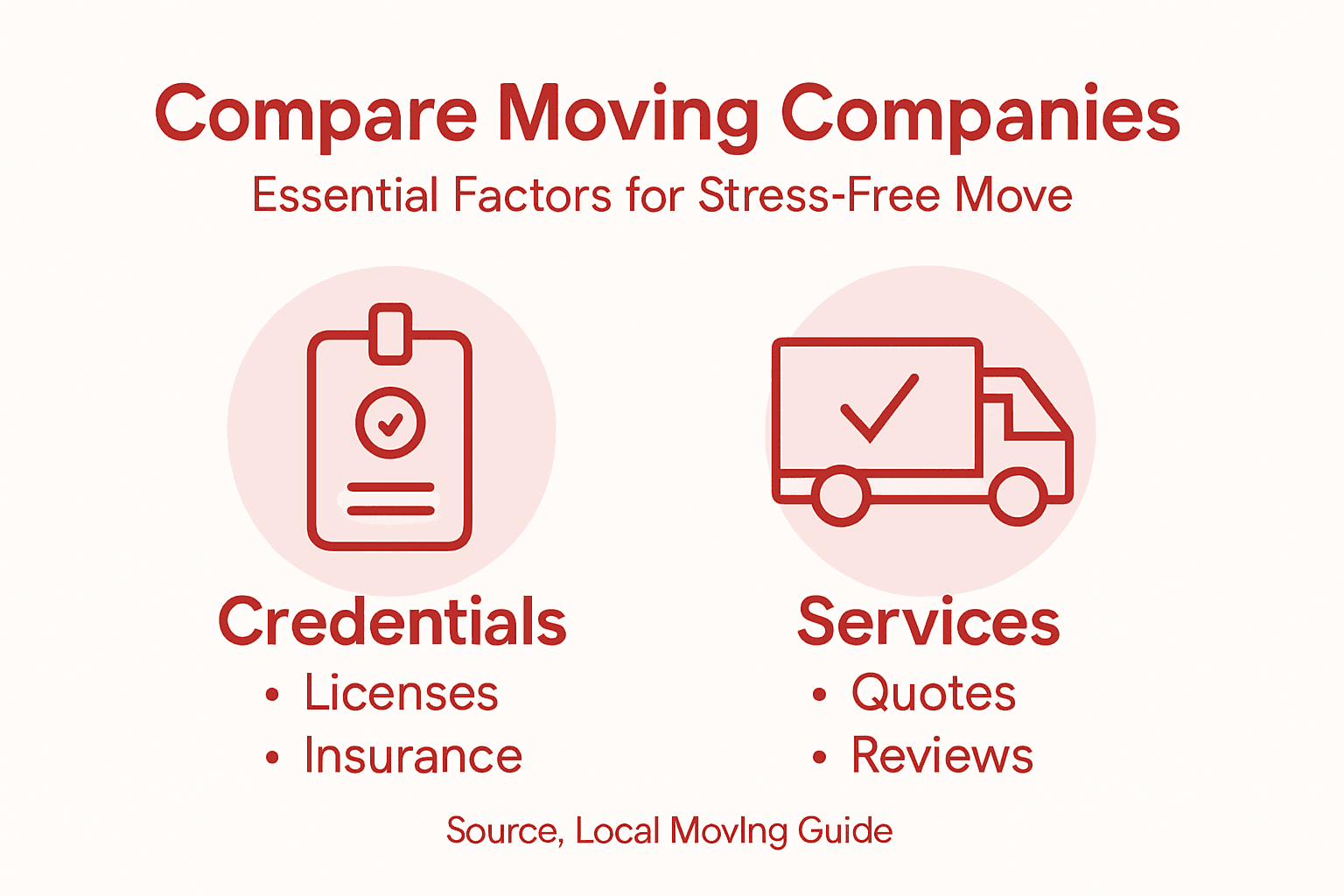
Pro tip: Create a side-by-side spreadsheet comparing quotes, highlighting not just price but specific services, to make a more informed decision about which moving company truly offers the best value.
Step 5: Check References and Confirm Reliability
Validating a moving company’s reputation requires more than just a quick online search. You need a comprehensive approach to thoroughly assess their track record and ensure they can deliver the professional service you expect.
Evaluate moving company ratings carefully by examining multiple sources of feedback and performance history. Your investigation should cover:
- Official Better Business Bureau ratings
- Online customer reviews
- Social media feedback
- Personal and professional references
- Complaint resolution histories
- Request a list of recent customer references
- Contact at least three past clients
- Ask specific questions about their moving experience
- Verify the authenticity of provided references
A reputable moving company will be transparent and confident in providing references that demonstrate their reliability.
Dig deeper than surface-level reviews by seeking out detailed accounts of customer experiences. Pay special attention to how the company handles challenges, resolves disputes, and treats customers during stressful moving situations.
Pro tip: Create a standardized questionnaire when speaking with references to ensure you gather consistent, comparable information about the moving company’s performance.
Step 6: Finalize Your Choice and Schedule the Move
With all your research complete, you’re now ready to transform your moving plans from preparation to action. This crucial stage involves solidifying details and ensuring everything is set for a smooth transition to your new home.
Coordinate moving logistics carefully to guarantee a seamless experience. Your final steps should include:
- Confirming the exact moving date
- Reviewing the complete service agreement
- Discussing specific moving requirements
- Verifying insurance coverage
- Establishing clear communication channels
- Request a written contract
- Discuss and confirm all service details
- Clarify pricing and potential additional fees
- Establish a clear timeline for the move
A comprehensive, well-documented agreement protects both you and the moving company, preventing misunderstandings.
Prepare comprehensive documentation that outlines every aspect of your move. This includes detailed inventories, special handling instructions for fragile items, and specific delivery expectations.
Pro tip: Create a digital folder with all moving documents, including contracts, estimates, and communication records, to ensure you have quick access to critical information throughout the moving process.
Choose a Trusted Moving Partner for a Truly Stress-Free Move
Relocating can bring many challenges like finding the right company with proper licenses, clear pricing, and excellent customer reviews. If you want to avoid the common pitfalls of unexpected fees, poor communication, or unreliable service, it is essential to select a mover that understands your needs and respects your budget. At MoveWithBridges.com, we specialize in providing transparent quotes, licensed and insured services, and a family-owned legacy built on trust since 1919.
Our full-service moving solutions cover everything from residential to commercial moves across New Hampshire, Maine, and Massachusetts. If you are ready to simplify your relocation with a dedicated team that values careful planning, clear estimates, and personalized support, start your journey with a trusted local mover.

Get your complimentary moving quote today at Get a Quote and experience the peace of mind offered by a company recognized as the “Best of Seacoast” and “Best Mover in NH.” Trust in transparency, reliability, and decades of expertise to make your move as smooth as possible. Don’t wait until last minute—secure your preferred moving date by requesting your customized quote now.
Frequently Asked Questions
How can I assess my moving needs before choosing a moving company?
To assess your moving needs, create an inventory of your belongings, considering the volume, weight, and any special handling requirements for fragile items. Determine the distance of your move and whether you require additional services like packing or storage to ensure you choose a company that fits your specific requirements.
What should I include in my moving budget when hiring a moving company?
Your moving budget should include base rates from moving companies, the cost of packing materials, insurance coverage, and potential additional service fees. Set aside an extra 10-15% of your total budget as a contingency for unexpected expenses to help manage costs effectively.
How can I effectively research and compare local moving companies?
Research local moving companies by checking verified ratings, reading customer reviews, and confirming licensing and insurance. Create a spreadsheet to track important details like quotes and service offerings, helping you make informed comparisons across multiple companies.
What information should I verify before hiring a moving company?
Before hiring, verify the company’s federal and state licenses, insurance coverage, and complaint histories. Review their track record for handling moves similar to yours to ensure they are a legitimate and qualified mover.
How can I ensure transparency in moving quotes and avoid hidden fees?
To ensure transparency, request detailed written quotes that break down all potential charges and service inclusions. Compare at least three written estimates, asking about any extra fees to avoid surprises during the moving process.
What steps should I take to finalize my choice of a moving company?
To finalize your choice, confirm the moving date, review the service agreement, and discuss specific requirements with the company. Ensure all details are documented in a written contract to avoid misunderstandings and protect your interests.