
TL;DR:
- Moving is one of the most stressful life events but can be made easier with proper planning and organization. Preparing early with essential supplies, key documents, and a first-night kit helps reduce last-minute chaos, while a room-by-room packing strategy ensures efficiency and clarity during unloading. Clear paperwork, delegation, and trusting experienced movers are crucial to minimizing emotional stress and ensuring a smooth transition into your new space.
Moving is consistently ranked among the most stressful life events for families and business owners alike. Whether you’re relocating a three-bedroom home in Portsmouth or shifting your small business from Portland to Manchester, the sheer number of moving parts can feel overwhelming fast. The good news is that stress usually comes from uncertainty, not from the move itself. With a reliable checklist, the right documents, and a clear process, you can take control from day one and arrive at your new space feeling organized and confident rather than exhausted.
Table of Contents
- What you need before moving day
- Step-by-step: A proven workflow for a smooth move
- Paperwork, protection, and what not to overlook
- Essential tips to keep moving day stress-free
- What most moving guides miss: Emotional and practical triggers of stress
- Ready to move without the stress?
- Frequently asked questions
Key Takeaways
| Point | Details |
|---|---|
| Preparation is key | Planning early and using a room-by-room checklist makes moving day smooth and predictable. |
| Legal paperwork matters | Signing a bill of lading and confirming valuation coverage prevent costly mistakes and disputes. |
| Essentials reduce chaos | Having a first-night essentials kit prevents last-minute stress and helps you settle in fast. |
| Delegation lowers anxiety | Assigning roles and considering professionals can take a load off your mind and your hands. |
What you need before moving day
Now that we’ve framed the need for a reliable plan, let’s list exactly what you need on hand before moving day arrives.
Preparation is where smooth moves are made or broken. Most people focus on the physical labor of packing and loading, but the real work starts well before the truck shows up. Having the right supplies, the right documents, and the right mindset in place weeks ahead will save you from the frantic last-minute scrambles that cause most moving day headaches.
Essential supplies to gather early:
- Sturdy moving boxes in varied sizes
- Heavy-duty packing tape and a tape gun
- Bubble wrap, packing paper, and foam padding
- Permanent markers and color-coded labels
- Moving blankets and furniture pads
- A dedicated paperwork folder or binder
Beyond physical supplies, you need to gather your key documents well in advance. Your moving checklist should include a bill of lading, your chosen valuation coverage documentation, a detailed home inventory list, and any lease or purchase agreements relevant to your new address.
One of the smartest and most underrated preparations you can make is your first-night essentials kit. This is a clearly labeled box or bag packed separately from everything else, set aside so it’s the last thing loaded and first thing unloaded. According to expert moving advice, a phased checklist is essential for predictability and reducing stress, and packing essentials for the first 24 to 48 hours is a must.
First-night kit should include:
- One or two changes of clothes per person
- Toiletries (toothbrush, soap, toilet paper)
- Phone chargers and power banks
- Medications and a basic first-aid kit
- Snacks, paper plates, and bottled water
- Bedding or at least a sleeping bag per person
- Copies of your most important documents
Finally, the right mindset matters. Expect that something will go slightly off-schedule. A small delay or a misplaced box is normal. When you mentally build in that buffer, you stop catastrophizing minor hiccups and stay focused on the bigger picture.
Pro Tip: Keep all paperwork, including your inventory list, bill of lading, and valuation documents, in one clearly labeled folder that stays with you personally throughout the move. Never put it in a box that gets loaded onto the truck.
| Supply category | Why you need it | When to gather it |
|---|---|---|
| Boxes and tape | Core packing materials | 4 to 6 weeks before move |
| Color-coded labels | Speeds up unloading by room | 3 to 4 weeks before move |
| Moving blankets | Protects furniture surfaces | 2 to 3 weeks before move |
| Paperwork folder | Keeps documents safe and accessible | Immediately |
| First-night kit | Reduces first-day chaos | 1 week before move |
Step-by-step: A proven workflow for a smooth move
With your essentials and documents ready, you’re equipped to follow the next vital steps for a truly stress-free process.
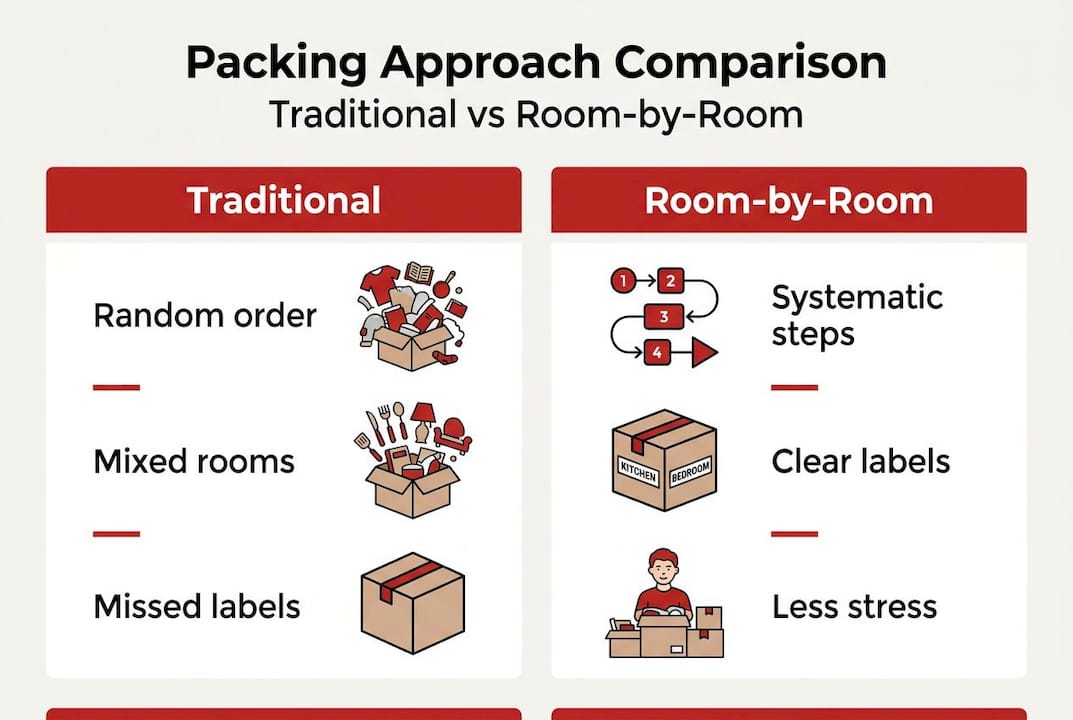
A random, reactionary approach to packing almost always leads to chaos. Rooms get mixed together, labels get missed, and by the time you’re unloading, no one knows which box goes where. A phased, room-by-room method solves this completely. As moving professionals explain, a phased checklist and room-by-room strategy prevent last-minute chaos. Here’s how to apply it in six clear steps.
1. Plan your timeline early Start eight weeks out if possible. Note your move date, confirm your mover, and work backwards to assign tasks to specific weeks. Moving in New England during summer peak season means movers’ calendars fill up fast, so booking early is critical.
2. Assign tasks to people Don’t try to do everything yourself. Give each family member or employee a clear responsibility. One person handles electronics, another handles the kitchen, another manages documents. For small businesses, assign a point person to manage the movers and another to handle utilities and address changes.
3. Tackle one room at a time Start with rooms you use least, like a guest room, storage room, or basement. Finish one room completely before moving to the next. This gives you visible progress and keeps the rest of your home functional as long as possible.
4. Label every box carefully Write the destination room and a brief contents description on at least two sides of every box. Don’t just write “kitchen.” Write “kitchen: coffee maker, dish towels, spatulas.” This makes unpacking faster and helps you prioritize which boxes to open first.
5. Set your essentials aside Your first-night kit and all important documents should be physically separated from the main load. Keep them in your personal vehicle if possible.
6. Confirm all details the day before Call your moving company to verify arrival time, entry access to your new property, and any special instructions. Review your expert packing steps one final time and check your packing services arrangement if you’ve hired professional packers.
| Approach | Traditional | Room-by-room |
|---|---|---|
| Packing order | Random, as time allows | Systematic, least-used rooms first |
| Box labeling | General or skipped | Detailed room and contents |
| Unloading speed | Slow, lots of sorting | Fast, boxes go directly to rooms |
| Stress level | High, constant confusion | Low, clear expectations at every step |
| Family involvement | Usually one person scrambles | Roles assigned, shared responsibility |
Pro Tip: Assign a different color of label or tape to each room. Blue for the master bedroom, green for the kitchen, red for the living room. When movers are unloading, anyone can direct boxes instantly without reading every label.
Paperwork, protection, and what not to overlook
With your workflow in motion, it’s time to verify that essential paperwork and protections are in place for true peace of mind.
Most moving disputes and post-move frustrations trace back to one source: missing or misunderstood paperwork. Understanding what documents you need and why they matter can save you real money and significant stress if something goes wrong.
The bill of lading is the most important document in any professional move. It serves as your legal contract with the moving company, a receipt of your belongings, and a record of the terms agreed upon. According to FMCSA regulations, a bill of lading must be issued and signed before loading, and it contains the contract terms, valuation coverage, and inventory evidence. Never allow loading to begin without signing this document and keeping a copy for yourself.
Valuation coverage is another area where people get caught off guard. Many customers assume their belongings are fully insured through the moving company, but standard carrier liability (called “released value”) only covers about 60 cents per pound per item. Full value protection is a much stronger option and requires you to formally select and confirm it. As valuation experts note, the number one avoidable dispute source is unclear valuation and coverage options, and you should always confirm your chosen coverage in writing.
Your inventory list is the third critical document. A detailed, signed inventory created before loading gives you a clear record of every item’s condition. If something arrives damaged or doesn’t arrive at all, your inventory list and the bill of lading together provide the evidence needed to file a claim.

When choosing a moving company, always ask directly about their valuation and claims process before signing anything.
Three documents you must not overlook:
- Bill of lading: Must be signed by both parties before loading begins; keep your copy on your person
- Valuation coverage confirmation: Written proof of whichever coverage level you selected, not just a verbal agreement
- Inventory checklist with condition notes: Signed by both you and the mover at pickup and again at delivery
“The number one avoidable dispute source is unclear valuation and coverage options. Always confirm the chosen coverage in writing.” — Moving industry guidance on valuation best practices
Essential tips to keep moving day stress-free
Armed with paperwork and a structured plan, the final stage is setting yourself up for a stress-free experience on moving day itself.
Moving day arrives faster than most people expect. Even with weeks of preparation, the day itself can feel chaotic if you haven’t thought through the human side of the operation. Logistics matter, but so does knowing who is responsible for what when the truck pulls up.
Packing an organized essentials kit for the first 24 to 48 hours reduces first-day chaos significantly. Have that kit loaded into your personal vehicle or clearly set aside so it’s never accidentally loaded onto the truck.
Moving day action checklist:
- Confirm mover arrival time the evening before and again the morning of
- Have a designated person meet and brief the movers at the door
- Assign someone to supervise children and pets in a separate, secure area
- Walk through the home with the lead mover before loading begins
- Do a final walkthrough of every room, closet, and cabinet before the truck leaves
- Photograph the home at both ends of the move for your records
Build buffer time into your expectations. New England weather, traffic on I-95, elevator wait times in apartment buildings, these variables can and do add time to the process. A one-hour delay is not a crisis if you’ve planned for it. Learn more about how stress-free moves work when professionals manage the logistics, and explore moving storage solutions if your timeline requires a gap between move-out and move-in.
Pro Tip: Make a simple moving day reference card with three to five key contacts and their phone numbers (lead mover, property manager at new address, utility contacts), plus the confirmed arrival times for each party. Keep it in your pocket all day.
What most moving guides miss: Emotional and practical triggers of stress
Now that you have all the actionable steps, let’s examine why so many “stress-free” guides still leave people feeling overwhelmed, and what actually makes the difference.
Most moving guides focus entirely on logistics. Pack these boxes. Label those rooms. Call this company. And while those steps are genuinely useful, they miss something fundamental: moving stress is primarily emotional, not physical.
The real triggers are uncertainty, loss of control, and last-minute surprises. When you don’t know what’s happening next, when you feel like things are slipping out of your hands, that’s when anxiety spikes. A detailed checklist doesn’t just organize your belongings. It gives your brain something concrete to hold onto. Visible order creates emotional calm, and that’s not a small thing.
Delegation is another factor that most guides underestimate. Many families and small business owners try to manage every detail personally because they’re afraid something will go wrong if they hand it off. The truth is the opposite. Clearly assigning roles to family members, employees, or professional movers actually removes a significant source of stress. You can’t be everywhere at once, and trying to be is exhausting.
This is one of the reasons why full-service moving, where professional packers reduce stress and protect your belongings, is so much more than a time-saving convenience. It’s an emotional relief. When you trust experienced people to handle specific parts of the process, you free up your mental bandwidth for the decisions only you can make.
And finally, there’s this: the true measure of a successful move isn’t whether everything was loaded and unloaded on time. It’s whether you felt settled, safe, and at ease that first night in your new space. If you can sit down at the end of moving day feeling organized and in control, even with a few boxes still to unpack, that’s a genuinely successful move. That’s what the preparation is really for.
Ready to move without the stress?
If you want expert hands to handle everything and truly let go of the stress, here’s how Bridges Bros. Movers can help.
Bridges Bros. Movers has been serving families and businesses across New Hampshire, Maine, and Massachusetts since 1919. Our team handles everything from careful packing and loading to storage and unpacking, so you can stay focused on settling in rather than managing logistics. Explore our full range of all moving services to find the right fit for your situation. If you’re still gathering materials and getting organized, our packing supply tips are a great place to start. As a family-owned, award-winning company with deep roots in the Seacoast community, we’re here to make sure your next move feels less like an ordeal and more like a fresh start.
Frequently asked questions
What is a first-night essentials kit for moving?
It’s a bag or box packed with everything you need for the first 24 to 48 hours in your new home, including clothes, toiletries, snacks, medications, and important documents, so you never have to dig through boxes at the end of a long day. Experts consistently recommend this as one of the most effective ways to prevent first-day stress.
Do I need to sign any legal paperwork before moving my belongings?
Yes. By law, a bill of lading must be prepared, issued, and signed by both you and the mover before they load your belongings onto the truck.
How can I avoid moving disputes over lost or damaged items?
Always confirm your valuation coverage in writing before the move begins, and make sure your complete inventory list is signed and attached to your contract at both pickup and delivery.
Is it worth using a professional packing service?
Professional packers save you meaningful time, lower your stress significantly, and protect your belongings with the right materials and techniques, making them a worthwhile investment for most families and businesses.
Recommended
- Moving storage solutions: Benefits for stress-free relocations
- How to Choose a Moving Company for a Stress-Free Move
- Packing tips for moving: expert steps for a stress-free move
- Why Use Storage During Moving: Stress-Free Solutions
- 7 Ways to Conquer Moving House Stress in 2025 | Emmanuel Transport Removalists Perth