
Planning an interstate move often feels overwhelming, with dozens of tasks competing for your attention and tight deadlines adding pressure. The logistics of coordinating movers, managing costs, and ensuring nothing gets left behind can quickly become stressful for families and individuals alike. This comprehensive guide breaks down the entire process into manageable steps, covering everything from early preparation and budgeting to moving day logistics and settling into your new home. By following a structured approach, you can transform a complex relocation into a smooth, organized experience that minimizes stress and maximizes success.
Table of Contents
- Key takeaways
- Preparing your move: essential steps before moving day
- Estimating your moving costs and budgeting wisely
- Managing logistics and essential tasks on moving day
- Completing your interstate move: settling in and final checklist
- How Bridges Bros. movers can simplify your interstate move
- FAQ
Key Takeaways
| Point | Details |
|---|---|
| Plan Early Eight Weeks | Begin preparation at least eight weeks in advance using a detailed weekly checklist to prevent last minute stress. |
| Verify Licenses and Quotes | Research and verify each mover license and insurance, and obtain written estimates from at least three companies to compare costs. |
| Budget for Weight and Distance | Create a realistic budget that accounts for weight, distance, and potential extra fees to avoid cost surprises. |
| Update Addresses Early | Start updating addresses and transferring records early so mail, utilities, and school or work documents stay on track. |
| Include Pets and Family | Include pets and family considerations to keep the move smoother and reduce disruptions. |
Preparing your move: essential steps before moving day
Successful interstate moves begin with thorough preparation months before the actual moving date. Rushing through these foundational steps creates unnecessary stress and increases the risk of forgotten tasks or last-minute complications. A strategic timeline gives you control over the process and ensures nothing falls through the cracks.
Begin planning 8 to 12 weeks in advance to give yourself adequate time for every phase of the move. This timeframe allows you to research options thoroughly, secure the best rates, and handle unexpected issues without panic. During peak moving season from May through September, even earlier planning becomes critical as quality movers book up quickly.
Create a comprehensive interstate moving checklist that breaks down tasks by week and priority level. Your checklist should include major categories like decluttering, mover research, booking confirmations, packing schedules, and administrative updates. Digital tools and apps can help you track progress and set reminders, but a simple spreadsheet works equally well if you prefer traditional methods.
Decluttering before you pack saves money and simplifies your new home setup. Moving costs typically depend on weight and volume, so reducing your belongings directly lowers your expenses. Go room by room and sort items into keep, donate, sell, or discard categories. Host a garage sale or list items online to offset moving costs while clearing out unnecessary possessions.
Researching and verifying movers requires careful attention to licensing and insurance credentials. Check each company’s USDOT number through the Federal Motor Carrier Safety Administration database to confirm their legal status for interstate transport. Read recent customer reviews on multiple platforms to identify patterns in service quality and reliability. Request detailed written estimates from at least three companies to compare pricing structures and service offerings.
Booking your moving company early secures your preferred date and often results in better pricing. Companies offer lower rates during off-peak periods like mid-month weekdays or the fall and winter months. Confirm all details in writing, including pickup and delivery windows, insurance coverage, and any additional fees that might apply. Review the contract carefully before signing to understand your rights and the company’s responsibilities.
Start administrative tasks like address updates, school transfers, and utility arrangements as soon as your moving date is confirmed. The USPS recommends submitting address changes at least two weeks before your move to ensure mail forwarding begins on time. Contact your current and future utility providers to schedule disconnections and connections that align with your moving timeline.
Pro Tip: Schedule your move during off-peak times like mid-month weekdays or October through April to secure better rates and more flexible scheduling options from quality movers.
Estimating your moving costs and budgeting wisely
Understanding the factors that drive moving costs helps you create a realistic budget and avoid financial surprises. Interstate moves involve more variables than local relocations, and each element affects your final price. Accurate cost estimation prevents budget overruns and allows you to make informed decisions about service levels.
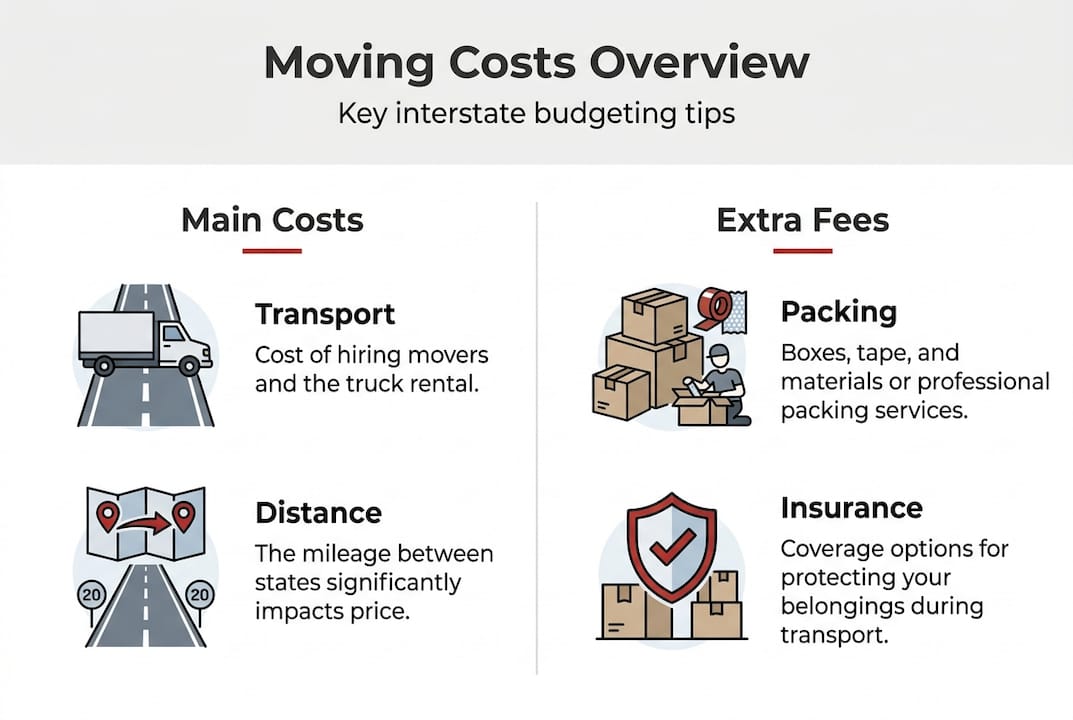
Moving costs primarily depend on the total weight of your shipment and the distance between your current and new homes. Professional movers calculate charges based on the pounds they transport multiplied by the mileage covered. A typical three-bedroom household weighs between 8,000 and 10,000 pounds, though this varies significantly based on furniture density and belongings.
Full-service long-distance moves range from $5,000 to $8,000 for a three-bedroom home traveling over 1,000 miles, with costs scaling up or down based on specific circumstances. Smaller apartments or studio moves might cost $2,000 to $3,500, while larger four or five-bedroom homes can exceed $10,000 for cross-country distances. These estimates include basic loading, transport, and unloading services.
| Household size | Estimated weight | 1,000-mile cost | 2,000-mile cost |
|---|---|---|---|
| Studio/1 bedroom | 2,000-3,500 lbs | $2,000-$3,500 | $3,500-$5,000 |
| 2 bedrooms | 5,000-7,000 lbs | $3,500-$5,500 | $5,500-$7,500 |
| 3 bedrooms | 8,000-10,000 lbs | $5,000-$8,000 | $8,000-$11,000 |
| 4+ bedrooms | 12,000+ lbs | $8,000-$12,000 | $12,000-$16,000 |
Additional costs beyond basic transport add up quickly and deserve careful consideration in your budget. Pet certificates and veterinary health checks typically cost $50 to $200 per animal, while vehicle shipping adds $500 to $1,500 depending on distance and vehicle type. Storage fees apply if you need temporary warehousing between move-out and move-in dates, ranging from $100 to $300 monthly for a standard 10-by-10 unit. Specialty item handling for pianos, antiques, or artwork incurs extra charges due to the additional care and insurance required.
Comparing full-service versus DIY or self-service options reveals distinct tradeoffs between convenience and cost. Full-service movers handle everything from packing to unpacking, providing insurance coverage and professional expertise that protects your belongings. This convenience costs more but eliminates physical labor and reduces damage risk. DIY moves using rental trucks save money on labor but require you to handle all packing, loading, driving, and unloading yourself, increasing injury risk and time investment.
Adding a 10 to 15 percent contingency buffer to your estimated budget protects against unexpected expenses like additional packing materials, last-minute storage needs, or unforeseen delays. This cushion provides financial flexibility without forcing you to make rushed decisions or compromise on important services. Track all moving-related expenses in a dedicated spreadsheet or app to maintain visibility into your spending.
Pro Tip: Booking movers at least six to eight weeks in advance often secures early-bird discounts and guarantees availability during your preferred timeframe, especially during peak season.
Managing logistics and essential tasks on moving day
Executing your move efficiently requires coordinating multiple moving parts while maintaining flexibility for unexpected situations. Moving day logistics extend beyond simply loading boxes onto a truck. Proper planning for transit times, valuable items, and family needs ensures everyone arrives safely and comfortably at your new home.
Transit typically takes 3 to 14 days depending on distance and route complexity, with cross-country moves requiring longer timeframes than regional relocations. Movers provide estimated delivery windows rather than exact dates due to variables like weather, traffic, and other customer stops along the route. Understanding this flexibility helps you plan temporary accommodations or flexible work arrangements if needed.
Keeping valuables and important documents with you during the move prevents loss and provides immediate access when needed. Pack a separate bag or box containing:
- Financial documents like bank statements, tax records, and insurance policies
- Jewelry, collectibles, and sentimental items that cannot be replaced
- Medications and medical records for all family members
- Electronics like laptops, tablets, and phones with their chargers
- Legal documents including passports, birth certificates, and property deeds
Coordinating care and documentation for pets and children requires advance planning to minimize disruption and stress. Obtain current health certificates from your veterinarian at least two weeks before moving, as many states require proof of vaccinations for animals crossing state lines. Research pet-friendly hotels along your route if you are driving, and pack familiar toys, bedding, and food to maintain routine. For children, involve them in age-appropriate planning tasks and maintain open communication about the move to address concerns and build excitement.
Planning frequent stops and flexible timing during family travel reduces stress and accommodates everyone’s needs. Schedule breaks every two to three hours for bathroom visits, meals, and stretching. Pack snacks, entertainment, and comfort items to keep children occupied during long drives. If flying to your new home, book direct flights when possible and allow extra time at airports for security and potential delays.
Unpacking kids’ rooms first upon arrival helps children settle quickly and establish a sense of normalcy in the new home. Setting up familiar spaces with their belongings, decorations, and routines provides comfort during a major transition. Prioritize assembling beds and unpacking essential clothing and toys before tackling other rooms. This approach helps the entire family adjust more smoothly while maintaining focus on immediate needs.
Completing your interstate move: settling in and final checklist
The work does not end when the moving truck pulls away from your new home. Post-move tasks ensure a complete transition and help your family integrate into the new community. Systematic verification and administrative updates prevent future complications and establish your household in its new location.
Confirming all items and shipments arrived intact protects your interests and documents any damage for insurance claims. Conduct a thorough inventory check as movers unload, comparing delivered items against your original inventory list. Inspect furniture and boxes for visible damage before signing the delivery receipt. Note any missing or damaged items immediately and photograph evidence for your records. Contact your moving company within 24 hours to report problems and initiate the claims process if necessary.
Promptly updating your address with USPS, banks, utilities, DMV, and voter registration prevents service interruptions and ensures you receive important mail. Submit your USPS address change online or at your local post office to activate mail forwarding. Contact financial institutions to update billing addresses for bank accounts, credit cards, and investment accounts. Register your vehicle and obtain a new driver’s license within your new state’s required timeframe, typically 30 to 90 days. Update your voter registration to participate in local elections and receive relevant civic information.
Transferring important records such as school and medical files requires coordination with institutions in both locations. Request official transcripts from your children’s previous schools and submit them to new schools along with immunization records and any special education documentation. Contact your healthcare providers to transfer medical records to new doctors, dentists, and specialists in your area. Refill prescriptions before moving or arrange transfers to pharmacies near your new home to avoid gaps in medication access.
Settling children and family members with familiar routines helps everyone adjust to the new environment. Maintain consistent bedtimes, meal schedules, and family activities even amid unpacking chaos. Explore your new neighborhood together to locate parks, libraries, grocery stores, and other essential services. Introduce yourselves to neighbors and research local community groups or activities that match your family’s interests. These connections build a support network and create a sense of belonging in your new location.
Pro Tip: Prioritize unpacking essential rooms like bedrooms, bathrooms, and the kitchen first to establish functional living spaces, then tackle remaining areas systematically to avoid feeling overwhelmed.
How Bridges Bros. movers can simplify your interstate move
Navigating an interstate move becomes significantly easier when you partner with experienced professionals who understand the complexities involved. After learning the detailed steps required for a successful relocation, many families realize the value of expert assistance in reducing stress and protecting their belongings.

Professional moving services offer insured, convenient full-service options that handle every aspect of your relocation from initial packing through final placement in your new home. Experienced movers bring specialized equipment, proven techniques, and comprehensive insurance coverage that protects your possessions throughout the journey. Access expert packing materials and supplies specifically designed to protect belongings during long-distance transport, from reinforced boxes to custom crating for fragile items. Bridges Bros. offers tailored solutions for interstate relocations backed by over a century of trusted service across New Hampshire, Maine, and Massachusetts. Using professionals reduces the risk of damage and stress while freeing you to focus on other important aspects of your transition.
FAQ
What is the best time frame to start planning an interstate move?
Start planning 8 to 12 weeks in advance to ensure all details are covered, from researching movers to decluttering and handling administrative tasks. This timeline provides adequate buffer for unexpected issues and allows you to secure better rates and availability. Booking early is especially important during peak moving seasons from May through September when quality movers fill their schedules quickly. Earlier planning also reduces stress by spreading tasks over manageable timeframes rather than cramming everything into the final weeks. Use an interstate moving checklist to track progress and ensure nothing gets overlooked.
How do I choose the right moving company for a long-distance move?
Verify USDOT numbers through the Federal Motor Carrier Safety Administration database to confirm each company’s legal authorization for interstate transport. Check insurance coverage details and read recent customer reviews across multiple platforms to identify service quality patterns. Obtain at least three written estimates before deciding, comparing not just prices but also services included, insurance options, and contract terms. Ask about experience with routes similar to yours and request references from recent long-distance customers. Choosing the right moving company requires balancing cost with reliability, insurance protection, and proven expertise in interstate relocations.
What should I do to prepare my family and pets for the move?
Involve kids in planning and packing age-appropriate tasks to help them feel included and reduce anxiety about the transition. Prepare pet paperwork including current health certificates and vaccination records at least two weeks before moving, as many states require documentation for animals crossing state lines. Schedule frequent breaks during travel every two to three hours for bathroom visits, meals, and stretching to keep everyone comfortable. Pack familiar items like favorite toys, bedding, and snacks to maintain routine and provide comfort during the journey. Research pet-friendly moving tips specific to your animals’ needs and temperaments for additional guidance.
How much should I budget for an interstate move?
Budget based on your household size, distance, and service level, with typical three-bedroom moves ranging from $5,000 to $8,000 for distances over 1,000 miles. Add 10 to 15 percent contingency buffer to cover unexpected expenses like additional packing materials, storage fees, or specialty item handling. Factor in extra costs for pet transport, vehicle shipping, temporary lodging, and utility deposits at your new home. Compare full-service versus self-service options to find the right balance between convenience and cost for your situation. Request detailed written estimates from multiple companies to understand exactly what services are included and identify potential hidden fees before committing.
What important tasks should I complete immediately after arriving at my new home?
Conduct a thorough inventory check as items are unloaded, comparing delivered belongings against your original list and documenting any damage with photographs. Update your address with USPS, banks, utilities, DMV, and voter registration within the first week to prevent service interruptions and ensure you receive important mail. Transfer school and medical records to new institutions promptly so children can start school without delays and family members can access healthcare services. Prioritize unpacking essential rooms like bedrooms and the kitchen to establish functional living spaces quickly. Prepare your new home by testing utilities, changing locks, and deep cleaning before fully unpacking to create a fresh, safe environment for your family.