
Planning a long-distance move from New Hampshire, Maine, or Massachusetts often begins with a flood of questions and financial worries. Families and small business owners know that the difference between a stressful move and a smooth transition often comes down to thoughtful preparation and trusted local support. By learning how factors like volume of items, timing, and service selection shape your expenses, you can create a smart plan and discover truly personalized, stress-reducing moving solutions.
Table of Contents
- Step 1: Assess Your Moving Timeline And Budget
- Step 2: Sort And Minimize Your Belongings
- Step 3: Choose And Book Your Moving Company
- Step 4: Organize Packing And Labeling Efficiently
- Step 5: Confirm Move Details And Finalize Preparations
Quick Summary
| Key Insight | Explanation |
|---|---|
| 1. Create a Detailed Budget | Outline all potential costs associated with your long-distance move to prevent financial surprises and facilitate better planning. |
| 2. Declutter Before Moving | Sort belongings into categories like keep, donate, and sell to minimize moving costs and streamline the relocation process. |
| 3. Research Moving Companies | Gather multiple quotes and assess factors like reputation and services to select a reliable moving company that fits your needs. |
| 4. Pack and Label Systematically | Use color-coded labels and organized packing strategies to ensure items are correctly categorized, minimizing confusion during the move. |
| 5. Confirm Logistics Before Moving Day | Double-check moving details and complete administrative tasks in advance to ensure a smooth transition and reduce last-minute issues. |
Step 1: Assess your moving timeline and budget
Moving long distances requires strategic financial planning and precise scheduling. Your goal in this crucial first step is to develop a comprehensive budget and realistic timeline that minimizes stress and unexpected expenses.
Start by understanding the major cost drivers for long-distance moves. These typically include the volume of items you’re transporting, distance traveled, specialty item shipping, and timing of your move. Creating a detailed budget helps prevent financial surprises and allows for smoother planning.
Key Budget Considerations:
- Total moving distance
- Number and type of items being moved
- Professional moving service costs
- Packing materials and supplies
- Travel expenses
- Potential storage fees
- Emergency financial buffer
Timeline Planning Strategies:
Here is a quick comparison of peak and off-peak moving seasons to help plan your timeline:
| Season | Cost Impact | Availability | Weather Concerns |
|---|---|---|---|
| Peak (summer months) | Higher prices | Limited slots | Hot, potential storms |
| Off-peak (fall/winter) | Lower prices | Flexible scheduling | Possible harsh weather |
- Determine your ideal moving date
- Research peak vs. off-peak moving seasons
- Book movers at least 6-8 weeks in advance
- Create a step-by-step preparation checklist
- Allow buffer time for unexpected complications
Accurate budgeting is the foundation of a stress-free moving experience. Take time to research and plan meticulously.
Pro tip: Set aside an additional 10-15% of your estimated moving budget for unexpected expenses to provide financial flexibility and peace of mind.
Step 2: Sort and minimize your belongings
Preparing for a long-distance move is the perfect opportunity to declutter your living spaces and streamline your possessions. This step is about making intentional decisions about what to keep, donate, sell, or discard, ultimately reducing your moving costs and simplifying your transition.

Start the sorting process systematically by breaking down your belongings into clear categories. This approach prevents overwhelm and helps you make more objective decisions about each item. Focus on one room or area at a time, creating distinct piles for different outcomes:
Sorting Categories:
- Keep: Essential items you’ll definitely need in your new home
- Donate: Good condition items that can benefit others
- Sell: Valuable items you no longer need
- Trash: Damaged or unusable items
- Storage: Sentimental items or seasonal belongings
Minimization Strategies:
Use this summary table to better understand the benefits of popular sorting outcomes when minimizing your belongings:
| Outcome | Financial Impact | Convenience Factor | Common Uses |
|---|---|---|---|
| Keep | No direct savings | No disruption | Essentials, daily use items |
| Donate | Tax deduction, goodwill | Free up space | Clothing, furniture |
| Sell | Earn extra cash | Requires added effort | Electronics, collectables |
| Discard | Reduces moving cost | Requires disposal | Damaged or broken items |
| Store | Increases storage fees | Seasonal access | Holidays, sentimental items |
- Ask yourself key questions for each item
- Consider when you last used the item
- Evaluate the item’s practical value
- Think about replacement cost vs. moving expense
- Be honest about emotional attachment
Decluttering is more than organizing – it’s a mindful process of understanding your true needs and letting go of unnecessary possessions.
Pro tip: Create a digital inventory of items you’re keeping, selling, or donating to track your progress and simplify insurance and moving documentation.
Step 3: Choose and book your moving company
Selecting the right moving company is critical for a smooth long-distance relocation. Understanding how to compare interstate moving companies will help you make an informed decision that balances cost, reliability, and service quality.
Begin by researching and gathering multiple quotes from reputable moving companies. Look beyond just the price and evaluate their comprehensive offerings, customer reviews, and professional credentials. Pay close attention to the following key selection criteria:
Essential Evaluation Factors:
- Company reputation and years in business
- Licensing and insurance coverage
- Detailed written estimates
- Range of available moving services
- Customer testimonials and online ratings
- Specialized experience with long-distance moves
Booking Process Steps:
- Request in-home or virtual moving estimates
- Compare detailed written quotes
- Verify company credentials and insurance
- Check references and online reviews
- Confirm availability for your preferred moving date
A thorough evaluation prevents last-minute complications and ensures a smoother moving experience.
Pro tip: Request binding estimates from at least three different moving companies to ensure you’re getting a competitive and accurate price for your long-distance move.
Step 4: Organize packing and labeling efficiently
Efficient packing is the backbone of a stress-free long-distance move. Applying systematic packing guidelines will help protect your belongings and streamline the entire moving process.
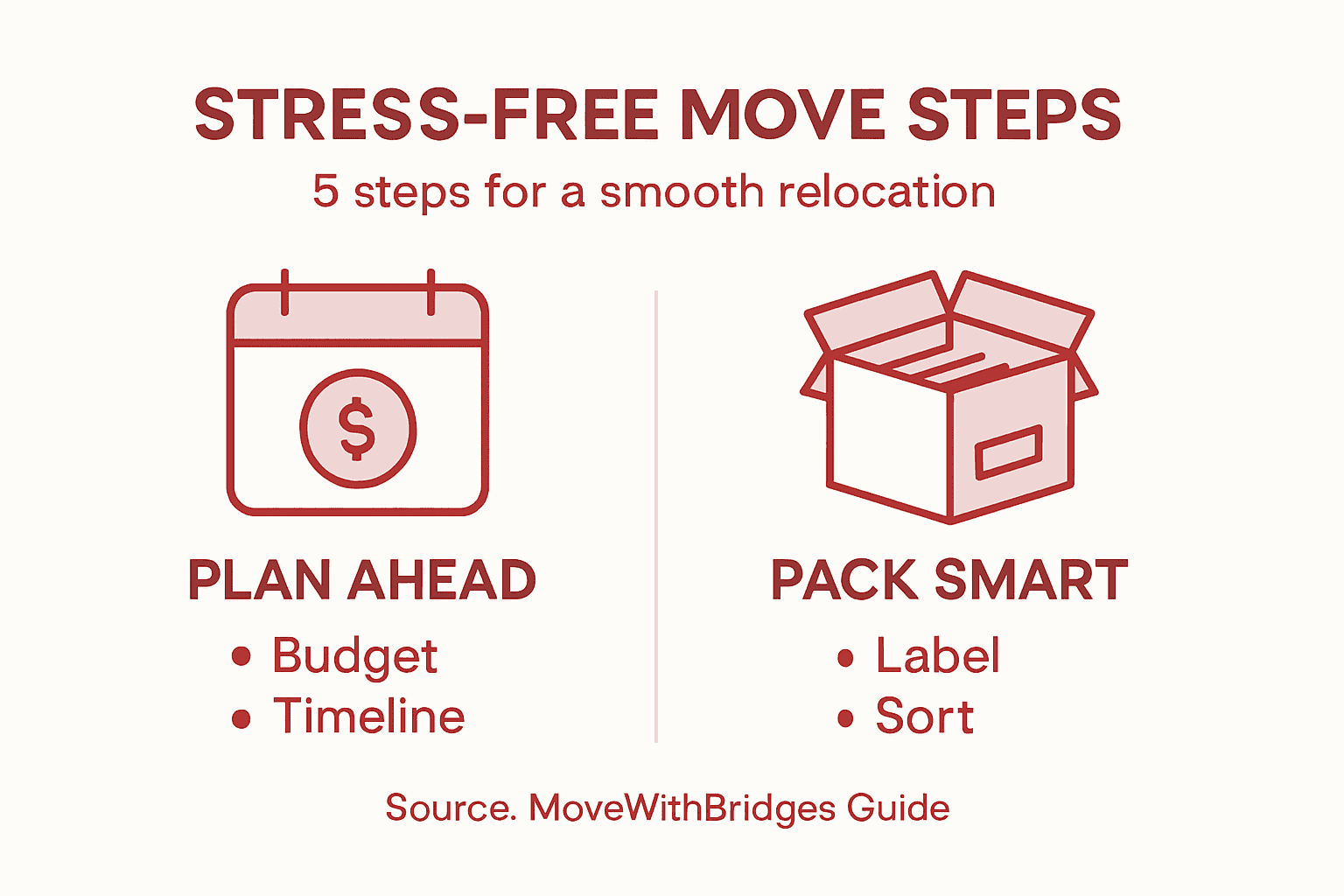
Start by gathering high-quality packing materials and creating a comprehensive labeling system. Approach packing strategically by room and prioritize your items based on frequency of use and fragility. Your goal is to create an organized, easily navigable system that minimizes confusion and potential damage during transit.
Packing Organization Strategies:
- Group items by room and usage frequency
- Use color-coded labels for different categories
- Pack rarely used items first
- Create a master inventory list
- Keep essential items easily accessible
- Pack heavy items in smaller boxes
Effective Labeling Techniques:
- Label each box with contents and destination room
- Mark boxes with handling instructions
- Create a number system for tracking
- Use fragile stickers for delicate items
- Keep a digital backup of your inventory
Proper organization transforms a potentially chaotic moving experience into a smooth, manageable process.
Pro tip: Take photos of electronic setups and valuable items before disassembling, which helps with reassembly and provides documentation for potential insurance claims.
Step 5: Confirm move details and finalize preparations
As your moving day approaches, it’s critical to systematically review your moving checklist and ensure every detail is carefully addressed. This final stage involves confirming logistics, managing administrative tasks, and preparing for a smooth transition to your new home.
Prioritize communication with your moving company and handle essential administrative notifications. Your preparation will determine how seamlessly your long-distance move unfolds, reducing potential last-minute complications and stress.
Key Confirmation Tasks:
- Verify exact moving date and time
- Confirm moving company contact details
- Double-check service agreement
- Review inventory of packed items
- Prepare payment and documentation
- Arrange final utility readings
Administrative Notification Checklist:
- Contact utility providers for disconnect/reconnect
- Update postal address
- Notify financial institutions
- Transfer medical records
- Update insurance information
- Inform schools and employers
Meticulous preparation transforms a potentially chaotic moving experience into a well-orchestrated transition.
Pro tip: Create a digital folder with all moving-related documents, screenshots, and correspondence to ensure you have instant access to critical information during your move.
Make Your Long Distance Move Stress-Free with MoveWithBridges
Preparing for a long distance move comes with many challenges like budgeting accurately, sorting and minimizing belongings, and carefully organizing every detail to avoid moving day chaos. If these steps feel overwhelming, you are not alone. Many people struggle with creating realistic timelines, choosing trustworthy movers, and managing all the logistics while keeping stress low. MoveWithBridges understands these pain points and offers personalized, full-service solutions tailored to your exact moving needs across New Hampshire, Maine, and Massachusetts.
With a trusted legacy since 1919 and accolades like Best of Seacoast and Best Mover in NH, MoveWithBridges takes the worry off your shoulders. Whether you need expert packing, secure storage, or seamless home cleaning, their family-owned team focuses on simplifying your journey. You can even start by getting a free detailed estimate through an online quote or scheduling an in-home or virtual consultation.
Stop stressing over your long distance move and start planning with confidence. Explore how their knowledgeable staff can help you create a customized moving plan that fits your budget and timeline. Request your personalized moving quote today by visiting Get a Quote and take the first important step toward a smooth, stress-free move.
Frequently Asked Questions
How can I assess my budget for a long-distance move?
Begin by identifying major cost drivers such as the distance, the number and type of items, and any specialty shipping needs. Create a detailed budget by estimating expenses in each category and consider setting aside an additional 10-15% for unexpected costs.
What timeline should I follow to prepare for a long-distance move?
Aim to start your preparations at least 8 weeks before your moving date. Research peak and off-peak seasons, book moving services in advance, and create a structured checklist to manage each phase of the moving process.
How do I efficiently sort my belongings before a long-distance move?
Systematically categorize your items into groups: Keep, Donate, Sell, Trash, and Store. Focus on one area at a time and ask yourself how frequently you use each item to facilitate intentional decision-making.
What factors should I consider when choosing a moving company?
Evaluate several companies based on their reputation, insurance coverage, and written estimates. Collect quotes from multiple providers and check customer reviews to ensure you select a reliable service for your long-distance relocation.
How can I pack and label my items for a long-distance move efficiently?
Organize your packing process by grouping items by room and usage frequency, and use color-coded labels for easy identification. Create a master inventory list and ensure that essential items are packed separately for easy access during the move.
What final preparations should I confirm before my moving day?
Verify the moving date and time with your moving company, and ensure all final utility readings are arranged. Prepare necessary documentation and communicate with service providers about changes in your address to guarantee a smooth transition.
Recommended
- Attention Realtors: It’s Time to Send Your Clients Packing in Exeter, NH | Bridges Bros. Movers
- How to Prepare Your New Home Before Moving In | Moving Tips
- The Ultimate Guide to Relocating During COVID-19 in Exeter, NH | Bridges Bros. Movers
- 1 in 10 Americans Prefer Jail Over Moving | Bridges Bros. Movers
- Free Cost of Living Calculator – Compare Net Salary & Rent Between Cities