
TL;DR:
- Proper moving day preparation begins weeks in advance by booking movers early and organizing logistics. Packing room by room with clear labels and an essentials box helps streamline the process and reduce stress. On moving day, a structured schedule involving final walk-throughs, pathway clearing, and supervision ensures a smooth and efficient move.
Moving day preparation is a multi-step process that begins weeks before the truck arrives, not the night before. Knowing how to prepare for moving day means booking movers early, packing room by room, organizing your logistics, and clearing the way for your crew. Families who plan ahead avoid the last-minute scramble that turns a manageable task into a chaotic one. This guide walks you through every stage, from the first task on your moving day checklist to the final walkthrough, so you arrive at your new home with everything intact and your stress level low.
How to prepare for moving day: essential tasks to start now
The single most important step in preparing for a move is booking your movers or rental truck as early as possible. Peak moving season runs from may through september, and movers’ calendars fill up fast during those months. Scheduling at least 8 weeks ahead gives you flexibility on timing and a wider choice of crews. If you are moving in New England, check the best time to book movers in your area before committing to a date.
Once your date is locked in, work through these tasks in order:
- Declutter before you pack. Moving fewer items saves time and money. Go room by room and decide what to donate, sell, or toss. Bridges Bros Movers has a helpful resource on whether to donate, toss, or move each item.
- Gather packing supplies early. Stock up on boxes in multiple sizes, packing tape, bubble wrap, packing paper, and labels before you start. Running out mid-pack wastes time.
- Set up utilities and internet at your new address. Contact your providers at least two to three weeks out. Arriving without power or internet adds unnecessary friction.
- Update your address. Notify the U.S. Postal Service, your bank, your employer, insurance providers, and subscription services. The USPS mail forwarding process takes a few days to activate.
- Assign tasks to helpers. If friends or family are pitching in, give each person a specific role in advance. Vague offers of help often result in confusion on the day itself.
- Confirm all logistics in writing. Reconfirm your mover’s arrival time, parking arrangements, and any building elevator reservations at least 48 hours before moving day.
Pro Tip: Set a recurring weekly calendar reminder starting six weeks out. Each week, tackle one room or one category of tasks. This keeps preparation steady without overwhelming your schedule.
How to pack for moving: techniques that save time and protect your belongings
Packing is where most moves succeed or fail. Avoiding last-minute packing prevents both physical injuries and damage to your belongings. Professional move manager Marty Stevens-Heebner recommends a week-by-week packing approach that reduces burnout and keeps your home functional until the final days. Start with storage areas, guest rooms, and seasonal items, then work toward the rooms you use daily.
Here are the core packing rules that experienced movers follow:
- Limit box weight to 40–50 lbs. A typical 3-bedroom home requires 60 to 80 boxes. Heavy items like books go in small boxes; light, bulky items like bedding go in large ones.
- Fill every box completely. Partially filled boxes collapse under the weight of stacked boxes in the truck. Fill gaps with towels, packing paper, or bubble wrap.
- Label boxes on at least two sides. Top-only labels become invisible once boxes are stacked. Side labels let movers read contents without moving anything.
- Use a color-coding system. Assign each room a color using colored tape or sticker dots. Color-coded boxes can cut unloading time by up to 50% because movers place boxes in the right room without stopping to read every label.
- Pack an essentials box last. This box travels with you, not on the truck. Include phone chargers, a change of clothes, toiletries, medications, snacks, and any documents you need immediately.
Pro Tip: Take a photo of the back of your TV and electronics before unplugging cables. You will thank yourself when it is time to reconnect everything at the new place.
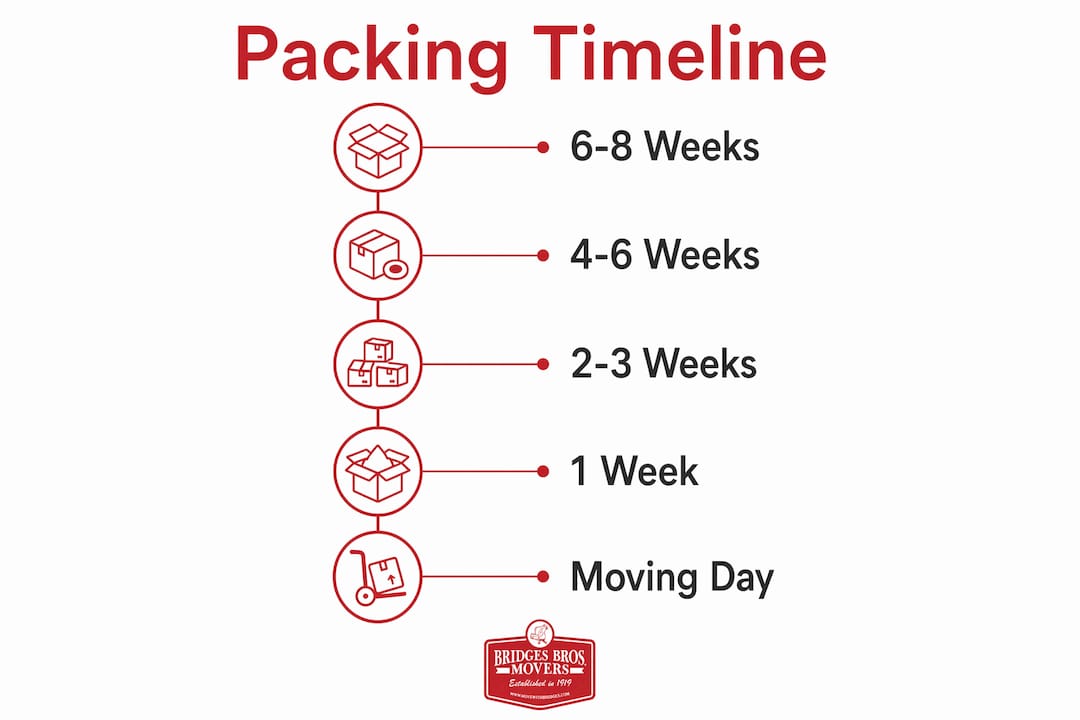
The table below summarizes the packing timeline that works best for most households.

| Weeks Before Moving Day | What to Pack |
|---|---|
| 6–8 weeks out | Storage areas, garage, seasonal items, books |
| 4–5 weeks out | Guest rooms, décor, non-essential kitchen items |
| 2–3 weeks out | Most clothing, linens, hobby supplies |
| 1 week out | Remaining rooms except daily-use items |
| Day before | Final kitchen items, bedding, essentials box |
For more detail on protecting large items, the guide on preparing furniture and appliances covers disassembly, wrapping, and appliance prep step by step.
What should you do on moving day itself?
Moving day runs best when you treat it like a project with a schedule, not a free-form event. A systematic approach to the day itself prevents the small oversights that cause big headaches later.
Follow these steps in order:
- Wake up early and eat a real breakfast. Physical labor on an empty stomach leads to fatigue and poor decisions. Give yourself at least 90 minutes before the crew arrives.
- Do a final walkthrough of every room. Check inside closets, cabinets, the attic, and the garage. Open every drawer. Moving companies cannot take responsibility for items left behind.
- Clear all pathways. Remove rugs, door mats, and any obstacles between rooms and the exit. This protects your floors and speeds up the loading process. The guide on preparing your home for movers covers this in detail.
- Arrange pets and children. A moving truck and an open front door create real safety risks. Have a trusted person take children and pets to another location for the day.
- Confirm parking and access. Make sure the truck has a clear path to your front door. If you live in a building, confirm elevator access and any time restrictions with management.
- Supervise loading actively. Stay present and direct movers on fragile items. Point out boxes marked “fragile” and confirm they are loaded last so they come off first.
- Photograph both homes. Taking photos before and after the move documents the condition of both properties. This protects you in disputes over security deposits or damage claims.
- Tip your movers and provide refreshments. Keeping cash on hand for tips is standard practice. Providing water, sports drinks, and snacks keeps energy levels up throughout the day and shows genuine appreciation.
“The best moving days are the ones where the homeowner is ready before the truck pulls up. Clear paths, labeled boxes, and a calm household make every hour count.” — Bridges Bros Movers crew lead
What common mistakes derail moving day?
Most moving day problems trace back to decisions made weeks earlier, not on the day itself. Recognizing these patterns in advance lets you sidestep them entirely.
- Booking movers too late. During peak season, waiting until four weeks out often means settling for a less experienced crew or an inconvenient time slot.
- Using inadequate packing materials. Thin boxes, insufficient tape, and no cushioning are the top causes of broken items. Invest in quality supplies from the start.
- Labeling only the top of boxes. This single habit causes significant slowdowns during unloading. Side labels take five extra seconds per box and save hours at the destination.
- Skipping the declutter step. Moving items you no longer need costs money in labor, truck space, and time. Every unnecessary box adds real cost to your move.
- Leaving important documents in boxes. Passports, birth certificates, financial records, and medical documents should travel with you personally, never on the truck.
- Neglecting to prepare your new home first. Arriving at a new address without utilities connected, clean surfaces, or a plan for where furniture goes creates immediate chaos.
Pro Tip: Create a “do not load” zone in one room or near the front door. Place your essentials box, important documents, and anything traveling in your personal vehicle in that spot. Brief your movers on it when they arrive.
Key takeaways
Thorough preparation for moving day requires early booking, phased packing, clear labeling, and a structured plan for the day itself.
| Point | Details |
|---|---|
| Book movers 8 weeks early | Peak season demand fills schedules fast; early booking gives you better timing options. |
| Pack room by room over 6–8 weeks | A phased approach reduces stress and keeps your home functional until the final days. |
| Label boxes on two sides with color codes | Side labels stay visible when stacked; color coding can cut unloading time by up to 50%. |
| Prepare an essentials box | Pack items you need immediately and carry it with you, not on the truck. |
| Photograph both homes on moving day | Photos document property condition and protect you against deposit or damage disputes. |
What i’ve learned after watching hundreds of moves
After years of working alongside families on moving day, the pattern I see most often is this: the stress is almost never about the move itself. It is about the two weeks before it. Families who pack a little each week, starting with the rooms they use least, arrive at moving day calm and ready. Families who wait until the final weekend arrive exhausted before the truck even shows up.
The color-coding tip is one I push hard because the results are immediate and visible. When every box going to the kitchen has a yellow stripe and every box going to the master bedroom has a blue one, movers work faster and ask fewer questions. That translates directly to fewer hours billed and less confusion at the destination.
The essentials box is the other habit that separates smooth moves from frustrating ones. I have seen families spend an hour digging through a truck to find a phone charger or a child’s medication. Packing those items last and keeping them with you costs nothing and solves a problem that comes up on nearly every move.
My honest advice: treat your moving day checklist as a project plan, not a to-do list. Assign dates to each task, not just intentions. If you are moving in New Hampshire, Maine, or Massachusetts, the packing tips guide from Bridges Bros Movers is a solid place to start building that plan.
— Patrick
How bridges bros movers makes moving day easier
Bridges Bros Movers has served families across New Hampshire, Maine, and Massachusetts since 1919, and the full range of professional moving services covers every stage of your move. From residential moves and specialty packing to junk removal and home cleaning, the team handles the details so you can focus on settling in. If packing feels like the biggest hurdle, the professional packing services team wraps, boxes, and labels your belongings with the care and speed that comes from decades of experience. Get a personalized quote today and find out how much easier moving day can be with the right crew behind you.
FAQ
How far in advance should i book movers?
Book your movers at least 8 weeks before your move date if you are relocating during peak season, which runs from may through september. Earlier booking gives you more scheduling flexibility and a better choice of crews.
How many boxes do i need for a 3-bedroom home?
A typical 3-bedroom home requires 60 to 80 boxes of mixed sizes. Use small boxes for heavy items like books and large boxes for light, bulky items like pillows and linens.
What goes in a moving day essentials box?
Your essentials box should include phone chargers, medications, a change of clothes, toiletries, snacks, and any documents you need on arrival. Carry this box with you rather than loading it onto the truck.
Should i tip my movers?
Yes. Tipping movers is standard practice and a genuine way to recognize hard physical work. Providing water and snacks throughout the day also helps maintain energy and goodwill across a long moving day.
What is the biggest packing mistake people make?
Labeling boxes only on the top is one of the most common and costly packing mistakes. Once boxes are stacked in a truck or storage unit, top labels are completely hidden. Label at least two sides of every box so contents are always visible.