
TL;DR:
- Proper preparation, including disassembling furniture and securing appliances, ensures a smooth and damage-free move. Gathering the right supplies, planning the loading process, and documenting all items can prevent costly mistakes and injuries. Hiring professional movers is recommended for heavy or complex items to guarantee safety and efficiency throughout the move.
Moving day has a way of turning small oversights into expensive problems. A scratched dining table, a dented refrigerator, or a pulled muscle from lifting a sofa the wrong way are not just frustrating. They can cost you real money and real time. Knowing how to prepare furniture and appliances for moving day is what separates a smooth move from a stressful one. This guide walks you through every stage, from gathering materials and disassembling furniture to loading the truck and unpacking at your new home, with practical steps that actually work.
Table of Contents
- Key Takeaways
- How to prepare furniture and appliances for moving day: start here
- How to disassemble furniture and pack it correctly
- Moving appliances safely: what you need to know
- Loading and transporting furniture and appliances
- After the move: unpacking and reassembly
- My honest take on moving day preparation
- Let Bridges Bros Movers take the weight off your move
- FAQ
Key Takeaways
| Point | Details |
|---|---|
| Start with the right supplies | Gather moving blankets, bubble wrap, stretch wrap, and furniture dollies before moving day arrives. |
| Disassemble furniture early | Remove legs, shelves, and drawers ahead of time to reduce weight and prevent damage in transit. |
| Clean before you move | Cleaning appliances and furniture while rooms are empty is far more effective than doing it after. |
| Use proper equipment | Appliance dollies and furniture sliders protect both your items and your floors during transport. |
| Document everything | Photograph all items before loading to support any damage claims and simplify reassembly. |
How to prepare furniture and appliances for moving day: start here
Before you wrap a single piece of furniture or disconnect a single appliance, you need a plan and the right materials. Showing up on moving day without preparation is one of the most common reasons moves go sideways.
Build your supply list first
Here is what you should have on hand before moving day:
- Moving blankets for padding large furniture surfaces and appliances
- Bubble wrap for fragile components like glass tabletops, mirrors, and electronics
- Stretch wrap (shrink wrap) to keep drawers and cabinet doors closed during transport
- Heavy-duty packing tape and scissors
- Furniture dollies and appliance dollies for safe transport of heavy items
- Furniture sliders to protect floors and reduce friction when moving heavy pieces
- Ratchet straps and tie-downs for securing items inside the moving truck
- Zip-lock bags and permanent markers for labeling hardware
Safety equipment matters too. Work gloves protect your hands from scrapes, and closed-toe shoes with good grip reduce the risk of foot injuries during loading.
Plan before you pack
Inventory your furniture and appliances by photographing each item before you start. This documents their pre-move condition and helps with any insurance claims if damage occurs. Measure your large furniture pieces, doorways, staircases, and hallways to confirm what can pass through without damage. If your sofa will not fit through the front door in one piece, you need to know that before the movers arrive.
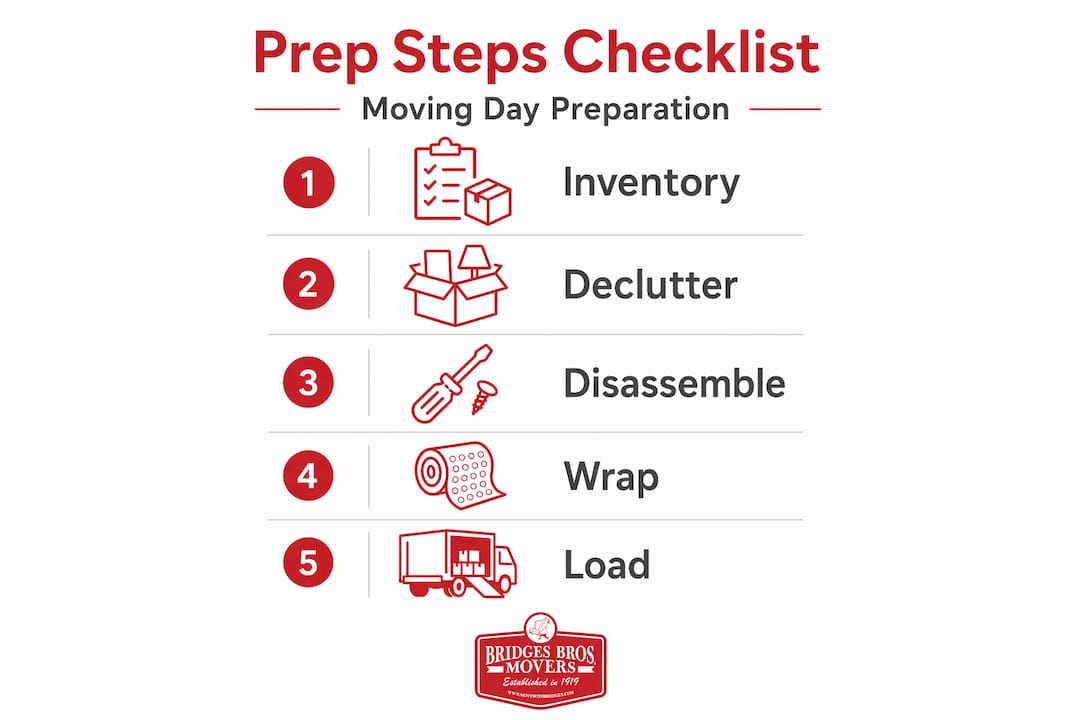
Pro Tip: If you have not already sorted what you are keeping, now is the time. Reviewing what to declutter before moving can dramatically reduce the number of items you need to pack and protect.
How to disassemble furniture and pack it correctly
Proper disassembly is one of the most effective things you can do to protect your furniture and reduce the risk of injury during the move.
Step-by-step furniture preparation
-
Remove all drawers and shelves. Emptying dresser drawers can cut the total weight of a piece by 100 pounds or more, which also protects cheaper flat-pack furniture from joint failure during lifting.
-
Detach removable legs, headboards, and arms. Disassembling furniture by removing these components reduces bulk, protects fragile parts from impact, and makes the piece far easier to carry through tight spaces.
-
Store all hardware immediately. Place screws, bolts, and small parts into labeled resealable plastic bags, then tape each bag directly to the piece it belongs to. This is the single best way to avoid losing a critical bolt on reassembly day.
-
Clean before you wrap. Dust and grime trapped under moving blankets can scratch finished surfaces during transit. Wipe down all furniture surfaces with a dry or lightly damp cloth before wrapping.
-
Wrap by material type. For wood furniture, use moving blankets secured with stretch wrap or rubber bands, not tape directly on the surface. For glass components like tabletops, layer bubble wrap generously and secure it with tape on the wrap itself, never on the glass. For upholstered pieces, stretch wrap works well to keep fabric clean, but avoid wrapping tightly in warm weather as it can trap moisture.
-
Secure moving parts without using tape on surfaces. Stretch wrap is best for keeping drawers and cabinet doors closed during transit. Direct tape application on wood or painted surfaces can peel finishes when removed.
Pro Tip: Take photos of complex furniture pieces like bookshelves or bed frames before disassembly. A quick photo of how everything fits together is faster than trying to read instructions later.
Moving appliances safely: what you need to know
Large appliances require more preparation than most people expect. Skipping even one step can lead to water damage, mechanical problems, or a back injury.
Here is how to handle the most common appliances:
-
Refrigerator and freezer: Empty and defrost at least 24 to 48 hours before moving day. Wipe down all interior surfaces to remove moisture and odors. Secure the doors with moving straps or stretch wrap so they do not swing open during transport. Cleaning appliance interiors while the unit is empty is significantly more effective than trying to clean it once it is back in place at your new home.
-
Washing machine: Disconnect the water supply hoses and drain any remaining water. Use shipping bolts if you still have them, since without these bolts the drum can move freely and sustain damage during transport. Keep hoses coiled and taped to the machine.
-
Dryer: Disconnect the power cord and, for gas models, have the gas line capped by a professional before moving day. Clean the lint trap and vent before loading.
-
Dishwasher: Disconnect the water supply and drain line. Remove the racks and wrap them separately to prevent them from rattling and scratching the interior.
When it comes to moving these items, use an appliance dolly for heavy loads. Professional no-tilt systems keep heavy items vertical, centering the weight between the dolly units and minimizing the risk of tipping. This matters most on ramps and stairs. Wrap appliances in moving blankets before loading them onto the dolly, and use ratchet straps to hold the blanket and secure the appliance to the dolly frame.
Pro Tip: For very large or heavy appliances like built-in refrigerators or double ovens, consider whether a professional mover is the right call. The cost of professional handling is almost always less than the cost of appliance repair or replacement.
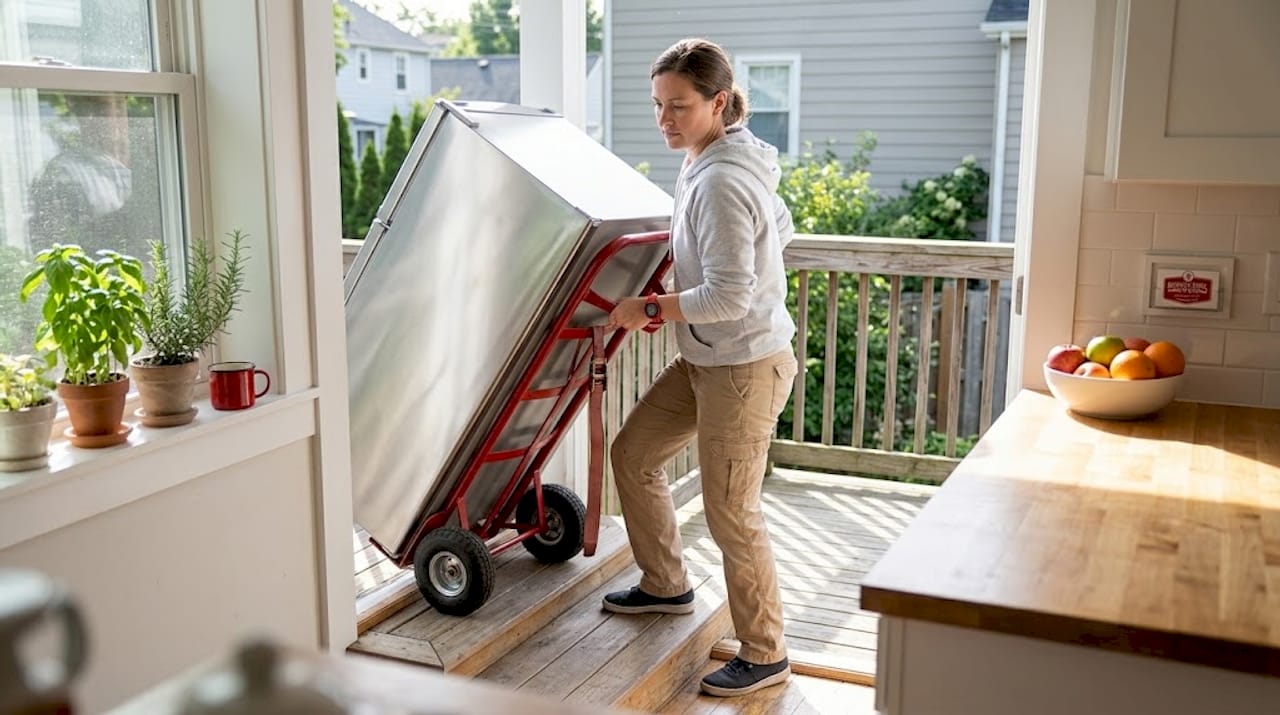
Back injuries are among the most common moving day problems. Keep your back straight, bend at the knees, and always have a second person available when moving refrigerators, washers, or dryers. The center of gravity principles used by professional movers are straightforward: keep the load as close to your body as possible and avoid twisting while carrying weight.
Loading and transporting furniture and appliances
How you load the truck matters as much as how you wrap the items. Poor loading strategy leads to shifting, scratching, and broken pieces during transit.
What to do before loading
- Clear and protect all pathways inside both homes. Lay down old cardboard or moving blankets on floors and use door frame protectors on high-traffic corners.
- Use furniture sliders under heavy pieces to protect hardwood and tile floors and reduce physical effort when sliding items to the door.
- Confirm all items are fully wrapped and secured before any lifting begins.
How to load the truck strategically
Good truck packing and weight distribution prevents damage during transit. Follow this approach:
| Zone | What goes here | Why |
|---|---|---|
| Front of truck (cab wall) | Heaviest items: appliances, dressers, large furniture | Keeps weight centered and stable during braking |
| Middle section | Medium-weight items: boxes, chairs, small tables | Fills space evenly and supports taller items |
| Back of truck (door end) | Light, last-minute items: bags, lamps, fragile boxes | Easy access for unloading; protects fragile items |
Never stack heavy furniture or appliances on top of fragile items. Use ratchet straps across large pieces to anchor them to the truck’s interior walls or tie-down rails. Move padding and moving blankets between items wherever surfaces are in contact. Cutting handles into cardboard boxes weakens their structure and increases the risk of damage during transport. Use plastic crates or proper dollies for heavy boxes instead.
You can review more detailed guidance on packing tips for moving if you want step-by-step advice on organizing boxes alongside your furniture and appliances in the truck.
After the move: unpacking and reassembly
Getting your items to the new home safely is only part of the job. How you unpack and reassemble matters too.
-
Inspect every item before unwrapping. Walk through the truck or unloading area and check for visible damage before you bring anything inside. For appliances, look for dents, broken knobs, or cracked doors. For furniture, check corners and legs. If you document damage with photos immediately, you have clear evidence for any insurance or liability discussions.
-
Create an unpacking plan. Decide which rooms you will set up first and move furniture directly to its destination room before unpacking boxes. This avoids clutter in hallways and keeps the process organized.
-
Reassemble using your labeled hardware bags. Retrieve the bag taped to each furniture piece and use the photos you took before disassembly as your guide. Reassemble on carpet or padding to avoid scratching floors or the furniture itself.
-
Check appliances before plugging them in. Allow refrigerators and freezers to stand upright for at least two to four hours after arrival before turning them on. This lets compressor oil settle back into place. Check washing machine hose connections for leaks before running the first cycle. Cleaning appliance interiors while rooms are still empty at your new home is far easier than doing it once everything is set up. For detailed guidance on why cleaning timing matters, see why professional cleaners help during moves.
-
Do a final walk-through. Once everything is in place, verify that all furniture is stable and all appliances are operating correctly before calling the move complete.
My honest take on moving day preparation
I have seen more moves go wrong due to skipped preparation than almost any other cause. The most common pattern is that people underestimate how much time disassembly and wrapping actually take and then rush through it on the morning of the move.
My experience tells me that cleaning before the move is the single most underestimated step. Most people plan to clean at the new place after everything arrives. But cleaning while rooms are still empty is dramatically more effective. Once your furniture is in, you will never fully access those corners and cabinet interiors again.
On equipment: renting a proper appliance dolly is worth every cent. I have watched people try to hand-carry washing machines with two people and some old moving straps. It is slow, exhausting, and risky. A no-tilt dolly with ratchet straps handles that same job in a fraction of the time with far less injury risk.
Finally, the furniture moving checklist that never gets made is the one for hardware bags. People wrap furniture carefully, then put all the hardware in one unlabeled bag. By reassembly day, nobody knows which screws go where. Label every bag with the piece name and attach it before you move on to the next item. That one habit saves hours.
— Patrick
Let Bridges Bros Movers take the weight off your move
Preparing furniture and appliances correctly takes time, the right materials, and the right technique. Bridges Bros Movers has been helping families across New Hampshire, Maine, and Massachusetts do exactly that since 1919. From professional packing services that protect your most valuable pieces to full-service loading and unloading, the team brings the equipment, experience, and care your move deserves. Explore the full range of moving and packing solutions and request a personalized quote to get started with a plan that fits your timeline and budget.
FAQ
What supplies do I need to protect furniture during a move?
You will need moving blankets, bubble wrap, stretch wrap, heavy-duty packing tape, furniture dollies, and ratchet straps. These materials protect surfaces, keep moving parts closed, and secure items during transport.
Should I disassemble furniture before moving day?
Yes. Disassembling furniture by removing legs, shelves, and drawers reduces weight, makes pieces easier to carry, and protects fragile parts from impact damage in transit.
How do I prepare a refrigerator for moving?
Empty and defrost the refrigerator 24 to 48 hours before the move, wipe down the interior, and secure the doors with straps or stretch wrap. Allow it to stand upright for two to four hours at your new home before turning it on.
How should heavy appliances be moved to avoid injury?
Use an appliance dolly with ratchet straps and keep the load vertical to maintain a stable center of gravity. Always use a second person and bend at the knees, not the back, when lifting.
When should I hire professional movers for furniture and appliances?
For large or heavy appliances like built-in refrigerators, commercial dryers, or oversized furniture, professional movers reduce the risk of injury and equipment damage. A professional moving service typically costs less than repairing or replacing a damaged appliance.