
TL;DR:
- Summer moves in New Hampshire are complicated by unpredictable weather, high humidity, and peak-season scheduling pressures. Adequate planning, room-by-room packing, and home protection strategies ensure a smooth relocation despite these challenges. Starting preparations four weeks in advance, communicating with movers, and protecting your home help prevent stress, damage, and delays during the busy season.
Summer might seem like the ideal time to move. School is out, days are long, and the roads are clear. But if you are planning a summer move in New Hampshire, the reality is more complicated than the calendar makes it look. Between sudden afternoon thunderstorms, peak-season scheduling pressure, and the physical demands of moving in heat and humidity, good preparation is what separates a smooth relocation from a stressful one. This guide walks you through every practical step, room by room and week by week, so you can move confidently and leave your old home in great shape.
Table of Contents
- Why summer moves in New Hampshire require special preparation
- Room-by-room packing: A four-week timeline for success
- Protecting your home from summer weather and moving wear
- Final move-out preparations: Checks and tasks before you leave
- A mover’s perspective: What most families overlook during a summer move
- Take the next step for your New Hampshire summer move
- Frequently asked questions
Key Takeaways
| Point | Details |
|---|---|
| Plan ahead | Start organizing and packing four weeks before your move for a less stressful experience. |
| Label everything | Label boxes by room and contents to make unpacking simpler and faster. |
| Protect your home | Use plastic sheets or tarps to shield floors from rain and dirt during the move. |
| Check and double-check | Do a final walkthrough to make sure nothing is left behind and your home is move-out ready. |
Why summer moves in New Hampshire require special preparation
New Hampshire summers are beautiful, but they come with real moving challenges that catch many families off guard. Temperatures regularly climb into the upper 80s and 90s, humidity can make heavy lifting feel twice as hard, and pop-up thunderstorms can roll in with very little warning. Any one of those factors can slow your move down or cause damage to furniture, boxes, and flooring if you are not ready for them.
Beyond the weather, summer is simply the busiest time of year for moving companies across the state. Families coordinate moves around school calendars, leases end on June 30th and July 31st, and moving crews fill their schedules weeks or even months in advance. If you wait too long to book, you may find yourself with limited options or paying premium rates for last-minute availability.
There are also local logistics to think about. Many New Hampshire towns and neighborhoods have specific rules about parking large moving trucks, which hours movers can operate, and whether you need a permit to block a street or driveway. Checking these details early prevents costly surprises on moving day. As a starting point, start packing 4 weeks out to give yourself enough runway to address all of these variables.
Here are the key challenges to plan around before your summer move:
- Afternoon thunderstorms that can arrive quickly and soak unprotected furniture or boxes
- High humidity that warps wood furniture, damages electronics, and makes packing materials less effective
- Peak-season availability that limits your choice of moving dates and crew sizes
- Town permit requirements for truck parking or street access
- Increased foot traffic in and out of your home during a long move day, raising the risk of floor and wall damage
- Physical fatigue for both your family and your movers when temperatures spike
“Preparation is the single biggest factor that separates a smooth summer move from a chaotic one. The families who plan ahead are the ones who feel calm on moving day.”
For more guidance on managing stress throughout this process, our tips for a stress-free move are a great place to start before you dive into logistics.
Room-by-room packing: A four-week timeline for success
One of the most common mistakes families make is treating packing as a single weekend project. It rarely is. A four-week timeline breaks the work into manageable pieces and keeps you from scrambling at the last minute, forgetting important items, or arriving at your new home with unlabeled boxes you cannot make sense of.
The key principle is simple: start with the rooms and items you use least, and finish with the things you need every day. Label boxes clearly by room and contents as you go so unpacking at your new place is faster and less frustrating.
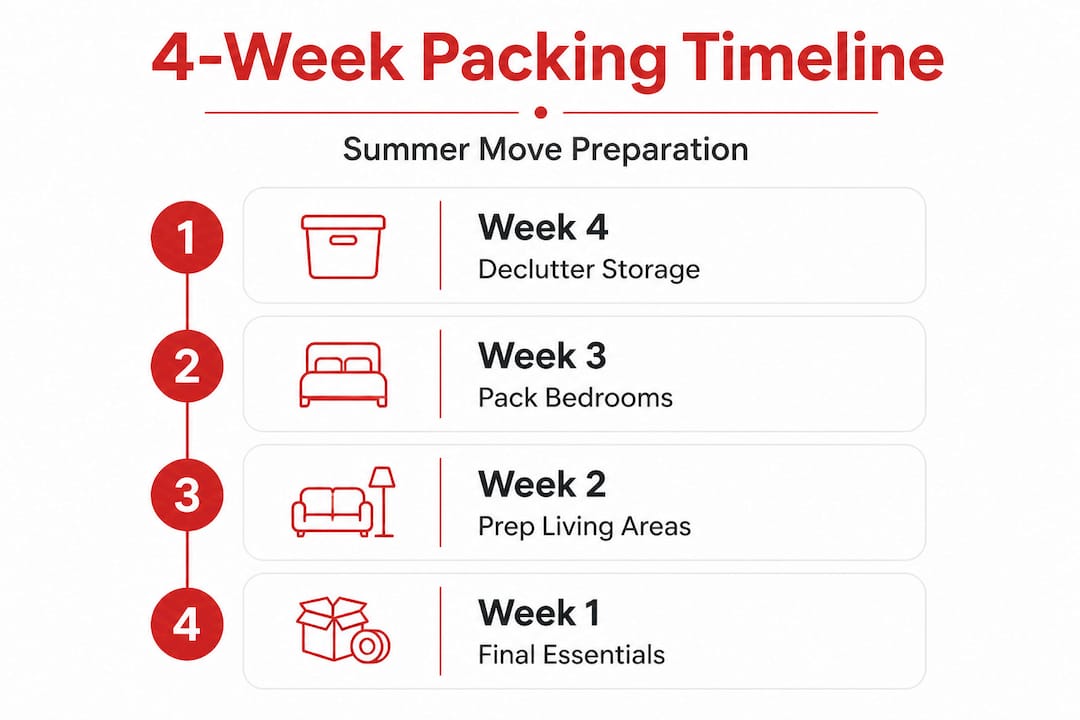
Here is a practical four-week packing sequence:
- Week 4 (Four weeks out): Pack storage areas first. Attic, basement, and garage items are typically non-essential and take the longest to sort through. This is also the best time to declutter and donate items you do not want to move.
- Week 3 (Three weeks out): Move to guest rooms, home offices, and hobby spaces. Books, art, seasonal decor, and extra linens can all be boxed up now without affecting your daily routine.
- Week 2 (Two weeks out): Tackle bedrooms. Pack clothing you will not need for the next two weeks, extra shoes, and anything decorative. Leave out one week’s worth of essentials per person.
- Week 1 (One week out): Pack the kitchen down to the basics you need for seven days. Wrap fragile items carefully and label boxes with both the room and specific contents (for example, “Kitchen: baking items” rather than just “Kitchen”).
- Moving day: The living room, remaining kitchen items, and your overnight essentials bag get packed last.
| Week | Focus area | Priority task |
|---|---|---|
| Week 4 | Attic, basement, garage | Declutter and pack non-essentials |
| Week 3 | Guest rooms, office, hobbies | Box up books, decor, extra linens |
| Week 2 | Bedrooms | Pack seasonal clothing and extras |
| Week 1 | Kitchen and living areas | Pack down to one week of daily items |
| Moving day | Final essentials | Pack overnight bag last |
Getting children involved helps, too. Giving kids ownership of packing their own room (with guidance) reduces the burden on parents and helps children feel a sense of control during what can be an emotionally unsettling time. If you have pets, plan ahead for their comfort and safety on the day itself. Our advice on moving with pets covers everything from keeping animals calm to arranging temporary spaces for them during the chaos.
Pro Tip: Keep one clearly labeled “open first” box for each room at your new home. Fill it with the items you will need in the first 24 hours: toilet paper, a change of clothes, phone chargers, snacks, and basic cleaning supplies. You will thank yourself for it.
For a deeper look at packing strategies that reduce damage and confusion, our packing tips for local moves break down the specifics in more detail.
Protecting your home from summer weather and moving wear
Packing your belongings carefully is only part of the equation. You also need to protect the home itself. On a summer move day in New Hampshire, you can expect mud tracked in from the yard, scuffs on walls from furniture being carried through hallways, and the very real possibility of a rain shower arriving mid-move.
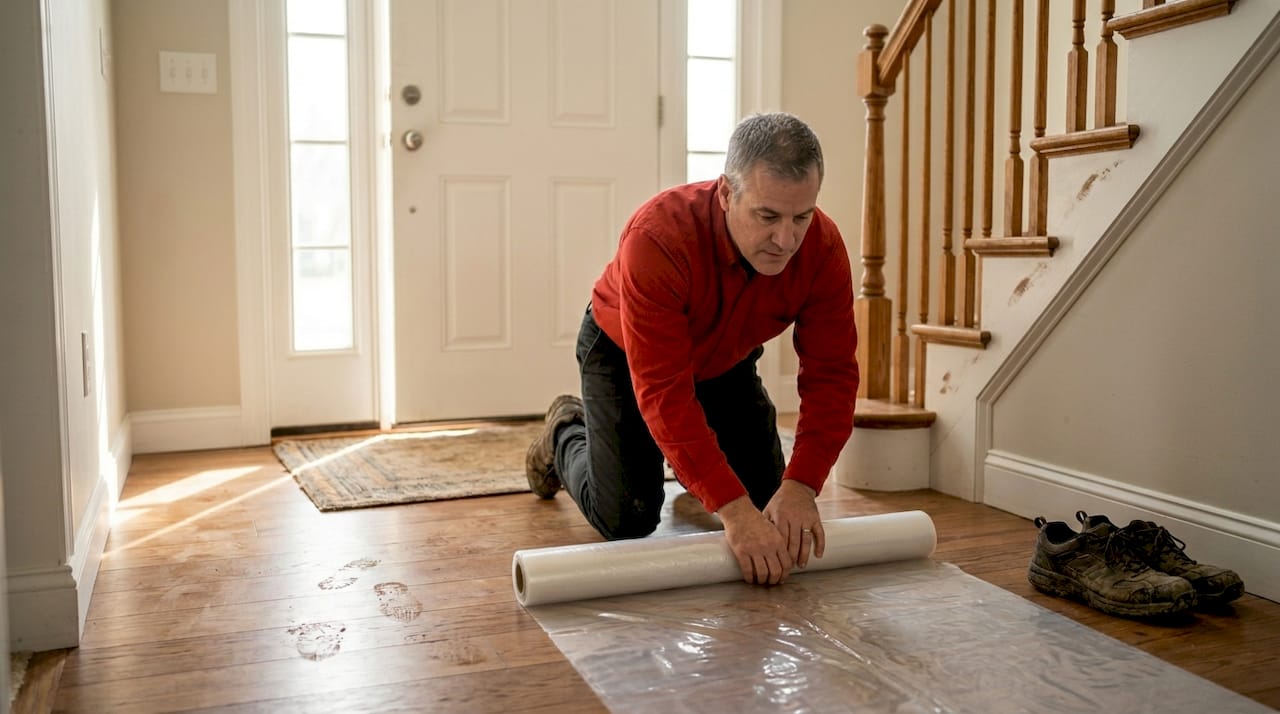
Protect floors with plastic sheets or tarps, particularly in entryways, hallways, and any high-traffic route between your front door and the moving truck. Hardwood floors scratch easily, and carpet can absorb dirt and water quickly if it gets wet.
Here is a breakdown of the most common risks and simple, affordable solutions:
| Risk | Area most affected | Solution |
|---|---|---|
| Mud and dirt from outside | Entryway, hallway | Plastic sheeting, door mats, shoe covers |
| Rain during the move | Floors, doorways | Tarps over entryways, covered loading zones |
| Wall scuffs from furniture | Hallways, stair landings | Foam corner guards, moving blankets |
| Stair damage | Staircases | Rubber stair treads, carpet runners |
| Door frame damage | All doorways | Padded door frame covers |
| Floor dents from furniture | Living room, bedroom | Furniture sliders, plywood sheets |
Beyond flooring, pay close attention to stair railings and door frames. These are the areas that receive the most impact when large furniture items are being moved through a home. A simple set of foam padding pieces attached with tape can prevent paint damage and wood chips that would otherwise cost you part of your security deposit or complicate your home sale.
If your household includes children, pets, or a large crew of movers, the wear on your home increases significantly. Consider setting up a designated entry and exit point and communicating that path clearly to everyone helping with the move.
Pro Tip: Keep a bucket of soapy water and old towels near the front door on moving day. Quick cleanups as mud gets tracked in prevent stains from setting into carpet or grout lines.
Once the truck is loaded and the move is complete, do a final cleanup pass before you hand over keys. Our guide on best moving practices walks through the full process of leaving a home in move-out-ready condition.
Final move-out preparations: Checks and tasks before you leave
The last 24 hours before you move out require their own checklist. Even well-organized movers forget things when the pressure is on. A clear, methodical approach to your final walkthrough prevents costly oversights and helps you avoid disputes over security deposits or home sale conditions.
Here is a step-by-step list for your final move-out day:
- Check every room, closet, and cabinet. Open every door and drawer. Check under beds, inside closets, and behind appliances. Items left behind are usually gone for good.
- Shut off and clean all appliances. Defrost the freezer the night before if possible. Wipe down the oven, refrigerator, and dishwasher. Leave them clean and empty.
- Take photos of every empty room. This is especially important for renters. Timestamped photos of clean, undamaged rooms are strong evidence if a landlord disputes the return of your security deposit.
- Gather all keys, garage openers, and access cards. Check with every family member to make sure nothing is in a coat pocket or at the bottom of a bag.
- Confirm mail forwarding is active. The U.S. Postal Service allows you to set up mail forwarding online, but it takes several days to take effect. Handle this at least a week before your move.
- Verify utilities are scheduled to transfer or disconnect. Contact your electricity, gas, water, and internet providers to confirm cutoff or transfer dates.
- Do a final sweep with your phone’s flashlight. Check corners, the back of closets, and behind doors one more time before you lock up.
Reviewing the guidance in this moving checklist for New Hampshire residents can help you cover tasks you might not have considered, particularly around utilities and local notifications.
If you are a renter, our tenant packing guide has specific advice on leaving a rental property in the best possible condition.
Pro Tip: Call your moving company the evening before the move to confirm the arrival time, crew size, and truck details. This single step prevents a surprising number of miscommunications and gives you confidence heading into moving day.
A mover’s perspective: What most families overlook during a summer move
After more than a century of moving families across New Hampshire and New England, we have seen the same patterns repeat themselves. Families almost always underestimate packing time, especially with children in the home. A room that looks easy to pack often contains dozens of oddly shaped, fragile, or sentimental items that take far longer to wrap and box than expected.
We also see families focus all of their energy on the big items, the furniture and appliances, while overlooking the small stuff that hides in corners and junk drawers. A forgotten bag of hardware, a charging cable behind the nightstand, a folder of important documents tucked in a kitchen drawer. These are the things that cause real problems after the move.
One thing worth saying clearly: do not stress over getting everything perfect. The goal is progress, not perfection. A professional crew handles the heavy lifting and the logistics. Your job is to be organized enough so that nothing critical gets left behind and your home is protected during the process.
Communication with your movers matters more than most people realize. Be upfront about tricky items (oversized furniture, fragile antiques, items that need disassembly), parking limitations at both addresses, and any access constraints like narrow staircases or low ceilings. The more your crew knows in advance, the smoother the day goes.
For a broader look at how to reduce stress at every stage of your relocation, our stress-free moving guide covers both the emotional and practical dimensions of a well-planned move.
Take the next step for your New Hampshire summer move

When you are ready to turn your preparation plan into a confirmed move date, Bridges Bros Movers is here to help. We have been serving New Hampshire families since 1919, and our team understands the specific demands of summer moves across the region. From flexible scheduling to professional packing support, we make the process manageable from start to finish. Explore our residential moving services to see what full-service support looks like, or browse our selection of packing materials to make sure you have everything you need. You can also download our step-by-step moving checklist to keep your preparation on track from week one to moving day.
Frequently asked questions
When should I start packing for a summer move in New Hampshire?
Begin packing non-essentials at least four weeks before your move date to avoid last-minute chaos and keep your daily routine intact as long as possible.
How can I protect my home’s floors during a summer move?
Use plastic sheets or tarps along high-traffic routes, especially at entryways and hallways, to prevent mud, water, and scuff damage during the move.
What are some last-minute essentials to check before moving out?
Do a room-by-room walkthrough with every door and cabinet open, shut off all appliances, collect all keys and access devices, and take timestamped photos of every empty room before you leave.
Should I expect delays when moving in New Hampshire during summer?
Summer is peak moving season in New Hampshire, and weather can be unpredictable, so booking your crew early and building a flexible timeline into your plan is the most reliable way to avoid significant disruptions.
Recommended
- The Local’s Guide to a Smooth Off-Season Move on the Seacoast | Moving Tips
- Top 10 Tips for a Stress-Free Move in New England | Expert Guide
- Pet-Friendly Moving Tips for Families in New Hampshire | Stress-Free Guide
- How to Prepare Your New Home Before Moving In | Moving Tips
- How to Prepare for Moving Day - The Muscle & Truck Co.