
TL;DR:
- Starting a family move eight weeks in advance allows for comprehensive planning, decluttering, and booking optimal movers.
- Implementing room-by-room packing with clear labeling and involving children in their own logistical tasks reduces stress and chaos.
Staying organized during a family move this summer is the single most effective way to reduce stress, protect your belongings, and keep your household running through one of the busiest seasons of the year. Professional movers and relocation specialists refer to this as structured relocation planning: a phased approach that breaks the process into manageable stages rather than one overwhelming event. The families who move with the least chaos are not the ones with the most time. They are the ones who start early, use a solid checklist for family moves, and plan specifically for summer’s unique demands, including heat, peak-season scheduling, and kids out of school.
How to start organizing your family move this summer
The most important decision you will make is when to start. Beginning about 8 weeks out gives you enough runway to declutter, research movers, notify schools, and handle utilities without everything colliding in the final week. Eight weeks sounds like a lot, but summer calendars fill up fast, and professional movers in New Hampshire, Maine, and Massachusetts book out weeks in advance during peak season.
Your first two weeks should focus entirely on the big-picture decisions. After that, you shift into packing and logistics. Here is a practical phase breakdown to get you started:
- Weeks 8 to 6: Declutter room by room. Donate items not worn or used in the last 12 months. Research and book your moving company. Notify your children’s schools and request records.
- Weeks 5 to 4: Begin packing non-essential rooms like guest bedrooms, storage areas, and seasonal items. Gather packing supplies. Set up a moving binder or a digital folder in Google Drive or Notion to hold contracts, receipts, school records, and utility confirmation numbers.
- Weeks 3 to 2: Pack the majority of the house. Confirm your mover booking. Arrange mail forwarding through USPS and update your address with banks, insurance providers, and subscriptions.
- Week 1: Pack final items, prepare essentials boxes, and confirm all logistics with your moving crew.
A moving binder is more useful than most families expect. Keep physical copies of your moving contract, new lease or closing documents, and a printed inventory of high-value items. If something goes wrong on moving day, you will not be searching through email on a dead phone battery.
Pro Tip: Request a moving checklist from your moving company early in the process. Bridges Bros Movers provides one that is tailored to summer moves in New England, covering everything from utility transfers to packing timelines.
What packing strategies keep your family move organized and efficient
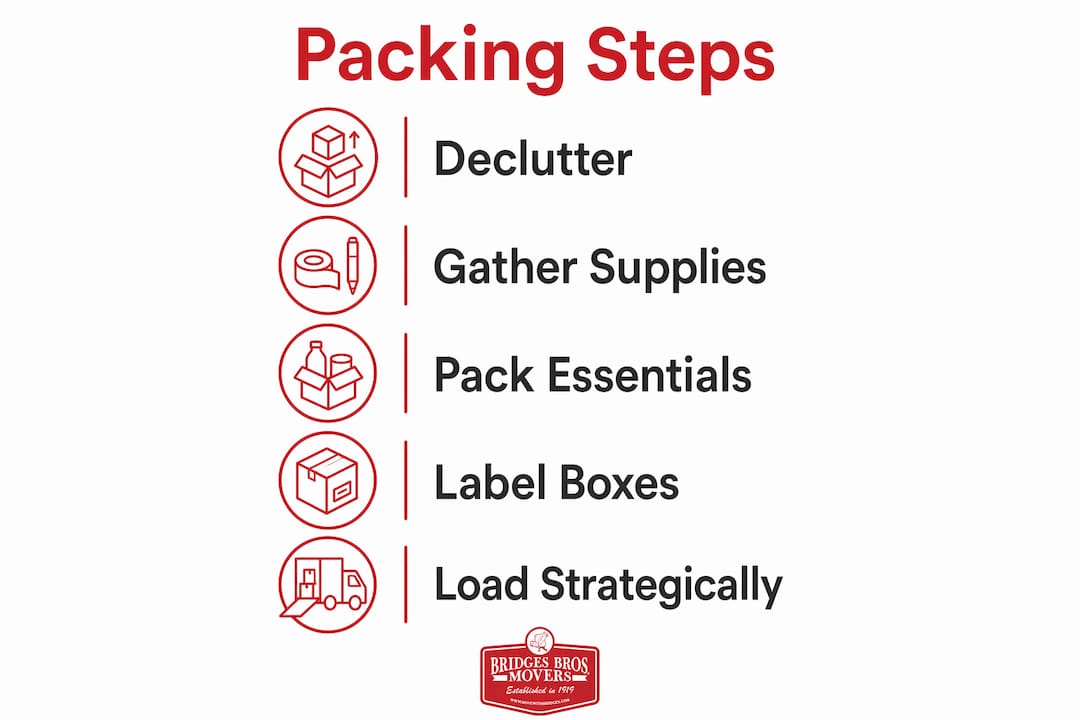
Packing is where most families lose control of the process. The room-by-room method is the most reliable system for staying organized while relocating, and it works because it limits decision fatigue. You finish one space completely before moving to the next, which prevents the half-packed chaos that makes unpacking a nightmare.
Follow this numbered sequence to pack efficiently and protect your belongings:
- Start with storage and seasonal spaces. Attics, basements, and garages hold items you will not need before the move. Packing these first builds momentum without disrupting daily life.
- Move to guest rooms and formal spaces. Dining rooms and guest bedrooms are rarely used daily. Clear these out early.
- Pack main living areas two weeks out. Living rooms, home offices, and bookshelves can be packed once you have settled into the final stretch.
- Pack bedrooms and bathrooms last. These are in daily use. Pack them in the final 48 to 72 hours.
- Label every box with room and contents. Write the destination room on the top and two sides so movers can read it from any angle. Color-coded tape by room speeds up placement at the new home significantly.
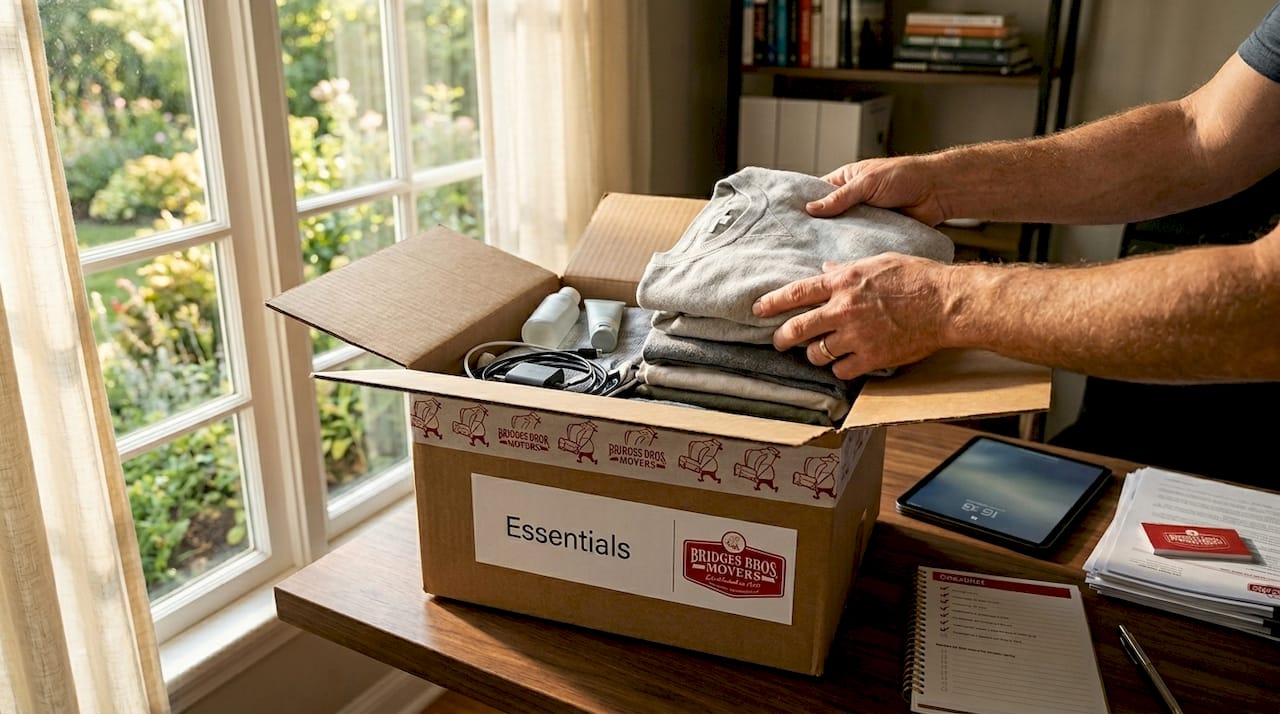
Every family member should have a dedicated essentials box. This is not the same as a moving day bag. The essentials box contains the items you will need in the first 24 to 48 hours at the new home: bedding, a change of clothes, toiletries, phone chargers, snacks, and any medications. Pack it last and load it into your personal vehicle, not the moving truck.
Here is a quick reference for your packing supplies checklist:
| Supply | Recommended quantity |
|---|---|
| Small boxes (books, tools) | 20 to 30 |
| Medium boxes (kitchen, toys) | 30 to 40 |
| Large boxes (linens, pillows) | 10 to 15 |
| Wardrobe boxes | 3 to 5 |
| Packing tape and dispenser | 4 to 6 rolls |
| Bubble wrap or packing paper | 2 to 3 reams |
| Permanent markers | 4 to 6 |
| Color-coded labels or tape | 1 roll per room |
Breaking tasks into smaller steps and maintaining daily packing goals prevents the freeze-up that hits most families in week three. Set a target of five to ten boxes per day rather than trying to pack an entire floor in a single weekend.
Pro Tip: Use clear plastic bins for items going directly into closets at the new home. You can see the contents without opening anything, which cuts unpacking time significantly.
How to manage kids and family logistics on moving day
Children experience moves differently than adults do. The stress is real, and it shows up as meltdowns, sleep disruption, and resistance, especially when kids feel like things are happening to them rather than with them. The solution is involvement. Letting children decide what to keep and pack their own special boxes gives them a sense of control that dramatically reduces their anxiety.
Treat kids’ logistics as a separate project with two distinct containers:
- The first-night box: Packed by the child, this holds their favorite stuffed animal, a book, pajamas, a nightlight, and anything else they associate with comfort. This box travels in your car and goes directly to their new bedroom.
- The moving day survival bag: A backpack with snacks, a tablet or handheld game, headphones, a water bottle, and a small activity kit. This keeps kids occupied and calm during the loading and transit hours.
Beyond the boxes, assign kids real roles on moving day. A six-year-old can carry their own backpack and be the “door holder.” A ten-year-old can manage a checklist of items coming out of their room. A teenager can supervise a younger sibling or help direct movers to the right rooms at the new home. Giving children a job shifts their mindset from passenger to participant.
At the new home, set up the kids’ rooms first. Familiar bedding, toys, and decorations in place before dinner on day one makes the new space feel like home faster than anything else you can do. Pre-stocking the new home with basics like toilet paper, soap, and easy dinner options removes the scramble that exhausts parents at the end of moving day.
Pro Tip: Let each child pick one item to unpack first in their new room. That small act of ownership creates a positive first memory in the new space.
How to adapt your moving plan for summer heat and schedule pressure
Summer moving organization requires one layer of planning that winter moves do not: heat management. Temperatures in New Hampshire and Massachusetts regularly climb into the 90s in July and August, and moving in that heat without a plan creates real physical risk for your family and your movers.
The most effective adjustment is timing. Starting your move around 6 AM means the heaviest lifting happens before temperatures peak. Staging everything the night before, including loading the truck with non-fragile items, means you are not scrambling in the morning heat. This single scheduling shift prevents fatigue and reduces the risk of errors.
Here is how to build heat protection into your moving day plan:
- Set up hydration stations at both the old home and the new one. Coolers with water, sports drinks, and ice should be accessible throughout the day.
- Schedule a mandatory break every 90 minutes. Heat exhaustion builds gradually, and most people do not notice it until they are already in trouble.
- Keep heat-sensitive items like electronics, candles, vinyl records, and artwork in climate-controlled spaces until the last possible moment. Load them last onto the truck and unload them first.
- Park the moving truck in shade whenever possible during loading pauses.
- Wear light-colored, moisture-wicking clothing and apply sunscreen before you start.
On the scheduling side, book your movers early because summer is peak moving season and availability disappears fast. In New England, weekends in June, July, and August are the first to go. If you have flexibility, a mid-week move often comes with better availability and, in some cases, lower rates. Check out when to book movers for a detailed breakdown of timing by season.
“The key to a successful summer move is scheduling to avoid the hottest parts of the day and preparing staging areas the night before.” This approach prevents fatigue and errors that compound as the day heats up.
Key takeaways
A family summer move stays organized when you commit to a phased timeline, treat kids’ logistics as a separate project, and build heat management into every stage of moving day.
| Point | Details |
|---|---|
| Start 8 weeks out | Begin with decluttering and mover booking before calendars fill up. |
| Pack room by room | Label every box with room and contents; pack essentials boxes last. |
| Treat kids as participants | Give children roles and their own first-night box to reduce stress. |
| Move early in the day | Start around 6 AM to avoid peak heat and schedule breaks every 90 minutes. |
| Book movers in advance | Summer is peak season; mid-week dates offer better availability and flexibility. |
What I have learned from watching families move in summer
After years of working alongside families through summer relocations across New Hampshire, Maine, and Massachusetts, the pattern I see most often is this: families who struggle are not disorganized people. They are organized people who underestimated how much summer specifically changes the equation.
The heat is the obvious factor, but the hidden one is the emotional load. Kids are out of school, routines are already disrupted, and everyone is spending more time together in a house that is being dismantled. That combination creates friction even in calm households. The families who handle it best are the ones who treat the move as a shared project rather than a logistical problem for the adults to solve quietly.
I have also seen how much a single missed step, like forgetting to set up the kids’ rooms first or skipping the hydration station, can derail an otherwise well-planned day. The checklist is not bureaucracy. It is the thing that keeps small oversights from becoming big problems at 2 PM when everyone is hot and tired.
My honest advice: build more buffer time than you think you need, especially on moving day itself. A move that is scheduled to finish by noon rarely does in summer. Traffic, heat breaks, and the unexpected are all part of the day. Plan for them, and you will not be rattled when they show up.
— Patrick
Let Bridges Bros Movers take the pressure off your summer move
Bridges Bros Movers has been helping New England families relocate since 1919, and summer moves are where that experience shows most. If packing feels like the part you are dreading most, the professional packing services team handles everything from wrapping fragile items to labeling boxes by room, so you can focus on your family instead of the tape gun. Need supplies to do it yourself? The packing materials selection covers everything on the checklist above. Whether you need full-service moving, packing help, or just a reliable crew for moving day, get a quote and find out what a well-planned summer move actually feels like.
FAQ
How far in advance should I book movers for a summer move?
Book your movers at least 6 to 8 weeks before your move date during summer. Peak season demand in New England means weekend slots in June, July, and August fill up quickly.
What goes in a moving day essentials box?
An essentials box should hold bedding, a change of clothes, toiletries, phone chargers, medications, and snacks for the first 24 to 48 hours. Pack it last and transport it in your personal vehicle, not the moving truck.
How do I protect electronics and candles during a summer move?
Keep heat-sensitive items in air-conditioned spaces until the final loading stage, then load them last and unload them first at the new home. Short-term climate-controlled storage is worth considering if the move spans multiple days.
What is the best time of day to move in summer heat?
Starting around 6 AM lets you complete the heaviest work before temperatures peak. Staging items and loading non-fragile boxes the night before makes an early start realistic without rushing.
How do I help my kids adjust to a summer move?
Involve children in packing decisions and give each child a first-night box they pack themselves. Setting up their rooms first at the new home creates a sense of familiarity before the rest of the house is unpacked.