
TL;DR:
- Efficient unpacking involves a prioritized, room-by-room approach that emphasizes essentials first to create a functional home quickly. Proper preparation, managing boxes immediately, and pacing work with timed intervals help prevent burnout and reduce clutter. Focusing on basic needs initially and establishing a flexible timeline ensures a smoother transition into your new space.
Efficient unpacking is a systematic, room-by-room process that prioritizes essential spaces first so your new home becomes functional within days, not weeks. Most people treat unpacking as a single overwhelming task, but the professional approach treats it as a sequenced project with clear milestones. Experts recommend a prioritized schedule that can get your home operational in 3 to 7 days depending on size. That timeline is realistic when you know which rooms to tackle first, how to manage boxes without creating chaos, and how to pace yourself so you don’t burn out on day two. This guide covers every stage of the process, from what to pack in your essentials box to how to organize after moving without losing momentum.
What do you need before you start unpacking?
The difference between a smooth unpack and a chaotic one is almost always preparation. Arriving at your new home with a clear plan, the right supplies, and a clean space cuts hours off the total time. Cleaning before unpacking creates a blank slate that makes organization far easier than trying to clean around furniture and boxes later. This is especially true for kitchens and bathrooms, where surfaces need to be wiped down before anything goes into cabinets or drawers.
Before you open a single box, run through this pre-unpack checklist:
- Essentials box or tote: Pack one box per person with items needed for the first 24 to 48 hours. Include toiletries, a change of clothes, phone chargers, medications, snacks, coffee supplies, and bedding. This box rides in your car, not the moving truck.
- Box labeling: Label boxes on multiple sides with both the destination room and a priority level (unpack first, unpack second, store). This lets movers place boxes in the right rooms immediately, saving you from sorting later.
- Tools on hand: Keep a box cutter, scissors, markers, and a trash bag in your essentials tote. You will need them within the first ten minutes.
- Safety checks first: Run all water fixtures and locate the main shutoffs before unpacking anything. Check the electrical breaker panel too. Discovering a leak after your bathroom boxes are unpacked is far more stressful than finding it on an empty floor.
- Staging area: Designate a spot, ideally a garage, porch, or hallway near the entrance, for empty boxes as you break them down. This keeps living areas clear from the start.
Pro Tip: Seal liquid toiletries with a small piece of plastic wrap under the cap before packing. This prevents in-transit spills that can ruin clothing, linens, or other packed items.
One more pre-move step that pays off immediately: decluttering before packing reduces the total volume you move and unpack. Every item you donate or discard before moving day is one less decision you have to make in your new home.
Which rooms should you unpack first?
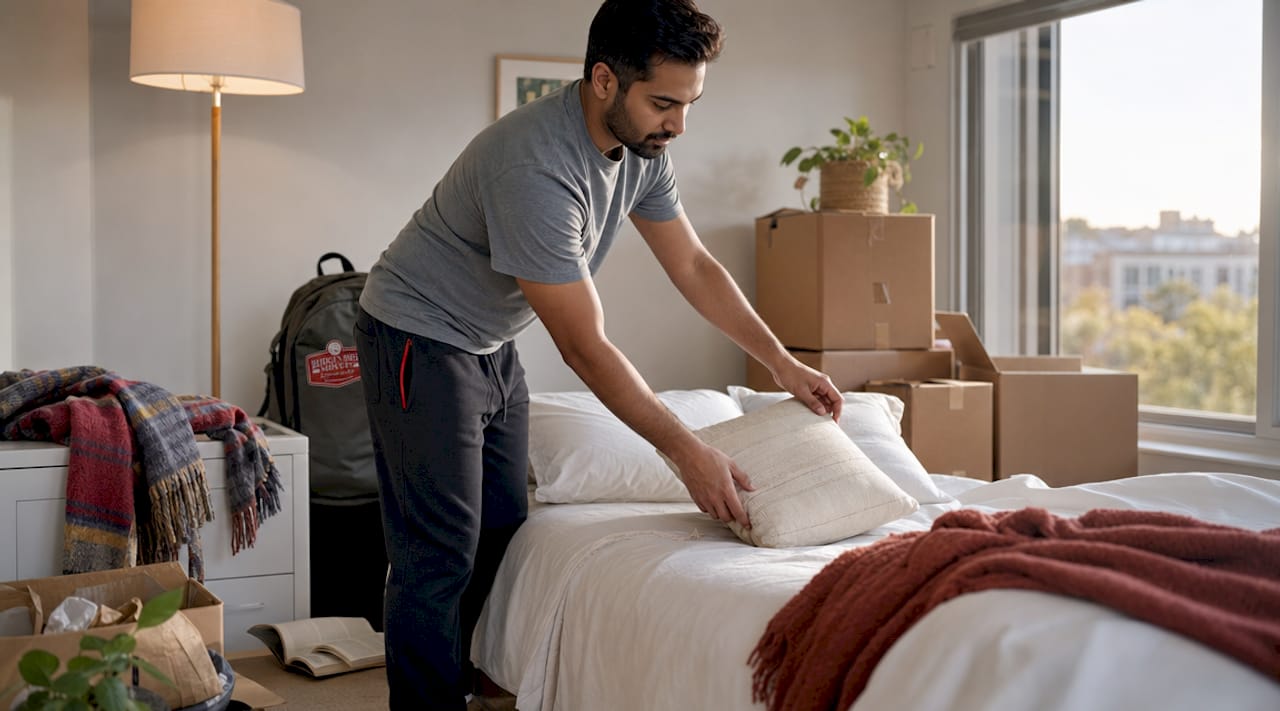
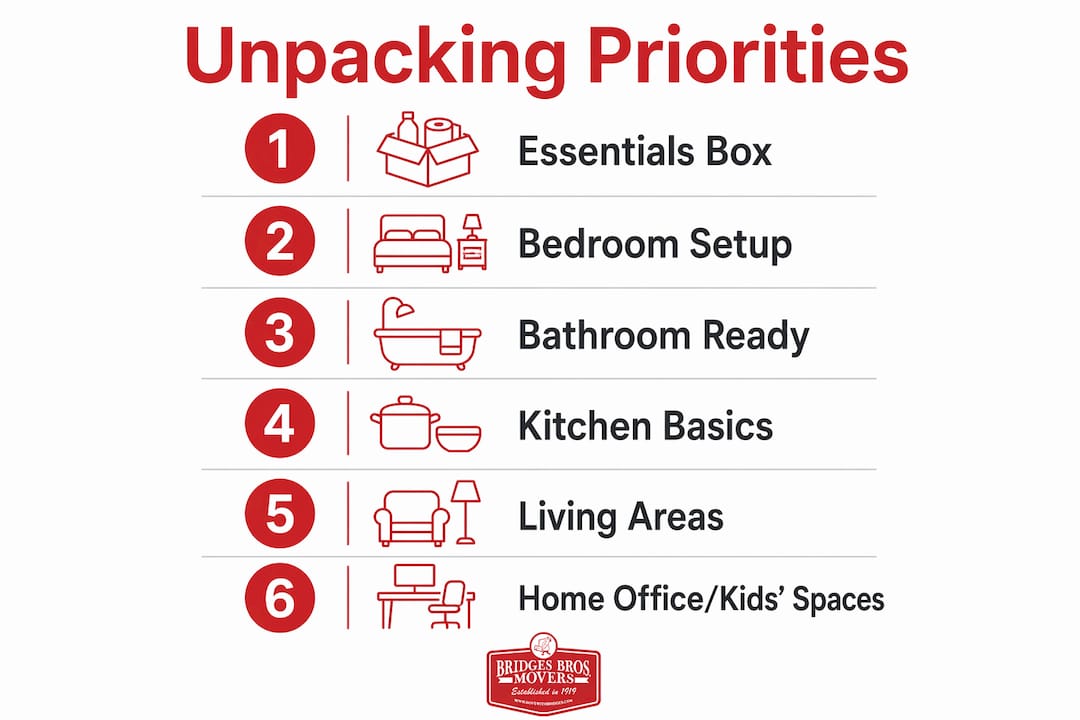
The most effective unpacking method follows a strict priority order based on daily function, not sentiment. Start with what you need to sleep, eat, and stay clean. Everything else can wait.
Setting up beds and essential rooms first leads to better sleep and hygiene, which directly affects your ability to cope with move-related stress. A family that sleeps well on night one unpacks faster on day two. That is not a small detail. It is the foundation of the entire process.
Here is a practical room-by-room timeline to guide your first week:
| Priority | Room or Area | Target Timeframe |
|---|---|---|
| 1 | Essentials box (all rooms) | First 30 minutes |
| 2 | Bedrooms (beds made, clothes accessible) | Day 1 |
| 3 | Bathrooms (toiletries, towels, toilet paper) | Day 1 |
| 4 | Kitchen (cooking basics, dishes, food) | Day 2 |
| 5 | Living room and home office | Day 3 to 4 |
| 6 | Kids’ rooms and pet areas | Day 3 to 5 |
| 7 | Storage, decor, books, and non-essentials | Week 2 and beyond |
After the bedroom and bathroom are functional, the kitchen becomes your next focus. You do not need every pot and pan accessible on day two. You need a pan, a spatula, plates, glasses, and the basics for simple meals. Unpack cooking essentials first, then work through the rest of the kitchen over the following day or two.
Living rooms, home offices, and kids’ rooms come next. For families with children, setting up a familiar space with toys and bedding quickly reduces anxiety for younger kids who are adjusting to the new environment. Pet areas follow the same logic. A dog or cat with their bed, food bowls, and familiar items in place settles faster, which means fewer disruptions while you work.
Completing one room before moving on avoids scattered clutter and decision fatigue. Resist the temptation to open boxes in multiple rooms at once. Finishing a room gives you a visible win and a clean space to retreat to when the rest of the home still looks like a warehouse.
How can you manage boxes and avoid clutter while unpacking?
Empty boxes are the silent enemy of efficient unpacking. They pile up fast, block walkways, and make a functional home feel chaotic even after you have made real progress. Managing them proactively is one of the best quick unpacking tips you can apply.
- Break down boxes immediately. The moment a box is empty, flatten it. Do not set it aside to deal with later. Later never comes on moving day.
- Designate a staging area. Pick one spot outside the main living areas, a garage corner, a back porch, or a hallway near the exit, for flattened cardboard. A designated staging area prevents spatial chaos and keeps traffic flowing through the home.
- Create a holding zone. For boxes you are not ready to unpack, stack them neatly in one room rather than spreading them across the house. A spare bedroom or basement works well. Out of sight means out of mind, which reduces visual overwhelm.
- Recycle or donate promptly. Most municipalities in New Hampshire, Maine, and Massachusetts have cardboard recycling pickup or drop-off. Schedule a pickup or plan a recycling run within the first week. Local Facebook groups and apps like Nextdoor are also reliable for giving away moving boxes to neighbors who need them.
Pro Tip: Keep a box cutter in every room you are actively unpacking. Walking back to find a tool every few minutes breaks your rhythm and adds up to significant lost time over a full day of unpacking.
For boxes containing items you are unsure about, use the holding zone rather than making rushed placement decisions. Deciding where something belongs when you are tired leads to poor organization that you will undo later anyway.
What time management strategies prevent unpacking burnout?
Homeowners typically need 4 to 6 weeks to feel truly settled after a move. That timeline is normal, and fighting it creates unnecessary stress. The goal in the first week is function, not perfection. Managing your time and energy well during that first week determines how the rest of the process goes.
Using 45-minute work blocks with 15-minute breaks improves motivation and prevents the burnout that causes people to abandon unpacking halfway through. Set a timer, work with focus, then step outside or sit down with a drink. This structure also makes the process feel manageable rather than endless.
A few additional strategies that work in practice:
- Set daily milestones. “Finish the kitchen by 3 p.m.” is more motivating than “unpack today.” Specific goals create momentum.
- Reward visible progress. Order dinner from a local restaurant after finishing the kitchen. Watch a movie in your newly set-up living room. Connecting effort to reward keeps energy levels up across multiple days.
- Stay in one room at a time. Multitasking across rooms creates clutter in every space simultaneously and makes it feel like nothing is getting done. Focus is faster.
- Keep one clutter-free zone. Designate one room, usually the bedroom, as a no-box zone from day one. Having a clean space to sleep and decompress makes the rest of the process feel less overwhelming.
Visible progress, like clearing boxes and completing rooms, is the most reliable motivator to keep unpacking efforts going. Every finished room is proof that the process is working.
The psychological benefit of organization is real. A home that feels functional reduces cortisol levels and helps your family adjust to the new space faster. Prioritizing essentials is not just a time-saving tactic. It is a stress-reduction strategy.
Key takeaways
Unpacking efficiently requires a prioritized, room-by-room approach that starts with sleep and hygiene, manages boxes proactively, and uses timed work intervals to maintain momentum across the first week.
| Point | Details |
|---|---|
| Prioritize by function | Unpack bedrooms and bathrooms on day one to support sleep and hygiene from the start. |
| Prep before you open boxes | Clean the home, run fixtures, and locate shutoffs before unpacking anything. |
| Finish one room at a time | Completing rooms fully avoids scattered clutter and reduces decision fatigue. |
| Manage empty boxes immediately | Flatten and stage boxes as you go to keep living areas clear and traffic flowing. |
| Pace with timed intervals | Work in 45-minute blocks with breaks to prevent burnout over a multi-day process. |
The part most people get wrong about settling in
I have seen a lot of moves, and the mistake I notice most often is not a packing error or a logistics problem. It is the expectation that the home should be fully set up within the first two or three days. That pressure turns what should be a manageable process into an exhausting sprint.
Function first, aesthetics second. That is the principle I come back to every time. If your bed is made, your bathroom is stocked, and you can cook a basic meal, your home is working. The gallery wall, the bookshelf arrangement, the decorative touches — those can wait two weeks without any real consequence.
I also think people underestimate how much the pre-move phase determines the post-move experience. Families who prepare their home for movers in advance, with clear labeling, decluttered loads, and an essentials box ready, consistently settle in faster than those who pack in a rush. The work you do before moving day is not overhead. It is the investment that pays off the moment the truck pulls away.
Be flexible with yourself and your family. Some rooms take longer than expected. Some boxes reveal items you forgot you owned. That is normal. The goal is steady, consistent progress, not a perfect home by sundown on day one.
— Patrick
How Bridges Bros Movers helps you settle in faster
Bridges Bros Movers offers full packing and unpacking services designed to take the heaviest parts of the process off your plate entirely. Whether you need a team to pack your entire home before the move or help getting boxes into the right rooms on arrival, the options are flexible and built around your schedule. For families in transition between homes, moving storage solutions keep your belongings safe and accessible while you get settled at your own pace. Bridges Bros Movers has served New Hampshire, Maine, and Massachusetts since 1919, and the team brings that experience to every move. Reach out for a personalized quote and a plan that fits your timeline.
FAQ
How long does it take to unpack after moving?
Most people can get their home functionally set up in 3 to 7 days by following a prioritized room-by-room schedule. Full unpacking and settling in typically takes 4 to 6 weeks.
What should you unpack first when moving into a new home?
Start with your essentials box, then set up bedrooms and bathrooms on day one. The kitchen should follow on day two, with living areas and secondary rooms completed over the next few days.
How do you avoid clutter while unpacking?
Flatten and stage empty boxes immediately after unpacking them, and designate a single holding zone for boxes you are not ready to open. Keeping one room completely box-free from day one also helps maintain a sense of order.
Does cleaning before unpacking actually make a difference?
Cleaning before unpacking makes organization significantly easier because you can place items directly into clean cabinets and drawers without moving them again later. Kitchens and bathrooms benefit most from this approach.
What is the best way to maintain energy during a multi-day unpack?
Work in 45-minute focused intervals followed by 15-minute breaks to prevent burnout. Setting specific daily milestones and rewarding completed rooms keeps motivation consistent across the full unpacking process.