
TL;DR:
- Moving day with a professional local moving company involves three coordinated phases: walkthrough and preparation, loading and transport, and unloading with sign-off. Proper pre-move planning, clear communication, and organization ensure a smooth process and prevent delays or damage. Staying available during unloading and thoroughly documenting items in real time help resolve issues efficiently and maximize move satisfaction.
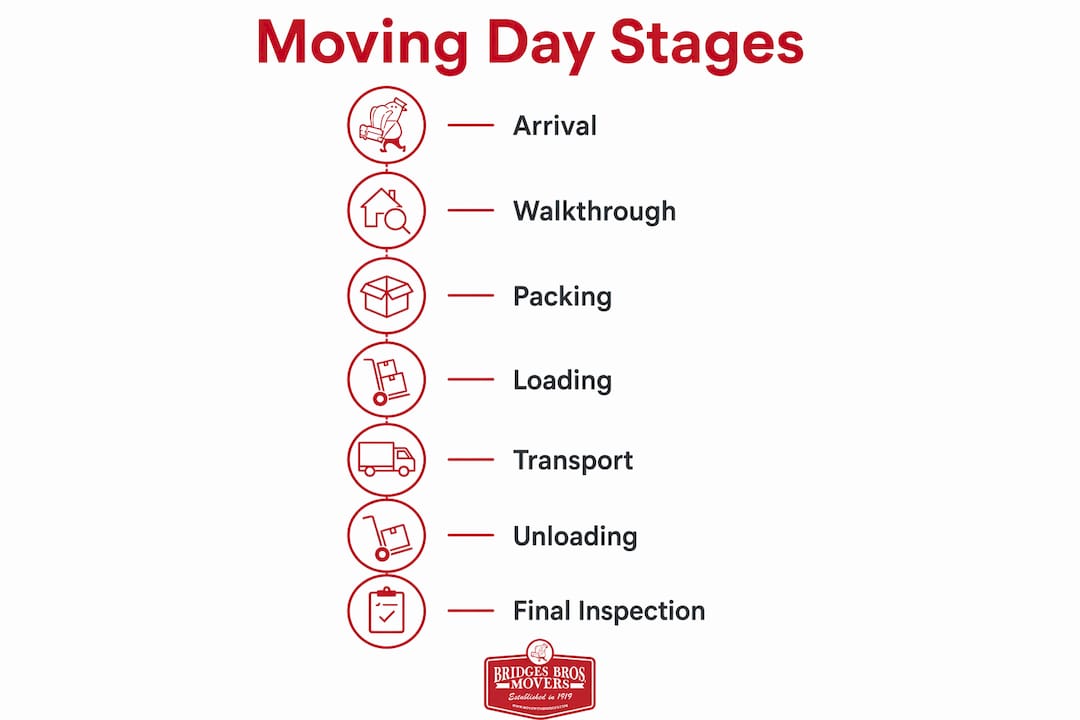
Moving day with a professional local moving company is a structured, three-phase process: crew arrival and walkthrough, loading and transport, then unloading and final sign-off. Knowing what to expect on moving day with a professional local moving company removes the guesswork and lets you focus on the decisions that actually matter. Bridges Bros Movers has guided families across New Hampshire, Maine, and Massachusetts through this process since 1919, and the single biggest factor separating smooth moves from stressful ones is preparation. This guide walks you through every phase so you know exactly what happens, when, and what your role is.
What to expect when professional movers arrive and do the walkthrough
The local moving day process begins the moment the crew pulls up. Movers will introduce themselves, and the lead mover will serve as your primary point of contact for the entire job. That person coordinates the crew, answers your questions, and manages the schedule on site.
Before a single box is touched, the lead mover conducts a walkthrough of your home. This step is not a formality. It confirms which items are moving, which are staying, and which need special handling due to fragility or size. Floor protection, door frame padding, and stair runners go down during this phase to prevent damage to your property.
You will also confirm your identity and review the bill of lading and inventory sheets. These documents define the scope of the move and protect both parties. Read them before signing.
- Designate one person in your household as the decision-maker for placement questions. Conflicting placement orders cause delays and mistakes that slow the entire crew.
- Point out fragile or high-value items during the walkthrough so the crew can plan accordingly.
- Clarify any items that are not moving, such as staging furniture or items going to storage separately.
- Ask the lead mover about the plan for the day, including estimated loading time and departure window.
Pro Tip: Write a short list of your three most fragile or irreplaceable items the night before and hand it to the lead mover during the walkthrough. It takes 30 seconds and eliminates the most common source of moving day miscommunication.
How professional movers handle packing, loading, and inventory
If you have booked packing services, the crew arrives with boxes, tape, and packing paper and works room by room before loading begins. If you are packing yourself, everything should be sealed, labeled, and staged near the door before the movers arrive. Unfinished packing is the single most common cause of delays and added cost on moving day.
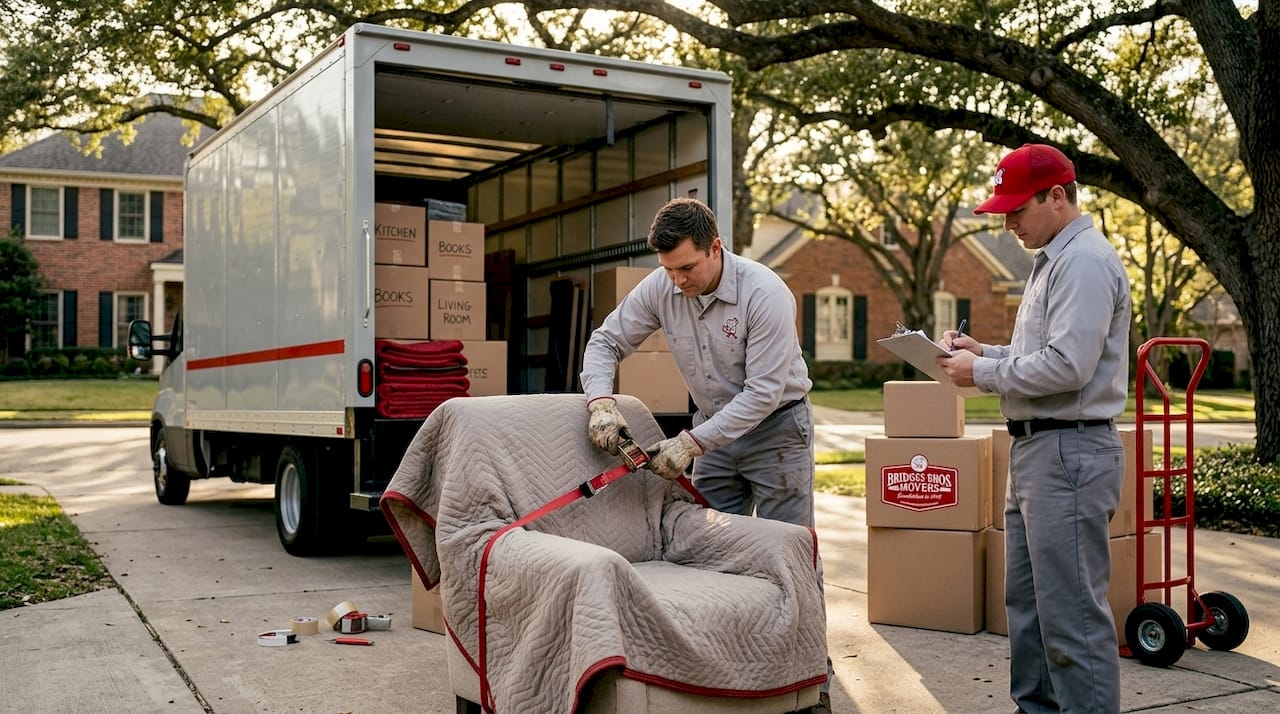
Loading follows a deliberate order. Large furniture loads first, positioned against the truck walls to create a stable base. Boxes fill the remaining space, staged by weight and fragility to prevent shifting in transit. Movers use furniture pads, lifting straps, and dollies throughout this phase. These are not optional extras. They are standard tools that protect your belongings and the crew.
Here is how the loading sequence typically unfolds:
- Disassemble beds, tables, and large furniture pieces as needed.
- Wrap furniture in moving pads and secure with stretch wrap.
- Load heavy furniture and appliances against the truck walls.
- Stack boxes by room and weight, heaviest on the bottom.
- Fill gaps with soft items like pillows or bagged linens to prevent shifting.
- Conduct a final sweep of closets, cabinets, the attic, and the garage before closing the truck. Overlooked spaces are the leading cause of items left behind.
Professional movers increasingly use descriptive electronic inventories to record each item’s condition before it is loaded. This means photos and written condition notes per item, not just a generic list. That level of documentation protects you if a claim becomes necessary and sets a higher standard of accountability than a handwritten tally.
| Approach | What it means for you |
|---|---|
| Customer packs in advance | Faster loading, lower hourly cost, crew focuses on transport |
| Movers provide packing services | Higher upfront cost, professional wrapping, less prep work for you |
| Partial packing (movers do fragiles) | Middle ground; you handle clothes and linens, movers handle art and electronics |
Pro Tip: Label every box on the side, not the top. When boxes are stacked in the truck, side labels stay visible and help movers place them in the correct room at the destination without opening anything.
For more guidance on getting your boxes ready before the crew arrives, the packing tips guide from Bridges Bros Movers covers materials, sequencing, and room-by-room strategies.
What happens during transport, unloading, and placement
Local moves deliver the same day, with unloading and placement following shortly after transit. That means the three phases of your move, prep and walkthrough, loading, and unloading with sign-off, all happen within a single day. For most local moves in New Hampshire, Maine, and Massachusetts, transit time is under an hour.
Before the truck leaves your old address, confirm that someone is at the destination to provide access. Locked doors, missing gate codes, or unavailable building managers stall the entire operation. The lead mover will typically call ahead to confirm arrival time.
At the new home, unloading mirrors the loading sequence in reverse:
- Large furniture and appliances come off first and go directly to their designated rooms.
- Boxes follow, sorted by room label and placed where you direct.
- Furniture reassembly happens after all items are inside, if reassembly is included in your service agreement.
- You walk through each room as items arrive to verify placement and flag any visible damage immediately.
Your role during unloading is to be present and available. The crew will ask you where specific pieces go, and delays happen when the decision-maker is unavailable or distracted. Designate a spot for yourself near the entrance of the new home so you can direct traffic without being in the way.
A detail many people miss: check item condition as each piece comes off the truck, not after everything is stacked and the crew has left. Catching a scratch or dent in real time is far easier to document and resolve than discovering it two days later.
How the final inspection, paperwork, and payment work
The move concludes with a final walkthrough at the destination. The lead mover walks through the new home with you to confirm all items are present, placed correctly, and in acceptable condition. This is your opportunity to raise any concerns before signing anything.
Follow these steps at the end of every local move:
- Walk every room and compare items against the inventory sheet.
- Note any damage or discrepancies in writing on the bill of lading before signing. Documenting damages immediately with photos and written notes is the most effective way to support a claim.
- Photograph any damaged items alongside the inventory paperwork for a clear record.
- Sign the bill of lading only after you are satisfied with the documentation.
- Pay at the conclusion of the move. Most local moving companies accept credit cards, checks, or cash. Confirm accepted payment methods with your mover in advance.
Understanding your valuation coverage before moving day matters here. Released value protection is the minimum standard, covering $0.60 per pound per item. That means a 10-pound laptop damaged in transit would be covered for $6.00, not its replacement value. Full value protection costs more but provides meaningful replacement assurance. Bridges Bros Movers explains both options on the moving insurance page so you can choose before moving day, not after.
Pro Tip: Take a short video walkthrough of your old home before the movers arrive and your new home after unloading is complete. This two-minute habit creates a timestamped record that supports any claim and gives you peace of mind.
Common moving day challenges and how to prepare for them
Moving day runs on access and decisions. When either breaks down, the schedule slips and costs rise. The most common obstacles are predictable, which means most of them are preventable.
- Parking and access: Arrange parking permits for the moving truck at both addresses before moving day. Narrow streets, loading docks with time restrictions, and apartment building elevator reservations all require advance coordination.
- Stairs and tight hallways: Notify your mover during booking if either address has stairs, low ceilings, or narrow doorways. The crew may need additional equipment or time.
- Unfinished packing: Movers who arrive to find unpacked rooms must either wait or pack for you at an additional cost. Neither outcome is ideal. Review the home preparation guide from Bridges Bros Movers to confirm your checklist is complete.
- Valuables and personal documents: Keep passports, jewelry, medications, and financial documents with you, not in the moving truck. No mover should be responsible for irreplaceable personal items.
- Children and pets: Arrange for children and pets to be in a separate room or off-site during the move. A busy crew moving large furniture through tight spaces is not a safe environment for either.
Pro Tip: Pack an essentials bag the night before with one day’s worth of clothes, phone chargers, toiletries, snacks, and any medications. Load it into your personal vehicle, not the moving truck. You will want access to these items before the truck is fully unloaded.
For a complete pre-move preparation checklist, the step-by-step hiring guide from Bridges Bros Movers covers everything from booking through moving day logistics.
Key takeaways
Moving day with a professional local mover follows a predictable sequence, and your preparation directly determines how efficiently each phase runs.
| Point | Details |
|---|---|
| Walkthrough sets the plan | Use the arrival walkthrough to confirm fragile items, exclusions, and designate one decision-maker. |
| Loading order protects your belongings | Furniture loads first, boxes follow by weight, with pads and straps used throughout. |
| Document damage in real time | Note and photograph any issues before signing the bill of lading, not after the crew leaves. |
| Access logistics drive the schedule | Arrange parking permits, elevator reservations, and gate codes before moving day. |
| Valuation coverage is a pre-move decision | Choose between released value and full value protection before the truck arrives, not after. |
What I’ve learned from watching hundreds of moving days unfold
After years of working alongside families on moving day across New England, the pattern I see most often is this: the moves that go smoothly are not the ones with the fewest belongings or the largest homes. They are the ones where the customer showed up prepared and stayed available.
The single biggest workflow disruptor I have witnessed is not a broken elevator or a narrow staircase. It is a household where two people are giving the crew conflicting placement instructions. The crew stops, waits, and the clock keeps running. Assigning one person to handle all placement decisions is the simplest thing you can do to keep the day on track.
I have also seen how unfinished packing ripples through a schedule. A crew that arrives to find three rooms still unpacked faces a choice: wait while you finish, or pack for you at an added cost. Either way, the afternoon delivery window tightens and stress rises for everyone. Finishing your packing the night before is not just courteous. It is the most direct way to control your moving day cost.
One more thing worth saying plainly: treat your crew well. Offer water, be clear with your directions, and give them space to work. Professional movers are skilled tradespeople, and a respectful working relationship produces better results than a transactional one. The moves I have seen go best are the ones where the customer and crew felt like a team.
— Patrick
Let Bridges Bros Movers handle your local move
Bridges Bros Movers has served families across New Hampshire, Maine, and Massachusetts since 1919, and that experience shows in every phase of moving day. From the initial walkthrough to the final signature, the crew arrives prepared, communicates clearly, and handles your belongings with care. Whether you need a full-service move with professional packing services or prefer to pack yourself and let the crew handle transport, Bridges Bros Movers offers flexible options to match your needs and budget. Explore the full range of local moving services or get a quote online to see what a well-planned moving day looks like when you have the right team behind you.
FAQ
What does a professional moving crew do first on moving day?
The crew introduces themselves, designates a lead mover as your point of contact, and conducts a walkthrough to confirm the inventory, identify fragile items, and set up floor and door protection before loading begins.
How long does a local moving day typically take?
Loading time varies based on home size, packing progress, and access conditions. Most local moves in New England complete loading, transit, and unloading within a single day, with transit often under one hour.
What should I do if an item is damaged during the move?
Document the damage in writing and with photos before signing the bill of lading. Noting damage immediately during or right after unloading gives you the strongest basis for a claim under your valuation coverage.
What is the difference between released value and full value protection?
Released value protection covers $0.60 per pound per item at no extra cost, while full value protection covers repair or replacement at current market value for an additional fee. Choose your coverage before moving day.
How can I prepare for movers to keep the day on track?
Finish all packing the night before, arrange parking and access at both addresses in advance, designate one decision-maker for placement, and keep valuables, pets, and children out of the crew’s work area.