Moving from New Hampshire to Florida covers approximately 1,400 miles, with full-service costs between $4,000 and $9,500. The move involves adjusting to a warmer climate, different housing styles, and higher hurricane risks, impacting lifestyle choices and financial considerations. Early planning, accurate estimates, and understanding Florida’s tax and living differences are essential for a smooth transition.
Moving from NH to Florida is defined as a long-distance interstate relocation covering approximately 1,400 miles, with full-service moving costs ranging from $4,000 to $9,500 for a 2–3 bedroom household. The move involves more than loading a truck. You are trading four-season New England life for year-round sunshine, a different tax structure, and a car-dependent lifestyle. Bridges Bros Movers has helped New Hampshire families plan exactly this kind of transition, and the decisions you make before moving day determine how smooth the whole process goes.
What are the typical moving costs for a New Hampshire to Florida move?
A full-service move from New Hampshire to Florida costs between $4,000 and $9,500 for a 2–3 bedroom home. That range reflects differences in shipment weight, packing needs, delivery timing, and parking access at both ends. A studio or one-bedroom move runs lower, while a four-bedroom home with a full garage can push well above $10,000.
If budget is the primary concern, a rental truck is the most affordable path. Rental truck costs for this route typically run $1,108 to $3,079, which is 30% to 65% less than full-service pricing. The trade-off is that you handle all the driving, loading, and unloading yourself across a 1,400-mile route.
Moving containers sit between those two options. You pack the container at your own pace, and the company transports it to Florida. This works well for families who want to avoid driving a large truck but still want control over packing. Delivery timelines for containers and full-service moves on this route typically run 7 to 14 days, depending on whether your shipment is consolidated with other loads.
Key factors that affect your final price:
Shipment weight and volume: More furniture means higher cost.
Delivery window: Flexible delivery dates cost less than guaranteed specific dates.
Packing services: Full packing by movers adds cost but reduces breakage risk.
Parking logistics: Limited truck access at either address can add fees.
Peak season timing: Summer moves cost more and book faster.
Pro Tip:Always request a binding or not-to-exceed estimate in writing, and confirm the delivery window in the same document. Verbal agreements on delivery dates are not enforceable, and vague windows can leave your belongings in transit longer than expected.
How does Florida’s cost of living compare to New Hampshire?
Both states have no state personal income tax, which is the first financial similarity most people notice. The differences show up in sales tax, property tax, and insurance. Florida charges a combined sales tax of about 7%, while New Hampshire has no sales tax at all. On $40,000 in annual spending, that gap adds up to roughly $2,800 per year out of pocket.
Property taxes tell a different story. Florida’s average property tax rate is 0.89%, compared to New Hampshire’s 1.86%. On a $400,000 home, that difference saves you approximately $3,880 per year. Florida’s homestead exemption reduces that liability further for primary residences, making ownership more affordable for families who plan to stay long term.
The offset is homeowners insurance. Florida insurance premiums commonly run $2,500 to $6,000 or more per year due to hurricane risk. New Hampshire homeowners typically pay $1,200 to $2,000 annually. That gap partially cancels out the property tax savings, so the net financial benefit depends heavily on where in Florida you buy and what coverage you carry.
Here is a side-by-side comparison of the key financial differences:
Category
New Hampshire
Florida
State income tax
None
None
Sales tax
None
~7% combined
Average property tax rate
1.86%
0.89%
Annual homeowners insurance
$1,200–$2,000
$2,500–$6,000+
Homestead exemption
No
Yes
The net affordability of a New Hampshire to Florida relocation depends on your spending habits, home value, and insurance needs. Families who spend heavily on goods and services will feel the sales tax. Those who own high-value homes will benefit most from the lower property tax rate.
What lifestyle changes should you expect when relocating to Florida?
The lifestyle shift from New Hampshire to Florida means trading four distinct seasons for year-round warmth, higher humidity, and a fundamentally different daily rhythm. That sounds appealing in february when you are shoveling a driveway in Portsmouth. By august in Tampa, the 95-degree heat and 90% humidity feel like a different kind of challenge.
Here are the major lifestyle adjustments families consistently report:
Climate and outdoor life. Florida offers year-round outdoor activity, and the state ranks 6th nationally for family fun. Beaches, parks, and warm-weather sports are accessible every month. The trade-off is hurricane season, which runs june through november and requires active preparation.
Transportation. Florida is heavily car-dependent, especially in metro areas like Tampa Bay. Public transit options are limited compared to New Hampshire’s more walkable downtowns. Budget for a reliable vehicle and expect to drive for nearly every errand.
Housing construction. Florida homes use concrete block construction rather than wood framing, lack basements due to high water tables, and feature screened lanais instead of traditional decks. If you are used to a New Hampshire colonial with a full basement, the layout and storage options will feel noticeably different.
Lawn and home maintenance. Florida’s climate means year-round lawn care, pest management, and humidity-related upkeep. These costs are lower in New Hampshire, where winter gives the yard a natural rest.
Hurricane preparedness. Florida homeowners need shutters or impact windows, a generator, and an emergency supply plan. This is a real annual cost and time commitment, not just a theoretical risk.
Pro Tip:Give yourself a full summer before deciding whether Florida suits you long term. The first summer is always the hardest. Most families who stay past year one adjust well and rarely look back.
How do you plan and execute a smooth long-distance move to Florida?
A well-planned New Hampshire to Florida relocation starts at least 8 weeks before your move date. Booking 4 to 8 weeks in advance during peak season secures better rates and guarantees availability. Off-peak moves in fall or winter can be booked closer to the date, but early planning always reduces stress.
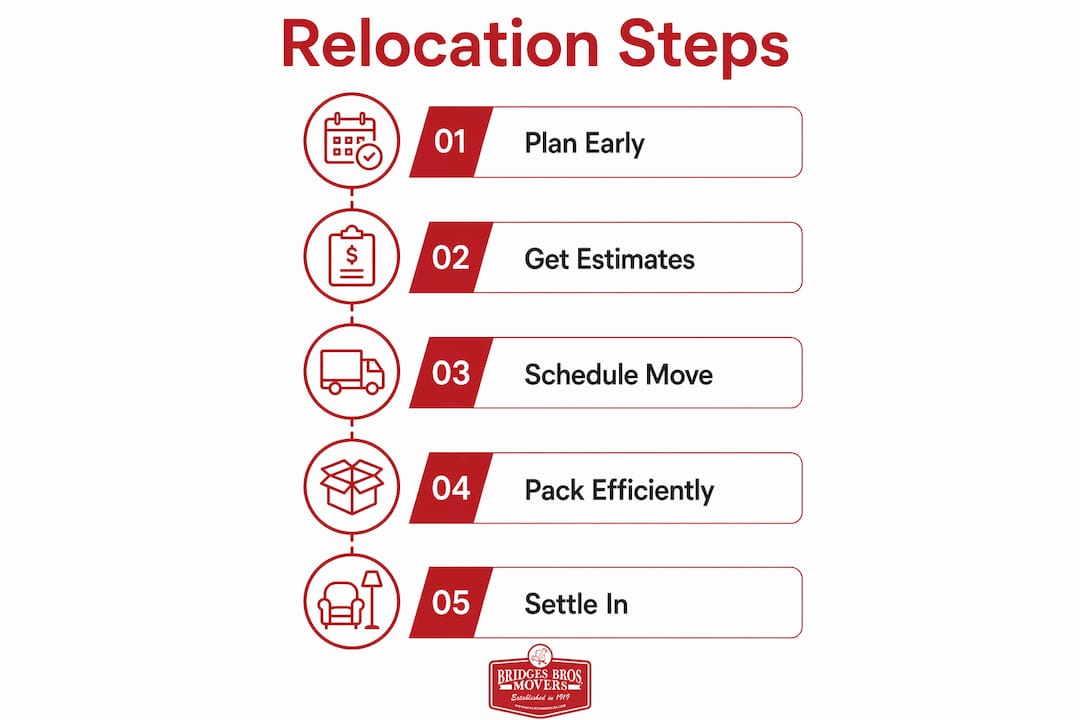
Follow this sequence to keep the process organized:
Choose your moving method. Decide between full-service movers, a moving container, or a rental truck based on your budget and physical capacity. Review the full-service moving options available for interstate moves before committing.
Get written estimates. Collect at least three binding or not-to-exceed quotes. Confirm delivery windows in writing.
Declutter before packing. Every item you do not move saves money. Donate, sell, or discard anything you would not pay to ship 1,400 miles.
Protect your belongings. Review your moving insurance options before the truck is loaded. Basic carrier liability covers very little.
Handle administrative tasks early. Update your Florida address with the USPS, transfer your driver’s license within 30 days of establishing residency, and register your vehicle within the same window. File for the homestead exemption by march 1 of the year after you move in.
Research Florida neighborhoods carefully. Some communities include Community Development District fees in their property taxes. These CDD fees can add hundreds of dollars per year to your housing costs and are not always obvious in listing prices.
If you have pets making the trip, pet-friendly moving tips can help reduce stress for the whole family during the long drive south.
For families navigating questions about who covers transportation costs in a relocation, legal guidance can clarify responsibilities before the move begins.
Key Takeaways
A successful New Hampshire to Florida relocation requires early booking, written cost estimates, and a clear-eyed view of Florida’s financial and lifestyle trade-offs.
Point
Details
Moving cost range
Full-service moves cost $4,000–$9,500; rental trucks run $1,108–$3,079 for this route.
Tax trade-offs
Florida’s lower property tax saves money, but a 7% sales tax and high insurance premiums offset gains.
Lifestyle adjustment
Expect car dependency, concrete block homes, no basements, and active hurricane season preparation.
Book early
Reserve your mover 4–8 weeks ahead during peak season to lock in rates and availability.
Admin deadlines
Transfer your Florida license and vehicle registration within 30 days of establishing residency.
What I have learned from helping families make this move
The families who struggle most with this relocation are the ones who focused entirely on the financial math and skipped the lifestyle research. The tax savings are real. The property tax difference on a $400,000 home is nearly $4,000 per year. But no spreadsheet captures what it feels like to drive everywhere, manage a lawn in july heat, or spend $5,000 on hurricane shutters in your first year.
The families who settle in well are the ones who visited Florida in august, not december. Anyone can love Florida in the winter. The real test is whether you can handle the summer. I have seen New Hampshire families fall in love with the Gulf Coast and never look back. I have also seen families return north after two years because they missed the seasons more than they expected.
My honest advice: spend at least one full year before drawing conclusions. The first summer is hard. The second is manageable. By the third, most people have built routines around the heat and genuinely enjoy the lifestyle. Working with an experienced mover who knows interstate logistics also removes a significant layer of stress from the process. The physical move itself should be the easy part.
— Patrick
Bridges Bros Movers and your New Hampshire to Florida relocation
Bridges Bros Movers has been helping New Hampshire families relocate since 1919, and long-distance moves to Florida are a natural extension of that work. The team offers residential moving services built for interstate moves, including full-service packing, loading, and delivery coordination. Whether you need help with packing materials for a careful pack-yourself approach or want a full-service crew to handle everything, Bridges Bros Movers has the experience to get your household to Florida safely. Request a free quote early, confirm your delivery window in writing, and let a team that knows New Hampshire handle the details from the first box to the last mile.
FAQ
How much does it cost to move from New Hampshire to Florida?
A full-service move for a 2–3 bedroom home costs between $4,000 and $9,500. Rental trucks run $1,108 to $3,079, making them the most affordable option for those willing to do the work themselves.
How far is New Hampshire from Florida?
The driving distance from New Hampshire to Florida is approximately 1,400 miles. Most professional movers complete delivery within 7 to 14 days depending on the service type and delivery schedule.
Does Florida have lower taxes than New Hampshire?
Both states have no income tax, but Florida charges about 7% in combined sales tax while New Hampshire charges none. Florida’s property tax rate of 0.89% is significantly lower than New Hampshire’s 1.86%, though higher insurance premiums offset part of that savings.
When is the best time to move from New Hampshire to Florida?
Fall and winter moves offer better pricing and easier scheduling. Peak season runs from late spring through summer, when demand is highest and rates increase. Booking 4 to 8 weeks in advance during peak periods secures better availability.
What should I know about Florida homes before relocating?
Florida homes are built with concrete blocks rather than wood framing, lack basements due to high water tables, and use screened lanais instead of decks. These construction differences affect storage options, layout, and how you approach home maintenance compared to a typical New Hampshire property.

 Both states have no state personal income tax, which is the first financial similarity most people notice. The differences show up in sales tax, property tax, and insurance. Florida charges a combined sales tax of about 7%, while New Hampshire has no sales tax at all. On $40,000 in annual spending, that gap adds up to roughly $2,800 per year out of pocket.
 Property taxes tell a different story. Florida’s average property tax rate is 0.89%, compared to New Hampshire’s 1.86%. On a $400,000 home, that difference saves you approximately $3,880 per year. Florida’s homestead exemption reduces that liability further for primary residences, making ownership more affordable for families who plan to stay long term.
The offset is homeowners insurance. Florida insurance premiums commonly run $2,500 to $6,000 or more per year due to hurricane risk. New Hampshire homeowners typically pay $1,200 to $2,000 annually. That gap partially cancels out the property tax savings, so the net financial benefit depends heavily on where in Florida you buy and what coverage you carry.
Here is a side-by-side comparison of the key financial differences: