
TL;DR:
- Moving storage solutions provide flexible, secure options to manage belongings during transitions.
- Professional storage often reduces overall costs by minimizing damage, injury, and time delays.
- Incorporating storage into your moving plan enhances control, reduces stress, and ensures timely arrivals.
Planning a move in New Hampshire, Maine, or Massachusetts is rarely as simple as it first appears. Most families and businesses start out confident, only to realize midway through that the logistics are far more demanding than expected. 40% of movers underestimate the true cost of a DIY approach, from damaged furniture to unexpected delays. Moving storage solutions address exactly these gaps, giving you a structured, flexible way to manage your belongings at every stage of the relocation process. This article walks you through what storage solutions involve, how they compare to going it alone, and how to put them to work for your specific move.
Table of Contents
- What are moving storage solutions?
- Comparing full-service storage vs. DIY moves
- Key benefits for families and businesses
- Applying moving storage solutions: Practical steps
- What most movers won’t tell you about storage solutions
- Take the next step: Stress-free moving and storage options
- Frequently asked questions
Key Takeaways
| Point | Details |
|---|---|
| Avoid hidden costs | Professional storage solutions prevent surprise expenses by streamlining the moving process. |
| Reduce risk and injury | Full-service moving and storage lowers chances of damage and personal injury, especially for large moves. |
| Flexibility and peace of mind | Storage services give you flexible scheduling, secure storage, and relief from relocation stress. |
| Custom solutions | Families and businesses can tailor storage and moving options for unique needs in New Hampshire, Maine, and Massachusetts. |
What are moving storage solutions?
Moving storage solutions are services that allow you to safely hold your belongings before, during, or after a move. They fill the gap that often opens up when your move-out date and move-in date don’t perfectly line up, or when you simply need more time to organize everything properly. Think of them as a buffer zone between your old life and your new one.
These services fall into a few distinct categories:
- Short-term storage: Ideal for gaps of a few days to a few weeks between moves. Great for families waiting on a new home to close or businesses transitioning between office spaces.
- Long-term storage: Best suited for extended transitions, downsizing, or seasonal storage needs. Useful when you’re moving into a smaller space and need time to decide what stays and what goes.
- Full-service storage: The moving company handles everything, including packing, pickup, secure storage, and final delivery. You don’t lift a finger.
- Self-storage: You rent a unit and manage access, packing, and transport yourself. Lower cost on paper, but more work on your end.
Understanding storage solutions for moves helps you determine which category fits your situation. The decision often depends on your timeline, the size of your household or business, and how much hands-on involvement you want.
Who benefits most from moving storage? Families buying and selling homes simultaneously often need a temporary home for their furniture. Businesses relocating offices need secure, organized storage so operations aren’t disrupted. People downsizing frequently need extra time to sort through years of accumulated belongings. And anyone relocating long-distance across New England benefits from the added flexibility that short-term vs. long-term storage options provide.
Storage options genuinely support more efficient moves for both businesses and households, reducing chaos and keeping your timeline on track.
Comparing full-service storage vs. DIY moves
Once you understand what storage options exist, the next question is whether to go the professional route or handle things yourself. It’s a fair question, and the answer depends on more than just upfront price.
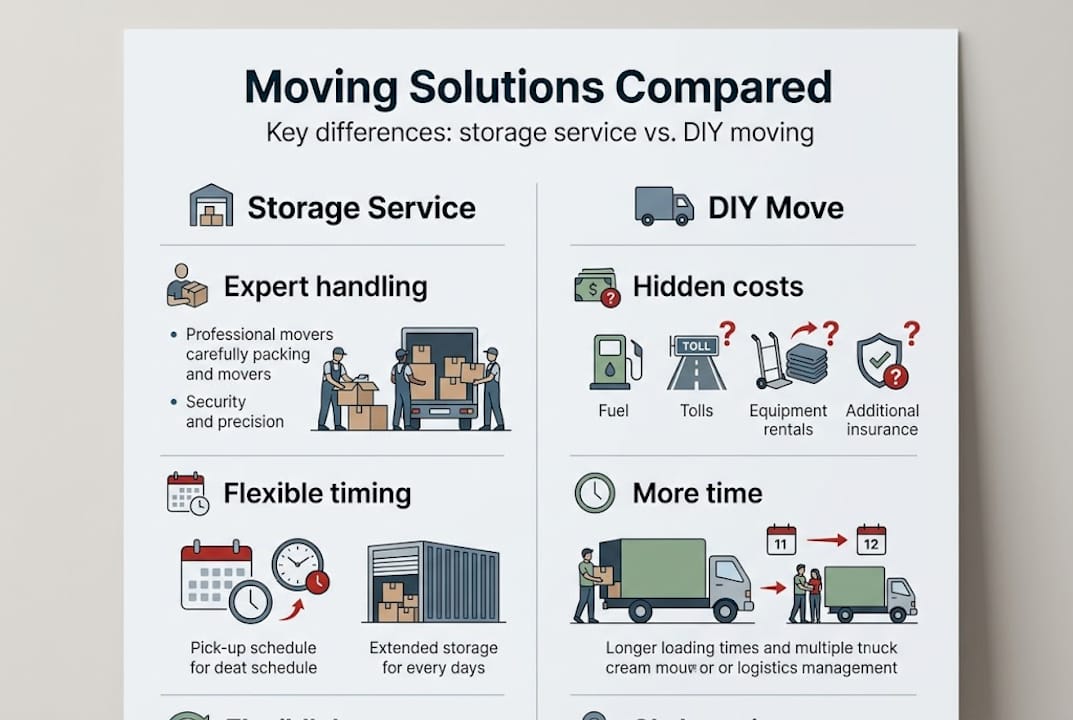
Here’s a side-by-side look at how the two approaches compare:
| Factor | Full-service storage | DIY move |
|---|---|---|
| Upfront cost | Higher | Lower |
| Hidden costs | Minimal | Rental trucks, gas, packing supplies, time off work |
| Injury risk | Low (professionals handle heavy lifting) | Higher |
| Scheduling flexibility | High | Limited by truck rental availability |
| Damage risk | Low (trained packing and handling) | Higher without experience |
| Time investment | Low | Very high |
The table tells a clear story. DIY moves underestimate costs roughly 40% of the time, and that doesn’t account for the physical toll or the hours lost to coordinating friends, renting equipment, and making multiple trips.
“The real cost of a DIY move isn’t just the truck rental. It’s the weekend you lost, the back injury you didn’t plan for, and the dresser that didn’t survive the trip.”
For families moving a 3-bedroom home in Portsmouth or a business relocating its Manchester office, safe, stress-free professional moves eliminate most of these risks before they happen. For smaller, simpler moves with minimal furniture, DIY can work. But once complexity increases, the value of professional help becomes hard to ignore.
Pro Tip: Before committing to DIY, tally every potential expense: truck rental, mileage, fuel, packing materials, time off work, and potential storage unit fees. That number often surprises people and makes professional quotes look far more reasonable.
If you’re still on the fence, making moving easier starts with an honest look at your actual available time, physical capacity, and total budget, not just the rental truck quote.
Key benefits for families and businesses
Now let’s look at the specific advantages that moving storage solutions deliver for households and commercial clients across New Hampshire, Maine, and Massachusetts.
For families:
- Reduced risk of damage or loss: Professional storage facilities use climate control and secure access. Your grandmother’s antique sideboard is far safer in a monitored facility than stacked in a friend’s garage.
- Flexibility in timing: Life rarely goes according to plan. Storage gives you breathing room when closings are delayed or leases don’t align perfectly.
- Easier staging and decluttering: Temporarily storing furniture lets you stage your current home for sale without living around boxes.
- Peace of mind: Knowing your belongings are secure reduces one layer of stress during an already demanding time.
For businesses:
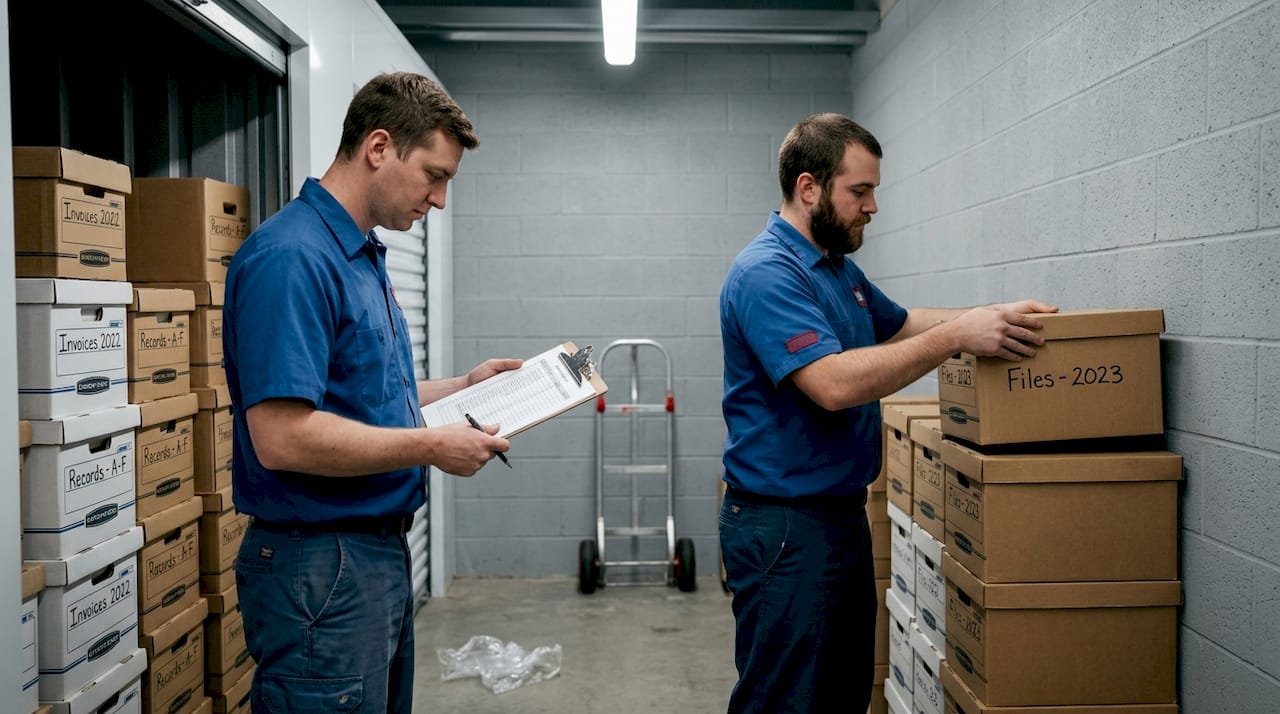
- Continuity of operations: Secure, organized storage means your equipment, files, and furniture are protected during the transition without halting productivity.
- Scalable solutions: Whether you’re moving a small office or a large commercial space, storage plans can scale to fit your needs.
- Reduced liability: Full-service storage helps avoid injury and time loss, especially for larger commercial moves where heavy equipment and sensitive files are involved.
Pro Tip: If you’re relocating a business, start sorting and labeling items at least four weeks before your move date. This makes loading and storage organization significantly faster and reduces costs.
For detailed guidance tailored to office relocations, commercial moving tips can help you build a practical plan from start to finish. And if you want your items to arrive intact and on time, understanding how packing reduces stress is a good place to start.
Across the board, the benefit that matters most is this: storage solutions give you control. Control over your timeline, your belongings, and your peace of mind.
Applying moving storage solutions: Practical steps
Knowing the benefits is one thing. Putting them into action is where most people get stuck. Here’s a practical framework you can follow.
- Assess what you actually need storage for. Go room by room and identify items you won’t need immediate access to after the move. These are your prime storage candidates.
- Choose between short-term and long-term options. If your gap is under a month, short-term is usually the right call. If you’re downsizing or waiting on renovations, plan for long-term.
- Integrate packing with your storage plan. Don’t pack randomly. Use the role of packing services to understand how professional packers organize items for storage access, not just transport.
- Coordinate pickup and access windows. Know in advance when you’ll need specific items back. This helps your moving company schedule efficiently and avoids last-minute surprises.
- Confirm climate control requirements. Electronics, artwork, wood furniture, and important documents all benefit from climate-controlled units, especially during New England winters.
Here’s a quick reference to match your situation to the right solution:
| Move type | Recommended storage | Duration |
|---|---|---|
| Buying and selling simultaneously | Short-term, full-service | 2 to 6 weeks |
| Long-distance relocation | Long-term, climate-controlled | 1 to 3 months |
| Downsizing | Long-term, self or full-service | 1 to 6 months |
| Office relocation | Full-service, secure facility | 2 to 8 weeks |
| Renovation before moving in | Short to long-term | 4 to 12 weeks |
DIY moves often lead to time loss and underestimated expenses, which is especially true for larger households and businesses that juggle more items, more people, and tighter timelines. Planning your storage needs in advance through packing services for stress-free moves sets you up to avoid those pitfalls entirely.
What most movers won’t tell you about storage solutions
Here’s something we’ve seen firsthand over more than a century of moving families and businesses across New England: most people choose storage reactively, not proactively. They call for a storage unit after something has already gone wrong, not as part of a smart plan from the start.
The conventional wisdom says storage is an extra cost you add only if you have to. We’d push back on that. When storage is built into your moving plan from day one, it often reduces your total cost by giving you more scheduling flexibility, fewer rushed decisions, and better protection for your belongings.
Another thing most movers won’t say out loud: why hire professional movers comes down to more than muscle. It’s about having a system that has been refined over years of actual moves. DIY movers often underestimate not just the financial cost, but the emotional cost of managing a chaotic, unplanned move. Building storage into your plan turns a stressful scramble into a calm, organized transition.
Take the next step: Stress-free moving and storage options
Ready to make your move simpler? Bridges Bros Movers has been helping families and businesses across New Hampshire, Maine, and Massachusetts move with confidence since 1919. Whether you need a short-term solution between closings or a full-service plan for a long-distance relocation, we have options built around your timeline and budget. Explore our storage services to find the right fit, or browse all of our moving and storage services to see how we can support every stage of your move. When you’re ready to talk numbers, get a free quote and we’ll walk you through your options.
Frequently asked questions
Is storage necessary for every move?
Storage isn’t required for every move, but it’s a practical necessity for complex, large, or time-sensitive relocations across New England. Storage options become especially valuable when move-out and move-in dates don’t align.
How can storage reduce stress during relocation?
Storage gives you flexibility over your timeline, protects belongings during the transition gap, and removes the pressure of having to coordinate everything on a single day. Full-service moving and storage also removes the physical burden from your plate entirely.
What is the difference between short-term and long-term storage?
Short-term storage covers gaps of a few days to a few weeks, while long-term storage works best for downsizing or extended transitions that stretch beyond a month. Storage options exist across this full spectrum to match your specific situation.
Are moving storage solutions more expensive than DIY?
The upfront cost of DIY looks lower, but 40% of movers underestimate the hidden expenses involved. Professional storage protects you from damage costs, wasted time, and physical injury that can easily exceed the cost difference.
Can I combine packing services with moving storage?
Yes, and it’s one of the most efficient ways to move. Full-service storage paired with professional packing means your items are organized, protected, and ready for delivery on your schedule without you having to manage the details yourself.