
TL;DR:
- Proper pet relocation requires early veterinary preparation, routine management, and off-site boarding to ensure safety and reduce stress during moving. Preparing a safe space, securing transport, and maintaining calm behavior help pets adjust with minimal anxiety. Avoiding rush-related mistakes and following structured plans support a smooth transition to the new home.
Pet relocation, the professional term for moving animals during a residential or commercial move, is fully achievable with the right preparation. The best moving tips with animals center on three non-negotiables: veterinary guidance before the move, routine maintenance throughout the process, and safe boarding on moving day. Skipping any one of these raises the risk of escape, injury, or lasting anxiety in your pet. Whether you have dogs, cats, or smaller animals, the steps below give you a clear, proven path to a low-stress relocation for every member of your household.
What are the best moving tips with animals before moving day?
Preparation is the single most effective tool for keeping pets calm during a move. The work you do in the weeks before moving day determines how your animal handles the chaos of the actual event.
Start with a vet visit scheduled 4–6 weeks in advance. Your vet can update vaccinations, issue health certificates, and discuss anti-anxiety medications if your pet is prone to stress. Health certificates are often valid for only 10 days before travel, so timing this appointment correctly matters. Ask your vet about Cerenia or similar anti-nausea prescriptions for dogs that get carsick during long drives.
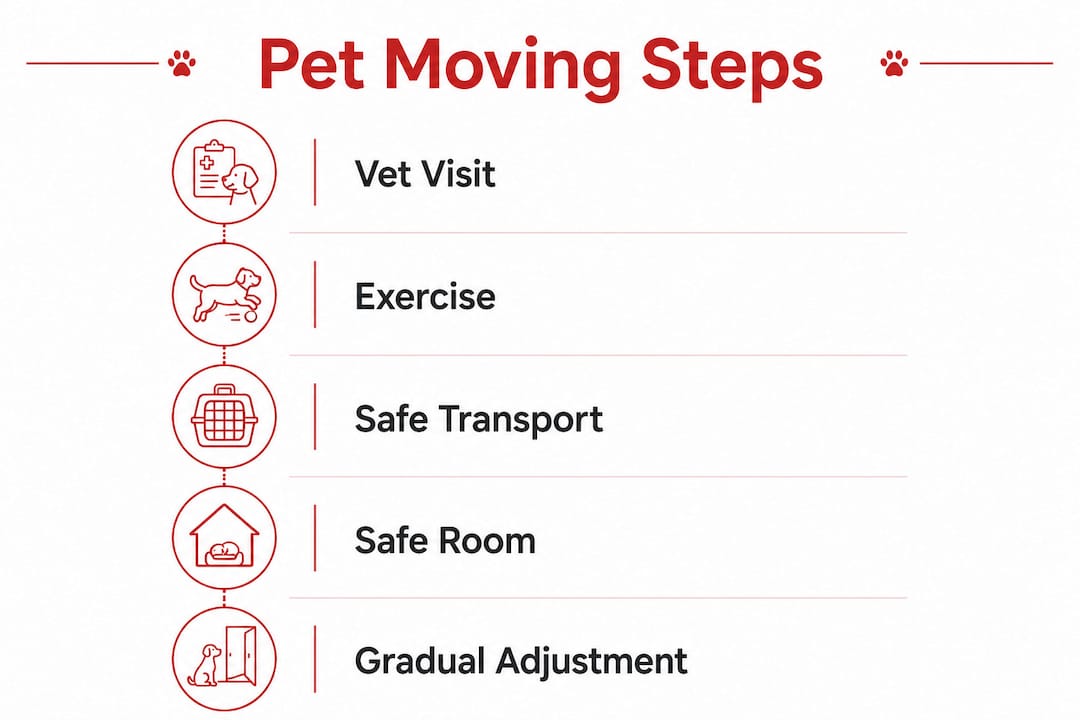
Crate acclimation 4–6 weeks before the move reduces travel anxiety by building positive associations with the carrier. Feed your pet inside the crate, let them sleep near it, and place a worn t-shirt inside so your scent is present. Pets that enter a carrier on moving day without prior exposure often panic.
Here is a practical pre-move checklist to work through:
- Schedule a vet appointment 4–6 weeks out for vaccinations and health certificates
- Begin crate or carrier training immediately after booking the vet visit
- Update your pet’s microchip registration with your new address
- Replace or update ID tags with your new contact information
- Take recent, clear photos of your pet in case of separation
- Introduce packing boxes gradually to prevent sudden anxiety spikes in your home
- Keep feeding, walking, and sleep schedules consistent throughout the packing period
Pro Tip: Give your dog a longer walk than usual on the mornings leading up to move day. Exercise before moving reduces stress behaviors and helps dogs settle during the busiest parts of the day.
How do you keep pets safe and calm on moving day?
Moving day is the highest-risk period for pets. Doors open and close constantly, strangers move through the home, and the familiar environment disappears piece by piece. The gold standard for pet safety on this day is off-site boarding.
-
Book a boarding facility or pet sitter in advance. Boarding costs range from $30–$160 per day for dogs and $20–$90 per day for cats in 2026. That cost is minor compared to the risk of a pet escaping through an open door during loading. Off-site boarding removes your animal from the chaos entirely.
-
Create a designated safe room if boarding is not possible. Choose a room that movers will not enter, place your pet inside with familiar bedding, food, water, and toys, and put a clear “Do Not Disturb” sign on the door. Inform every mover on your team about the room before work begins.
-
Never allow pets to roam during loading or unloading. Even calm animals can bolt when startled. A single open front door is all it takes.
-
Prepare a pet essentials kit the night before. Pack food, medications, medical records, a favorite toy, and your vet’s contact information in a bag you keep with you, not in the moving truck.
-
Feed a light meal 3–4 hours before travel. A full stomach increases the chance of nausea during the drive. A light meal timed correctly keeps your pet comfortable without leaving them hungry.
Pets sense your emotional state directly. A calm, predictable owner is the most effective tool for reducing animal anxiety on moving day. Rushing, shouting, or showing visible stress signals to your pet that something is wrong.
Pro Tip: If your dog is high-energy, arrange for a dog walker or friend to take them out for a long run while movers are working. Physical activity is one of the fastest ways to reduce stress-related behavior.
How do you transport animals safely during travel?
Safe transport during pet relocation requires the right equipment and a consistent routine during the drive. The carrier or crate you choose sets the foundation for the entire trip.
- Select a carrier that matches your pet’s size. Your pet should be able to stand, turn around, and lie down without restriction.
- Secure carriers with seat belts or place them on the floor behind the front seat. An unsecured crate becomes a projectile in sudden stops.
- Never leave a pet unattended in a parked vehicle. Temperatures inside a car rise rapidly, even on mild days.
- Plan rest stops every 2–3 hours for water, bathroom breaks, and a short walk for dogs.
- Maintain a stable vehicle temperature throughout the drive. Avoid blasting heat or air conditioning directly at the carrier.
- Keep the vehicle quiet. Loud music and sudden sounds increase stress in animals.
| Travel need | Recommended action |
|---|---|
| Carrier size | Pet stands, turns, and lies down comfortably |
| Vehicle security | Buckle carrier with seat belt or place on floor |
| Rest stops | Every 2–3 hours for water and bathroom breaks |
| Temperature | Stable and moderate, no direct vents on carrier |
| Motion sickness | Discuss Cerenia or calming aids with vet before travel |
| Emergency prep | Carry medical records and vet contact in your bag |
Consult your vet before the trip about motion sickness medication or calming aids. Some pets travel well without any support. Others benefit significantly from a prescribed calming supplement or medication. Your vet knows your animal’s history and can give you a specific recommendation rather than a general one.

For pet owners relocating internationally or across state lines, properly timed health certificates are required for air travel and some border crossings. Confirm the validity window with your vet and airline before the travel date.
How do you help your pet adjust to a new home?
Most pets adapt to new environments in 1–4 weeks. That timeline is a useful benchmark. If your pet shows stress signs beyond four weeks, a vet consultation is the right next step.
The fastest way to help a pet settle is to set up a safe room before giving full access to the house. Place familiar bedding, toys, food, and water in one room. Familiar scents and items help pets accept the new environment because they signal continuity. Once your pet eats normally and moves around the room confidently, you can expand access gradually.
For cats specifically, keep them indoors for 2–4 weeks after arrival. Cats that go outside too soon often attempt to return to their previous territory. Wait until your cat is eating normally, grooming regularly, and showing relaxed body language before allowing outdoor access.
For dogs, inspect the yard and fence line before any off-leash time. Look for gaps, loose boards, or low sections a dog could squeeze through or jump. Walk the yard perimeter yourself before trusting it.
Additional steps that support adjustment:
- Keep feeding and walking schedules identical to those in your previous home
- Use Feliway pheromone diffusers for cats, which have strong evidence for reducing feline stress during relocation
- Monitor for silent anxiety signs like hiding, appetite loss, or excessive grooming
- Avoid introducing new pets, new furniture arrangements, or new routines during the first two weeks
Pro Tip: Spend extra quiet time with your pet in the safe room during the first few days. Your presence is the most reassuring signal you can give. Sit on the floor, read a book, and let your pet approach you on their own terms.
What mistakes should you avoid when moving with pets?
The most common errors in pet relocation are avoidable with a little foresight. Knowing what not to do is as useful as knowing what to do.
Avoid sudden routine changes in the weeks before the move. Pets read consistency as safety. Changing feeding times, walk schedules, or sleeping arrangements adds stress before the move even begins. Keep everything as normal as possible until moving day.
Do not punish stress behaviors. A cat hiding under the bed or a dog pacing is not misbehaving. These are normal responses to an unfamiliar situation. Punishment increases anxiety and damages trust at exactly the moment your pet needs reassurance.
Do not skip the vet consultation for anxious pets. Behavioral support and medications for anxious animals are humane and effective. Many pet owners feel reluctant to medicate, but a short course of anti-anxiety support during a move is far less harmful than weeks of unmanaged stress.
The owner’s calm and predictable demeanor is the most effective tool for helping pets settle during stressful moves. Animals do not understand what a move means, but they read your body language and tone constantly.
Avoid letting pets outside prematurely in the new neighborhood. Dogs need leash walks until they learn the new territory. Cats need weeks indoors before any outdoor access. Rushing this step is the leading cause of post-move pet escapes. For additional guidance on items needing special planning, including pets and fragile belongings, Bridges Bros Movers has detailed resources on their website.
If you are relocating internationally, resources like this 2026 relocation survival guide cover country-specific requirements that affect pet documentation and travel logistics.
Key Takeaways
Relocating pets safely requires veterinary preparation, consistent routines, secure transport, and a structured adjustment period in the new home.
| Point | Details |
|---|---|
| Vet visit timing | Schedule 4–6 weeks before the move for vaccinations, health certificates, and anxiety support. |
| Crate acclimation | Begin carrier training 4–6 weeks out to reduce travel anxiety on moving day. |
| Moving day safety | Use off-site boarding to eliminate escape risk during loading and unloading. |
| Safe transport | Secure carriers with seat belts, stop every 2–3 hours, and never leave pets in a parked car. |
| Post-move adjustment | Most pets settle in 1–4 weeks; use a safe room, familiar items, and consistent routines to speed the process. |
What I’ve learned from watching families move with pets
I’ve watched a lot of moves over the years, and the ones that go smoothly for pets almost always share one thing: the owner prepared early and stayed calm. The ones that go badly share the opposite. A pet that escapes on moving day, a cat that stops eating for two weeks, a dog that develops separation anxiety in a new home. These outcomes are not random. They are almost always the result of skipped preparation steps.
The piece of advice I give most often is this: treat your pet’s moving plan with the same seriousness as your own. You would not show up to a long-distance move without a plan for where you are sleeping that night. Your pet deserves the same level of thought. Book the vet appointment first, before you book anything else.
The other thing I have seen underestimated repeatedly is the power of the owner’s own behavior. Pets are not confused by boxes or trucks. They are confused by a version of you they do not recognize. Stay steady, keep your voice calm, and maintain your normal routines as long as possible. Your pet is watching you for information about whether this situation is safe. Give them good information.
For families in New Hampshire and the surrounding region, Bridges Bros Movers has put together pet-friendly moving tips specifically for New England conditions and local logistics. It is worth a read before your move date.
— Patrick
Planning a pet-friendly move in New England?
Bridges Bros Movers has served families across New Hampshire, Maine, and Massachusetts since 1919. The team understands that a move involves every member of your household, including the four-legged ones. From careful scheduling that gives you time to arrange pet boarding, to full-service residential moving that keeps the process organized and on time, Bridges Bros Movers takes the logistical pressure off your plate. Explore the full range of moving and packing services to find the right fit for your move, and request a personalized quote to get started with a team that has been doing this right for over a century.
FAQ
How far in advance should I take my pet to the vet before moving?
Schedule a vet visit 4–6 weeks before your move date. This gives time to update vaccinations, obtain health certificates, and discuss anxiety medications if needed.
Is it safe to leave my pet home during moving day?
Off-site boarding is the safest option on moving day. If boarding is not possible, confine your pet to a designated room with food, water, and a “Do Not Disturb” sign on the door.
How long does it take for a pet to adjust to a new home?
Most pets adapt within 1–4 weeks after a move. If stress signs like hiding or appetite loss persist beyond four weeks, consult your veterinarian.
Should I use calming medication for my pet during the move?
Ask your vet before the move. Medications like Cerenia for motion sickness and prescription calming aids are safe and effective options for anxious or nausea-prone pets.
How do I keep my cat from escaping after moving to a new home?
Keep cats indoors for 2–4 weeks after arrival. Allow outdoor access only after your cat is eating normally, grooming regularly, and showing relaxed behavior in the new space.