
TL;DR:
- Packing a large home requires a phased, room-by-room approach spread over six to eight weeks to prevent chaos and reduce damage. Proper supplies, clear labeling, and an organized timeline help families arrive calm and ready at their new home, avoiding common mistakes. Using professional packing materials and detailed planning simplifies the move, making the process less stressful and more efficient.
Packing a large home efficiently is defined as a phased, room-by-room process that spreads the workload across six to eight weeks and uses uniform materials, clear labeling, and deliberate decluttering to reduce damage and moving-day chaos. Most families underestimate how much time a large home requires. A four-bedroom house with a finished basement and a garage can easily take 200 or more boxes, and without a structured plan, the final days before the move become a frantic scramble. Bridges Bros Movers has helped New England families relocate since 1919, and the single most consistent finding is this: the families who pack on a schedule arrive at their new home calm, organized, and ready to settle in.
What supplies do you need for packing a large home efficiently?
The right materials are not optional. Professional uniform boxes stack cleanly, resist crushing, and protect contents far better than free grocery-store boxes, which often fail under the weight and humidity of a move.
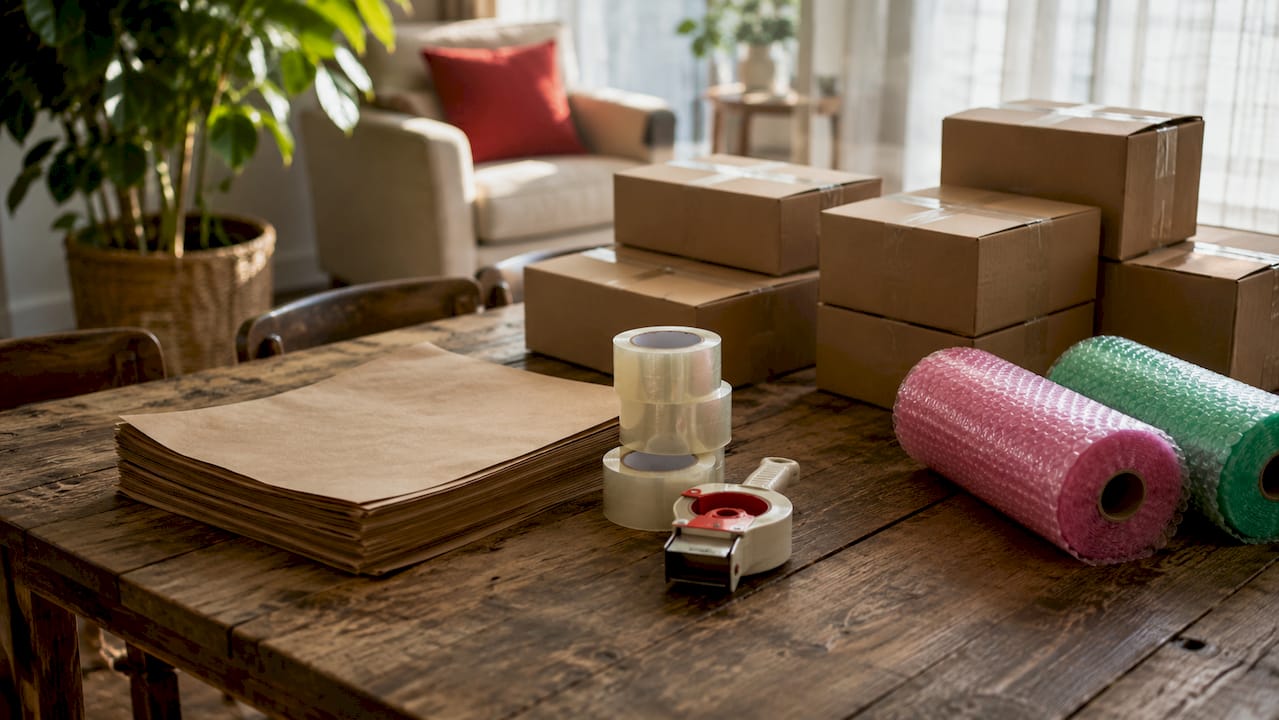
Box sizes and their correct uses
Use three core box sizes and assign each a specific purpose:
- Small boxes (1.5 cubic feet): Books, tools, canned goods, and other dense items. Packing books in small boxes prevents boxes from becoming too heavy to lift safely.
- Medium boxes (3 cubic feet): Clothing, toys, small appliances, and most household goods.
- Large boxes (4.5 cubic feet): Pillows, comforters, lampshades, and other light, bulky items only. Never fill a large box with heavy goods.
Protective supplies checklist
| Supply | Purpose |
|---|---|
| Packing paper | Wrapping fragile items and filling voids |
| Bubble wrap | Extra cushioning for glassware and ceramics |
| Mattress covers | Protecting mattresses from dirt and tears |
| Furniture blankets | Preventing scratches on wood and upholstered pieces |
| Color-coded labels | Identifying rooms at a glance during loading and unloading |
| Permanent markers | Writing contents, room, and fragile warnings on every side |
| Packing tape and dispenser | Sealing boxes securely without gaps |
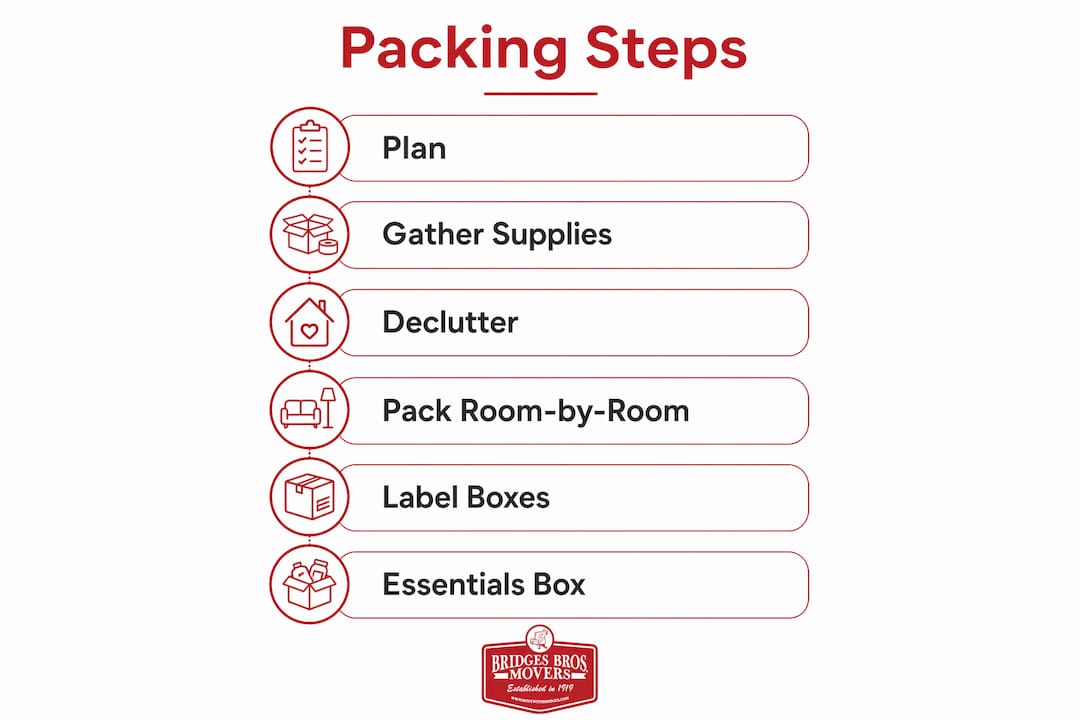
Order more supplies than you think you need. Running out of tape or bubble wrap mid-pack forces a stop that breaks your momentum and adds stress.
Pro Tip: The void-fill technique, which means filling empty box space with scrunched packing paper or rolled linens, prevents items from shifting during transit and is one of the most effective ways to reduce breakage.
How do you plan the packing timeline for a large home?
A phased timeline is the single most effective packing strategy for moving a large home. Starting packing 6–8 weeks before moving day reduces last-minute stress and the errors that come with rushing. The goal is to match each phase to how often you actually use the items in that phase.
The five-phase packing plan
-
Weeks 6–8 out: Declutter and gather supplies. Walk every room and decide what leaves the house before a single box is packed. Decluttering before packing cuts required boxes by 20–30%, which directly lowers your moving cost. Donate, sell, or discard anything you have not used in the past year. Order all packing supplies during this phase so they are ready when you need them. You can find guidance on decluttering before your move to make this step less daunting.
-
Weeks 4–5 out: Pack storage and off-season items. Attics, basements, garages, and seasonal storage areas go first. These items are out of daily rotation and will not be missed. Holiday decorations, sporting equipment used only in summer or winter, and archived paperwork all belong in this phase.
-
Week 3 out: Pack decor and spare rooms. Wall art, decorative objects, guest bedroom furniture, and books move into boxes now. The home starts to look sparse, which is normal and expected at this stage.
-
Weeks 1–2 out: Pack kitchen and living areas. This is the most time-consuming phase. Pack duplicate kitchen tools, serving dishes, and specialty appliances first. Leave only what you need for daily cooking. Pack the living room except for one set of seating and the television.
-
Moving day: Final essentials and last-minute items. Toiletries, phone chargers, medications, and daily clothing pack last and travel with you, not on the truck.
Pro Tip: Phased packing that aligns with daily-use priority keeps your home livable throughout the process and prevents the common mistake of packing things you still need.
What are the best room-specific packing methods?
Room-by-room packing is the best packing method for large homes because it keeps contents together, speeds unpacking, and prevents the confusion that comes from mixed boxes. Mixing contents from different rooms in one box creates disorganization that can take days to untangle at the destination.
Room-by-room packing priorities
- Storage areas and guest rooms first. These rooms have the least daily impact and the most items that can be packed weeks in advance.
- Books and dense items. Always use small boxes. A box of books that two people cannot lift safely is a box that will be dropped.
- Fragile items. Wrap each piece individually in packing paper or bubble wrap before placing it in a dish pack box. Never nest unwrapped items.
- Kitchen. Use dish pack boxes with cell dividers for glassware. Pack decorative items and duplicates early. Leave daily essentials for the final two days.
- Bathrooms. Leave toiletries until moving morning. Seal any liquids in zip-lock bags before boxing to prevent leaks.
- Daily essentials. Prepare a dedicated essentials box with 24-hour critical supplies including phone chargers, medications, a change of clothes, toiletries, snacks, and basic tools. This box travels in your personal vehicle.
Labeling system that actually works
Label every box on multiple sides with the destination room, a brief contents description, and any handling notes such as “fragile” or “heavy.” Assign each room a color and use matching colored tape or stickers. Number boxes per room and keep a simple master list. When movers carry 80 boxes off a truck, a color-coded label visible from any angle saves significant time.
Pro Tip: Consolidate loose hardware like screws and bolts in labeled zip-lock bags, then tape them to the corresponding furniture piece. Reassembly becomes straightforward and nothing gets lost in transit.
What are the most common packing mistakes in a large home?
Packing mistakes in large homes tend to cluster around three problems: wrong materials, poor labeling, and bad timing. Each one is avoidable with a clear plan.
-
Using free or inconsistent boxes. Grocery-store boxes lack structural integrity and collapse under weight or moisture. Uniform professional boxes stack safely and protect contents throughout the move.
-
Overloading large boxes. Large boxes are for light, bulky items only. Filling them with books or kitchen appliances creates boxes that injure movers and break contents.
-
Skipping or under-labeling. A box labeled only “kitchen” tells movers nothing about weight or fragility. Write the room, contents, and handling notes on every visible side.
-
Packing essentials too deep. Your phone charger, medications, and a change of clothes should never end up at the bottom of a sealed box on the truck. Pack them last and keep them with you.
-
Leaving furniture drawers loaded. Moving loaded furniture drawers increases injury risk and breakage. Empty every drawer, pack the contents separately, and tape the drawer shut before the movers arrive.
-
Starting kitchen packing on moving day. The kitchen is the most time-consuming room in any large home. Packing kitchen items last-minute causes rushed wrapping, broken dishes, and a chaotic loading process.
The most expensive packing mistake is not buying enough quality materials upfront. One broken lamp, one cracked mirror, or one ruined piece of furniture costs more than an entire order of professional packing supplies. Invest in the right boxes, tape, and padding before you pack a single item.
Pro Tip: Check your packing tips resource before you start. Knowing the most common errors in advance is the fastest way to avoid them.
How do you prepare for moving day and the final walkthrough?
Moving day preparation starts the day before, not the morning of. Completing these steps in advance prevents last-minute surprises and keeps loading on schedule.
- Defrost the refrigerator and freezer at least 24 hours before the truck arrives. A wet appliance delays loading and can damage flooring.
- Disassemble complex furniture the evening before. Bed frames, large shelving units, and dining tables take longer than expected. Photograph each piece before disassembly so reassembly at the new home is straightforward.
- Bag and label all hardware. Tape labeled bags directly to the furniture piece they belong to.
- Pack the essentials box last and load it into your personal vehicle, not the moving truck. This box should be the final thing you touch before leaving.
- Clear all pathways. Remove rugs, door stops, and any obstacles between rooms and the exit. Movers work faster and more safely on clear paths.
- Perform a room-by-room final walkthrough. Check inside every closet, cabinet, and drawer. Look behind doors and under beds. Photograph each room for your records, which also protects your security deposit if you are leaving a rental.
- Confirm the loading zone. Make sure the truck has clear access to your front door or driveway. Notify neighbors if needed, especially in tight New England neighborhoods.
Moving day runs smoothly when the preparation is done the night before. The goal on moving day itself is loading, not packing.
Key Takeaways
Packing a large home efficiently requires a phased timeline, uniform materials, consistent labeling, and a dedicated essentials box that travels with you, not on the truck.
| Point | Details |
|---|---|
| Start 6–8 weeks early | A phased plan spread over weeks prevents last-minute rushing and reduces errors. |
| Declutter before packing | Removing unused items cuts box count by 20–30% and lowers overall moving costs. |
| Use uniform professional boxes | Consistent box sizes stack safely and protect contents better than free or mixed boxes. |
| Label every box on multiple sides | Include room, contents, and handling notes so movers and you can locate items quickly. |
| Pack an essentials box last | Keep 24-hour supplies in your vehicle so critical items are always within reach. |
What I have learned from watching families pack large homes
After years of working alongside families moving out of four-bedroom colonials and sprawling New England farmhouses, the pattern is clear. The families who struggle most are not the ones with the most stuff. They are the ones who underestimated how long packing actually takes and started two weeks too late.
The decluttering step is where most people lose the most time. They stand in front of a closet full of items they have not touched in three years and try to make decisions in real time while also packing. That combination is slow and exhausting. My advice is to separate the two tasks completely. Spend one full weekend doing nothing but decluttering. Then start packing the following week with a clear head and a much smaller pile.
Labeling is the other area where I see families cut corners and regret it immediately. Writing “misc” on a box feels fine on packing day. On unpacking day, when you have 15 boxes labeled “misc” and you need your coffee maker, it is a different story. Spend the extra 30 seconds per box. Write the room, write two or three specific contents, and mark it fragile or heavy if it applies. That habit alone saves hours at the other end.
Professional-grade supplies are worth every dollar. I have seen families try to save money by collecting free boxes from liquor stores and grocery stores. Those boxes fail. They collapse under weight, they absorb moisture, and they do not stack cleanly on a truck. One broken item from a collapsed box costs more than a full order of proper moving boxes. Buy the right supplies once and protect everything you own.
— Patrick
Bridges Bros Movers makes large home packing less stressful
Packing a large home is a significant undertaking, and you do not have to handle every part of it alone. Bridges Bros Movers offers professional packing services for families across New Hampshire, Maine, and Massachusetts, including full-service packing, quality packing materials, and experienced residential moving crews who know how to protect your belongings from the first box to the final delivery. If you want expert hands on your move from start to finish, the residential moving team at Bridges Bros Movers is ready to help. Request a quote today and get a clear plan in place before moving day arrives.
FAQ
How early should you start packing a large home?
Start packing 6–8 weeks before your move date. A phased approach spread over that window reduces last-minute stress and gives you time to declutter before a single box is packed.
What is the best way to label boxes when moving a large home?
Label boxes on multiple sides with the destination room, a brief contents list, and any handling notes such as “fragile” or “heavy.” Use color-coded tape or stickers to identify rooms at a glance.
How do you pack a kitchen efficiently when moving?
Pack duplicate tools, serving dishes, and specialty appliances first, leaving only daily essentials for the final two days. Use dish pack boxes with cell dividers for glassware and wrap every fragile item individually.
What should go in an essentials box for moving day?
An essentials box should include phone chargers, medications, toiletries, a change of clothes, snacks, and basic tools. Keep this box in your personal vehicle so it is always accessible.
Does decluttering before packing actually save money?
Decluttering before packing cuts required boxes by 20–30%, which directly reduces the volume your movers transport and lowers your overall moving cost. Selling or donating items before the move also puts money back in your pocket. For more ways to reduce moving-related expenses, the 2026 household expense guide from Savings Grove covers practical cost-cutting strategies that apply directly to relocation planning.