
TL;DR:
- Proper planning and organization reduce stress and prevent damage during moves.
- Using the right packing materials and techniques ensures belongings are protected.
- Professional packing services help avoid costly mistakes and streamline the moving process.
Packing is the part of moving that most people underestimate until it’s too late. You start with good intentions, then suddenly it’s the night before the truck arrives and half your kitchen is still on the counter. For families and small business owners across New Hampshire, Maine, and Massachusetts, poor packing is the number one reason moves go sideways. The good news is that a clear, step-by-step approach makes the entire process manageable. This guide walks you through choosing materials, applying proven techniques, avoiding costly errors, and knowing when calling in professional help is the smartest move you can make.
Table of Contents
- Establish your packing game plan
- Choose the right packing materials
- Pack like a pro: Techniques and best practices
- Avoid these costly packing mistakes
- Why packing like a pro is about strategy, not speed
- Simplify your move with expert packing support
- Frequently asked questions
Key Takeaways
| Point | Details |
|---|---|
| Strategic planning | A clear plan with a checklist helps prevent last-minute stress, especially for families and businesses. |
| Quality materials matter | Investing in the right packing supplies saves money by reducing breakage and damage. |
| Avoid common mistakes | Overpacking and poor labeling are avoidable errors that can derail your move. |
| Best practices are key | Using professional packing techniques leads to safer and more efficient relocation. |
| Professional help pays off | Hiring pros or using their materials can save significant time and stress, especially for complex moves. |
Establish your packing game plan
Every smooth move starts with a plan. Without one, you end up packing the wrong things first, running out of boxes at the worst moment, and scrambling to find tape at midnight. Starting early reduces stress and significantly lowers the chance of damage to your belongings. Give yourself at least four to six weeks if you are moving a full household or a business.
Break the process into three clear stages:
- Declutter first. Before you pack a single box, go room by room and decide what you actually want to bring. Donating, tossing, or selling items now saves you time and money on moving day.
- Categorize your belongings. Group items by room and by fragility. Keep office supplies together, kitchenware together, and electronics separate from everything else.
- Build a packing schedule. Assign specific rooms or categories to specific days. Treat each session like an appointment you cannot cancel.
A room-by-room checklist is one of the most practical tools you can use. For families, this means starting with guest rooms, storage closets, and seasonal items. For small businesses, start with archived files, extra equipment, and supplies that are not in daily use. These stress-free move tips can help you build a customized timeline that fits your situation.
Pro Tip: Use a color-coding system for your boxes. Assign a different color of tape or marker to each room. When movers unload the truck, they can place boxes in the right room instantly without reading every label.
“A well-organized packing plan is not just about efficiency. It is about protecting your belongings and your peace of mind throughout the entire move.”
Labeling goes beyond just writing the room name. Include a short list of the top three items inside each box and note whether anything is fragile. This small step makes unpacking far less chaotic and helps you reduce packing stress on both ends of the move.
Choose the right packing materials
Once your plan is set, the right materials make all the difference in protecting your belongings. Not all boxes are created equal, and using the wrong ones is one of the fastest ways to end up with broken dishes or damaged equipment.
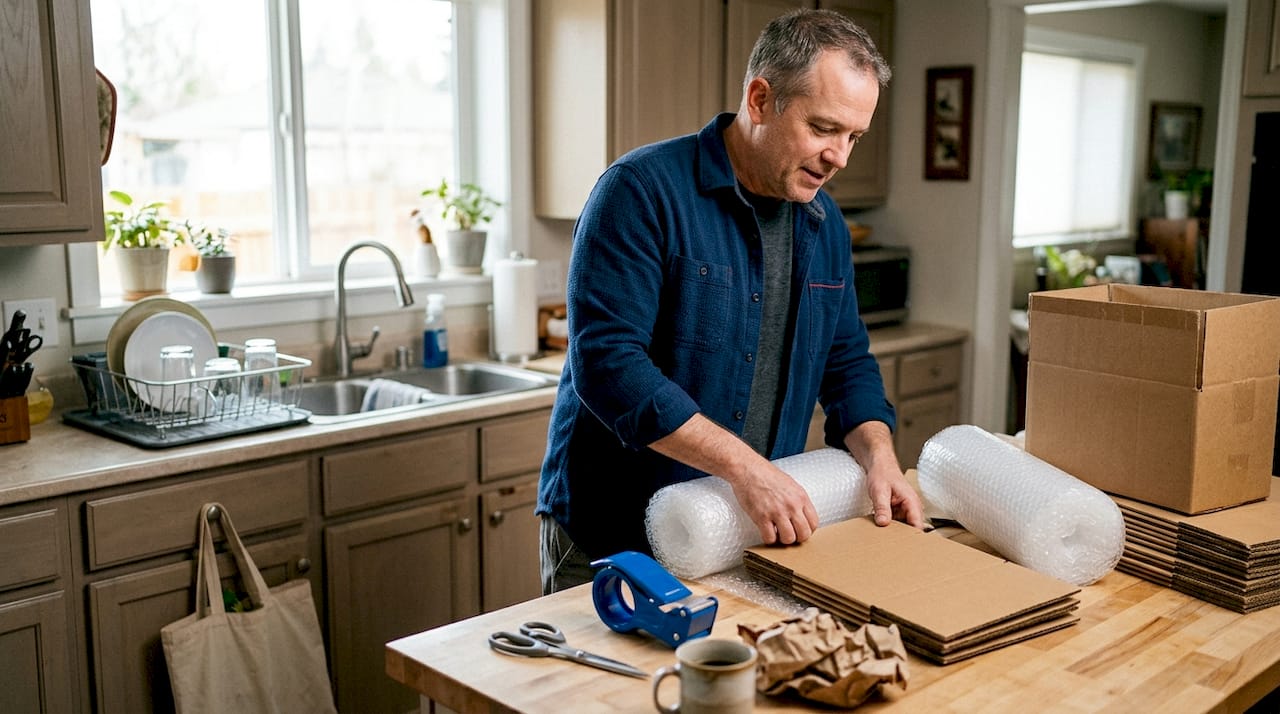
Here is a quick breakdown of the most useful materials and when to use them:
| Material | Best used for | Why it matters |
|---|---|---|
| Double-wall boxes | Heavy books, tools, appliances | Extra strength prevents crushing |
| Dish pack boxes | Plates, bowls, glassware | Thick walls absorb impact |
| Wardrobe boxes | Hanging clothes | Keeps garments wrinkle-free |
| Antistatic bubble wrap | Electronics, IT equipment | Prevents static damage |
| Packing paper | Filling gaps, wrapping items | Lightweight and versatile |
Using industry-preferred materials greatly lowers the risk of damage during transit, which is especially important for long-distance moves across New England.
For small business owners, antistatic bubble wrap is not optional. Standard bubble wrap can generate static electricity that damages computers, servers, and other sensitive equipment. Specialty materials cost a little more upfront but prevent expensive replacements later.
When it comes to sourcing materials, you have a few options:
- Buy new boxes for fragile or high-value items. New boxes have consistent strength and no hidden weak spots.
- Reuse boxes for books, clothing, and non-breakable items. Grocery stores and liquor stores in New Hampshire, Maine, and Massachusetts often give these away for free.
- Order from your mover. Many local moving companies carry packing materials at competitive prices, saving you the hassle of sourcing them yourself.
Pro Tip: Check out these packing supply tips before you buy anything. Knowing exactly how many boxes you need by room size can prevent both over-buying and running short.
One more thing worth knowing: the quality of your tape matters as much as the quality of your boxes. Use two-inch wide packing tape, not masking tape or duct tape. Apply it in an H-pattern across the top and bottom of every box for maximum hold. For more guidance on selecting what works best for your specific items, this resource on choosing packing materials is a great starting point.
Pack like a pro: Techniques and best practices
With your materials ready, smart techniques make your packing not just safe but efficient. Professionals use specific techniques to avoid damage and delays, and you can apply the same methods at home or in your office.
Here is how to pack a standard moving box the right way:
- Line the bottom with crumpled packing paper. This creates a cushion that absorbs shock during loading and transport.
- Place heavy items first. Books, canned goods, and tools go on the bottom. Lighter items go on top.
- Wrap fragile items individually. Each glass, plate, or figurine needs its own layer of bubble wrap or packing paper before going into the box.
- Fill every gap. Empty space lets items shift and collide. Use packing paper, clothing, or foam peanuts to fill voids completely.
- Do not overfill. The box lid should close flat without bulging. If it does not close easily, remove something.
For specific guidance on protecting your most breakable possessions, this article on packing fragile items covers glassware, artwork, and electronics in detail.
For clothing, skip folding entirely when possible. Roll soft items like t-shirts and sweaters to save space and reduce wrinkles. Use wardrobe boxes for anything on hangers. For books, always pack them spine-down or flat, never standing upright, to prevent spine damage.
Pro Tip: Pack one “open first” box for each room. Include the items you will need immediately after arrival: phone chargers, toiletries, a change of clothes, coffee supplies, and important documents. Label this box clearly and load it last so it comes off the truck first.
For specialty items like artwork, mirrors, and large electronics, the techniques are different. Flat items need corner protectors and should be packed vertically, not lying flat. You can find detailed guidance on packing specialty items that covers these categories step by step. If you are managing a business relocation, learning about using packing services for your most sensitive equipment may save you significant time and risk.
Avoid these costly packing mistakes
Efficiency is key, but so is avoiding mistakes that can undo all your hard work. Even experienced movers make errors that lead to broken items, lost time, and unexpected costs.
Here is a side-by-side look at common DIY mistakes versus professional standards:
| Mistake | DIY approach | Professional standard |
|---|---|---|
| Overfilling boxes | Stuff until it closes | Keep weight under 50 lbs |
| Under-padding | One layer of paper | Full cushioning on all sides |
| Poor labeling | Just the room name | Room, contents, and fragility |
| Mixing incompatible items | Random grouping | Categorized by weight and type |
| Skipping declutter | Pack everything | Remove unused items first |
Pros eliminate common mistakes that lead to broken items and lost time, which is why their results are consistently better than rushed DIY efforts.
The most frequent errors we see include:
- Overfilling boxes until they are too heavy to lift safely or the bottom gives out.
- Mixing heavy and light items in the same box, which causes lighter items to get crushed.
- Forgetting to label boxes on the sides, not just the top. When boxes are stacked, you cannot see the top.
- Packing items you no longer need. Moving things you plan to throw away anyway wastes space and money. Explore your options for downsizing before moving to keep your load manageable.
“Cutting corners during packing can cost you on move day, whether that means a broken heirloom, a delayed truck, or a frantic search for something you packed in the wrong box.”
Before moving day, do a quick walk-through with this checklist:
- Are all boxes sealed with packing tape?
- Is every box labeled with the room and key contents?
- Are fragile items padded on all six sides?
- Are heavy boxes kept under 50 pounds?
- Have you set aside your “open first” boxes?
For a full breakdown of what to expect and how to prepare, this guide on packing and unpacking advice walks you through both sides of the process.
Why packing like a pro is about strategy, not speed
Here is something most moving guides will not tell you: speed is not the goal. Strategy is.
We have worked with families and businesses across New Hampshire, Maine, and Massachusetts for over a century, and the moves that go smoothest are never the ones where people rushed. They are the ones where someone sat down with a checklist three weeks out and worked through it methodically.
The real value of professional packing is not that our team works fast. It is that they think before they pack. Every item gets assessed for fragility, weight, and destination. Every box gets filled intentionally. That process eliminates the need to repack, reduces damage, and makes unloading faster.
When you treat packing as a process with defined steps rather than a task to get through, the results are dramatically better. Understanding the value of packing services is really about understanding the value of doing things right the first time. That mindset is what separates a smooth move from a stressful one.
Simplify your move with expert packing support
If this guide has shown you anything, it is that great packing takes real planning, the right materials, and proven techniques. At Bridges Bros Movers, we have been helping families and businesses across New Hampshire, Maine, and Massachusetts move with confidence since 1919. Our professional packing services cover everything from fragile items to full office relocations, and we carry high-quality packing materials for those who prefer the DIY approach with the right supplies. Whether you are moving across town or across state lines, we offer custom solutions built around your timeline and budget. Ready to take the next step? Get a free moving quote and let us help you plan a move that goes exactly the way you want it to.
Frequently asked questions
What should I start packing first when moving?
Early packing reduces stress and gives you more control over the process. Begin with items you use least often, such as seasonal clothing, holiday decor, and storage room items, so your daily routine stays intact as long as possible.
How do I keep fragile items safe during a move?
Proper materials prevent breakage more than any other single factor. Wrap each item individually with bubble wrap or packing paper, use sturdy dish pack boxes, and label every fragile box clearly on all four sides.
Is it worth hiring professional packers?
Pros reduce time and damage significantly compared to rushed DIY packing. Hiring professionals is especially worthwhile for large households, businesses with sensitive equipment, or anyone with a tight moving timeline.
Where can I find packing materials for my New England move?
Local moving companies that serve New Hampshire, Maine, and Massachusetts are often the most convenient source, offering boxes, tape, and specialty supplies at fair prices without the hassle of searching multiple stores.
How do I avoid common packing mistakes?
Common errors lead to damage and frustration that could have been prevented. Avoid overloading boxes beyond 50 pounds, mixing heavy and fragile items together, and forgetting to label boxes on the sides where they are visible when stacked.