
TL;DR:
- Planning and organizing with clear systems save time and reduce stress during packing.
- Household items like towels, linens, and bags can be creatively used as packing materials.
- Small habits like labeling and packing essentials last make local moves smoother and less stressful.
Packing is almost always the part of moving that catches people off guard. You think a local move will be quick and simple, but before long you’re surrounded by boxes, wondering where your phone charger went and whether the kids’ backpacks made it into the right pile. Families relocating across New Hampshire, Maine, and Massachusetts face their own set of challenges: tight timelines, unpredictable weather, and the need to keep everyday life running while everything gets boxed up. This guide walks you through practical, proven packing tips and creative hacks so your next local move feels organized, calm, and manageable from start to finish.
Table of Contents
- Set the foundation: Planning and organizing before packing
- Smart packing hacks: Household materials and creative solutions
- Essential supplies vs. household hacks: Which works best for local moves?
- Room-by-room strategies for families relocating locally
- Why small, simple changes make the biggest difference in local moves
- Need an extra hand? Local packing help is available
- Frequently asked questions
Key Takeaways
| Point | Details |
|---|---|
| Plan before packing | Making a room-by-room plan and starting early prevents chaos and forgotten essentials. |
| Use creative household hacks | Repurpose towels, bags, and suitcases to protect items and save money during your local move. |
| Compare DIY vs. pro supplies | For most local moves, thoughtful self-packing saves money, but professional materials help with valuables. |
| Essentials bag is a lifesaver | Having a box or bag of first-day must-haves keeps the first night smooth and stress-free. |
Set the foundation: Planning and organizing before packing
Now that you know what to expect, let’s lay the groundwork for a successful move. The single biggest mistake families make is diving straight into packing without a plan. Starting with a clear system saves time, reduces confusion, and means nothing important gets left behind.
Begin by going room by room and deciding what you’re keeping, donating, or tossing. This step alone can cut your packing time significantly. Once you know what’s moving with you, gather your packing supply tips early so you’re not scrambling for boxes the night before.
Here’s a simple numbered approach to get you started:
- Tackle storage areas first. Attics, basements, and closets hold items you rarely use, making them the easiest to pack early.
- Work room by room. Complete one space before moving to the next so nothing gets mixed up.
- Pack daily-use items last. Keep your kitchen basics, toiletries, and work materials accessible until moving day.
- Label every box clearly. Write the destination room and a brief description on at least two sides of each box.
- Schedule packing sessions. Block out 30 to 60 minutes each evening rather than trying to pack everything in one exhausting weekend.
For families with kids, scheduling short, focused packing sessions works far better than marathon efforts. Children do better when their routines stay intact, so keeping their rooms mostly intact until the final days reduces anxiety for everyone.
One of the most practical moves you can make is preparing a dedicated essentials bag or box. Pack it with clothes, toiletries, meds, and chargers and load it last so it’s the first thing off the truck. For families, add snacks, a favorite toy, and any important documents. You’ll thank yourself when you arrive at your new home and don’t have to tear through 30 boxes to find the kids’ pajamas.
Pro Tip: Create a moving binder or a shared digital checklist where every family member can track what’s been packed and what still needs attention. Apps like Google Keep or a simple shared note work perfectly.
Investing a little time in essential moving supplies before you start packing will also pay off. Having the right boxes, tape, and markers on hand from day one keeps the process moving smoothly.
Smart packing hacks: Household materials and creative solutions
With your organizational foundation set, you can make packing easier using creative hacks for everyday items. The good news is that your home is already full of excellent packing materials you haven’t thought of yet.
Here are some of the most effective household hacks for local moves:
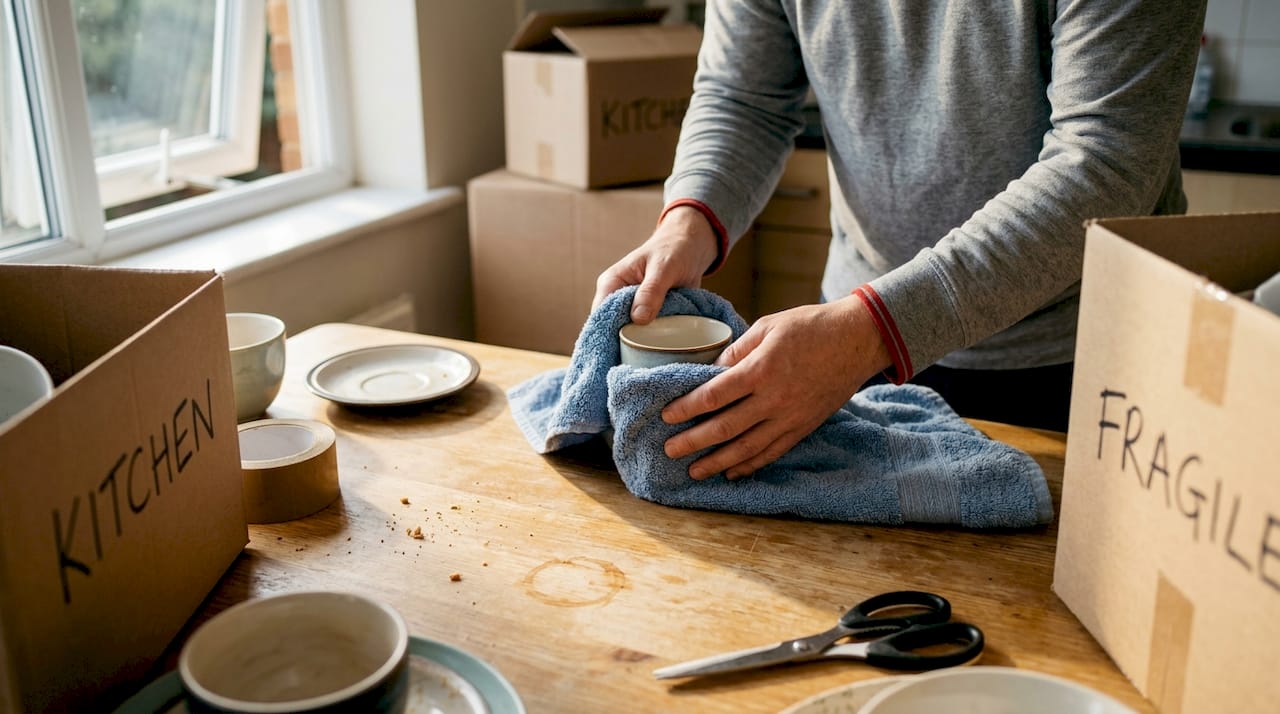
- Use towels and linens as padding. Wrap dishes, glassware, and small decor items in kitchen towels or soft linens instead of buying bubble wrap. This protects your fragile items and saves space in the truck.
- Leave clothes on hangers. Gather a group of hanging clothes, slide a trash bag up from the bottom, and tie the bag at the top around the hangers. This keeps outfits organized and wrinkle-free without folding a thing.
- Pack bags and suitcases fully. Your duffel bags, rolling suitcases, and backpacks are essentially free boxes. Fill them with clothes, packed bags, and towels to maximize every inch of space.
- Keep drawer contents in place. For dressers with light items like socks and t-shirts, simply wrap the entire drawer in plastic wrap or a trash bag. No unpacking, no repacking.
- Use Ziploc bags for hardware. When you disassemble furniture, drop all the screws, bolts, and small parts into a labeled Ziploc bag and tape it directly to the furniture piece it belongs with.
Using what you already own for packing can save a family of four anywhere from $50 to $150 in packing materials on a local move, without sacrificing protection for your belongings.
These hacks are especially useful for local moves because the transit time is short. Your items won’t be bouncing around in a truck for days, which means soft padding materials hold up just fine for a cross-town or cross-county relocation in New England.
The key is being intentional. Randomly stuffing towels into boxes doesn’t protect anything. Wrap each fragile item individually, cushion the bottom of the box, and fill any empty space so items can’t shift during the move.
Essential supplies vs. household hacks: Which works best for local moves?
But should you rely only on these creative strategies or invest in professional supplies? The honest answer is: it depends on what you’re moving.
| Factor | DIY household materials | Professional packing supplies |
|---|---|---|
| Cost | Low to none | Moderate to high |
| Protection | Good for most items | Best for fragile or valuable items |
| Convenience | Requires planning | Ready to use immediately |
| Best for | Clothing, linens, kitchenware | Artwork, antiques, electronics |
| Availability | Already in your home | Must be purchased or sourced |
For most local moves, a combination approach works best. Use household materials for the bulk of your packing, then invest in professional supplies for anything irreplaceable. A set of specialty dish boxes and a roll of packing paper for your grandmother’s china is worth every cent. Bubble wrap for your everyday coffee mugs? Probably not necessary.
The full-service vs. self-pack decision comes down to time and budget. For local short-haul moves, most families choose to self-pack to save on labor costs, then hire movers just for the heavy lifting.
Pro Tip: For local moves, self-packing generally saves most families money. Focus your supply budget on quality boxes in consistent sizes, strong tape, and permanent markers for labeling. These three items make the biggest difference in keeping your move organized.
If you want to explore your options, packing materials and packing services are available for families who want professional support without taking on the entire job themselves.
Room-by-room strategies for families relocating locally
With your approach decided, let’s dive into specific tactics for each area of your home. A room-by-room strategy keeps you focused and prevents the chaos of half-packed spaces spread across the house.
| Room | Priority items | Key tip |
|---|---|---|
| Kitchen | Dishes, pantry, appliances | Group by use frequency; pad all dishes |
| Bedrooms | Linens, clothing, mattresses | Protect mattresses with covers; keep kids’ items accessible |
| Living room | Electronics, decor, furniture | Use original boxes for electronics when possible |
| Bathroom | Toiletries, medications | Pack daily items last; seal liquids in bags |
| Storage areas | Seasonal items, tools | Pack first; label by category |
Here’s a numbered breakdown of the most important room-specific steps:
- Kitchen: Group items by how often you use them. Pack specialty appliances and rarely used gadgets first. Wrap dishes individually and stand plates on their edges inside boxes, which reduces breakage. Label boxes “fragile” and “this side up.”
- Bedrooms: Strip and bag linens separately so they’re easy to locate on arrival. Use mattress covers to protect against dust and scuffs. Keep a small bag of clothes, toiletries, and kid essentials out of the main packing until the very last moment.
- Living room: If you still have original boxes for your TV or gaming systems, use them. Otherwise, wrap electronics in blankets and secure cords in labeled bags. Bag all wires together by device so setup at the new home is straightforward.
- Bathroom: This room gets packed last. Seal any liquid bottles in Ziploc bags before boxing them to prevent spills. Keep a small toiletry bag with daily essentials separate and accessible throughout the move.
For more detailed guidance on keeping your family organized during the process, relocation packing strategies and expert moving tips can help you build on these basics with confidence.
Why small, simple changes make the biggest difference in local moves
Beyond tactical strategies, there’s a bigger takeaway to keep top of mind. Local moves are consistently underestimated. Because the distance is short, people assume the process will be quick and forgiving. That assumption is where most of the stress comes from.
We’ve seen it happen with families across New Hampshire, Maine, and Massachusetts. A couple moves two towns over, figures they’ll “just throw things in boxes” the night before, and ends up spending the first week in their new home digging through unlabeled boxes looking for the coffee maker and the kids’ school supplies.
The families who have the smoothest moves aren’t the ones with the most expensive supplies. They’re the ones who labeled clearly, kept their essentials bag within reach, and packed with intention rather than speed. Those small habits, a labeled Ziploc bag of screws, a well-packed essentials box, a consistent labeling system, make the actual moving day feel almost easy.
The truth is that reducing moving stress doesn’t require a complicated system. It requires a few good habits applied consistently. Start early, stay organized, and trust that the basics work. That’s the real lesson from decades of helping New England families move.
Need an extra hand? Local packing help is available
If you’d rather not do all the packing yourself or want a safety net, you have great local options. At Bridges Bros. Movers, we’ve been helping families across New Hampshire, Maine, and Massachusetts move since 1919, and we know that every move is different.
Our local packing services can handle as much or as little as you need, whether that’s packing a few specialty items or taking the entire job off your plate. Our crews know the region, understand the unique demands of New England homes, and bring the right supplies and experience to every job. Explore all of our Bridges Bros. Movers services or get a moving quote today to see how we can make your next local move as smooth as possible.
Frequently asked questions
What should I pack first when moving locally?
Start with rarely used items like seasonal decor and storage area contents, then work toward daily essentials as moving day approaches. Your essentials bag with clothes and toiletries should be packed last and loaded last so it’s the first thing you can access.
Are household materials like towels and bags safe for packing fragile items?
Yes, towels and soft linens work well for padding dishes and decor on short local moves if used with care. Wrapping fragiles in towels and filling empty box space prevents shifting during transit.
How do I keep track of small hardware during a move?
Place screws and hardware in labeled, sealed bags taped directly to the furniture they belong with. This Ziploc bag method for screws is one of the simplest ways to avoid the frustrating puzzle of reassembling furniture at your new home.
Is it worth hiring local packing services for a short move?
Hiring professionals adds real convenience and reduces stress, especially if time is tight or you have specialty items. While self-packing saves on short-haul labor for most families, professional help is worth considering for fragile, bulky, or high-value belongings.
Recommended
- Packing tips for moving: expert steps for a stress-free move
- How packing protects moves and reduces stress in 2026
- Role of Packing Services in Stress-Free Moves
- Top 10 Tips for a Stress-Free Move in New England | Expert Guide
- Guide to relocation logistics: smooth and stress-free moves