
TL;DR:
- Moving to New Hampshire, Maine, or Massachusetts requires detailed planning to address weather challenges and prevent overlooked items. A structured, timeline-based checklist helps families stay organized from eight weeks out to moving day, reducing chaos and last-minute stress. Proper preparation, labeling, and professional support ensure a smooth transition into your new home.
Moving to a new home in New Hampshire, Maine, or Massachusetts means juggling hundreds of details at once, and most families forget at least one crucial item no matter how prepared they feel. The weather alone, from late-season snowstorms to muddy spring thaws, adds layers of complexity that generic moving guides rarely address. A structured, timeline-based approach to your moving essentials list is the difference between a chaotic moving day and one that actually goes as planned. This guide walks you through what to pack, when, and how to stay organized from eight weeks out all the way to your first night in your new home.
Table of Contents
- How to use this residential moving essentials list
- Move-out timeline: Essential items and tasks by week
- Room-by-room essentials: What to pack and when
- Essential supplies for packing and moving day success
- Last-minute essentials: Moving day to arrival checklist
- Expert perspective: The hidden pitfalls of real-life moves in New England
- Make your next move effortless with the right support
- Frequently asked questions
Key Takeaways
| Point | Details |
|---|---|
| Plan by timeline | Begin your essentials list 8 weeks out to avoid last-minute chaos. |
| Don’t forget hidden spaces | Pack garages, attics, and seasonal items early to prevent missed belongings. |
| Stock up on supplies | Gather boxes, tape, labels, and weather gear ahead for moving day success. |
| Keep essentials with you | Carry vital documents, medications, and first-night needs in a clearly marked bag. |
| Prep for weather | In New England, protect your belongings and schedule for winter weather surprises. |
How to use this residential moving essentials list
Now that you understand the value of thorough preparation, here’s how to make the most of this checklist format.
The most effective moving lists are not just inventories. They are action plans organized around a realistic timeline. Breaking your tasks into phases, such as eight weeks out, four weeks out, one week out, and moving day itself, keeps the workload manageable and prevents the last-minute scramble that causes things to get left behind.
Here is how to structure your approach:
- Eight weeks out: Gather paperwork, book your movers, and begin decluttering every room.
- Four weeks out: Start packing non-essentials, notify utilities and schools, and collect packing supplies.
- One week out: Pack nearly everything except daily-use items, confirm logistics with your moving company, and label all boxes clearly.
- Moving day: Load, do a final walkthrough, hand off keys, and keep your essential bag with you at all times.
A moving checklist built around this structure helps every family member know what is expected and when. Assign specific tasks by room or person so nothing falls through the gaps. For families with kids, giving older children a list of their own rooms to sort builds accountability and reduces the load on parents.
Keep all moving paperwork, including your lease or purchase agreement, moving contracts, and school transfer records, in one physical binder or a dedicated folder on your phone. Losing a document on moving day adds unnecessary stress at exactly the wrong moment.
Pro Tip: Color-code your boxes by room using colored tape or stickers. Assign blue to bedrooms, red to the kitchen, and green to bathrooms. Your movers will unload faster, and you will spend less time directing traffic at the new house.
Learning how to streamline your move from the start pays off in hours saved and frustration avoided on moving day.
Move-out timeline: Essential items and tasks by week
With your organization strategy in place, let’s break the process down into a week-by-week essentials list.
A staged timeline checklist is one of the most effective tools for reducing the chances of missing something important. Here is what each phase should include.
Eight weeks before moving day:
- Research and book a reputable moving company for your preferred dates
- Begin sorting belongings into keep, donate, and discard piles
- Order packing supplies early, especially if you need specialty boxes
- Request school records, medical files, and insurance documents
- Give notice to your landlord if renting
Four weeks before moving day:
- Notify your utility providers, post office, and financial institutions of your new address
- Pack off-season clothing, books, and decorative items
- Arrange for storage if you have items that won’t fit immediately in the new home
- Confirm dates and details with your movers in writing
- Begin packing garage and attic items, which often take longer than expected
One week before moving day:
- Pack everything except daily essentials such as toiletries, a few dishes, and work materials
- Label every box with contents and destination room
- Prepare a first-night bag for each family member
- Defrost the freezer and use up pantry staples
- Confirm parking arrangements and building access at both locations
Moving day:
- Do a final walkthrough of every room, closet, and cabinet
- Check attics, basements, outdoor sheds, and storage units
- Hand off keys, garage openers, and appliance manuals
- Keep your essentials bag with you in your personal vehicle
| Phase | Key tasks | Items to pack |
|---|---|---|
| 8 weeks out | Book movers, sort belongings | Off-season, rarely used items |
| 4 weeks out | Notify utilities, collect documents | Books, decor, garage items |
| 1 week out | Pack almost everything, confirm logistics | All but daily-use items |
| Moving day | Final walkthrough, load, depart | Essentials bag stays with you |
You can grab a downloadable checklist to print and post somewhere visible during your entire moving process.
Room-by-room essentials: What to pack and when
Having established your big-picture timeline, dive deeper into room-specific packing strategies and essentials.
Each room in your home has its own packing logic. Working through them systematically prevents the chaos of grabbing random items at the last minute.
Bedrooms: Start with off-season clothing, extra linens, and decorative pillows. Keepsakes and photo albums should be packed early and labeled “fragile.” Declutter before you pack. Donating unused clothing now means fewer boxes to move. Keep out two sets of everyday clothing per person until the final pack-up day.
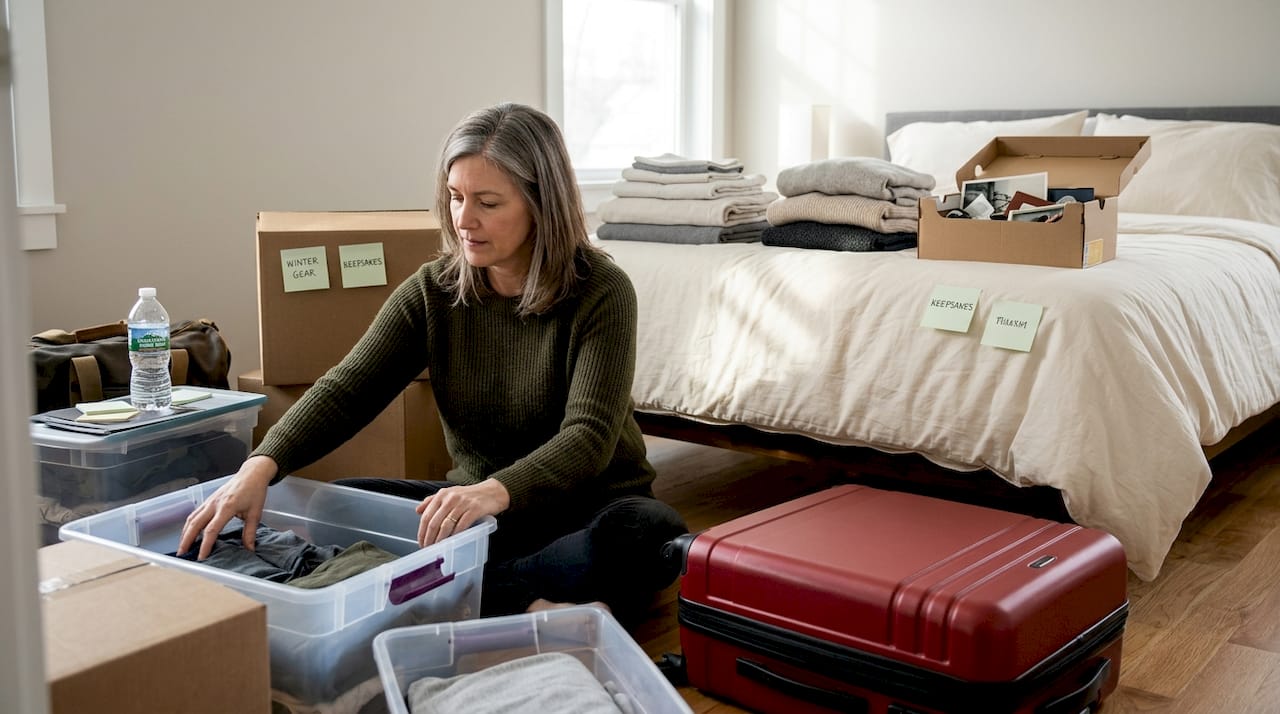
Kitchen: The kitchen is the most time-consuming room to pack. Begin with rarely used appliances, specialty cookware, and duplicate utensils. Move to everyday dishes and pots about two days before moving day. Use dish packs (double-walled boxes) for plates and glasses, and wrap each item individually in packing paper. Pack pantry staples in a separate, clearly labeled box and plan to use them up or donate them before the move.
Living areas: Electronics deserve extra care. Photograph the back of your TV and entertainment system before disconnecting cables so you can reassemble everything quickly. Keep original boxes for electronics if you have them. Pack books in small boxes to avoid overfilling. Label decorative items as fragile on multiple sides of the box.
Storage spaces: Hidden seasonal areas such as garages, attics, basements, and outdoor sheds are where most moves go wrong. These spaces accumulate years of items that have no clear home in the new space, making them mentally difficult to tackle. Start them early, ideally at the eight-week mark.
| Area | Regular rooms | Storage areas |
|---|---|---|
| When to start | 4 weeks out | 8 weeks out |
| Main challenge | Volume and fragility | Forgotten and seasonal items |
| Packing priority | Room-by-room order | Tackle before main rooms |
| Common missed items | Under-bed storage | Off-season sports gear, holiday decor |
Pro Tip: Walk through your attic, garage, and basement before you touch a single room inside the house. Inventory what is there first. Storage areas almost always contain more than you remember, and starting them early prevents a last-minute panic.
For detailed guidance on protective wrapping and organizing boxes, review these packing tips for local moves and make sure you have the right essential moving supplies on hand before you begin.
Essential supplies for packing and moving day success
With each room ready for packing, equip yourself with these supply essentials tailored for Northeast conditions.
Having the right supplies before you start packing saves multiple trips to the hardware store and prevents improvised solutions that can damage your belongings. Here is what you need:
Basic packing supplies:
- Small, medium, and large cardboard boxes (buy more than you think you need)
- Dish packs and wardrobe boxes for specialty items
- Heavy-duty packing tape and a tape gun
- Bubble wrap and packing paper, not newspaper, which can leave ink marks
- Permanent markers in at least two colors
- Color-coded labels or stickers by room
- Stretch wrap for furniture and appliances
Specialty and weather-specific supplies:
- Plastic bins with lids for items that may get wet during loading
- Mattress bags to protect against rain or snow
- Floor runners and furniture pads to protect hardwood floors
- Moving blankets for large furniture pieces
- Rope, bungee cords, and tie-downs for the truck
“Northeast moves benefit significantly from weather contingency planning. Protecting floors from mud and snow and having a flexible schedule to accommodate storm delays are essential parts of any New England move.”
Your moving day emergency kit and essentials bag should include medications, phone chargers, a change of clothes for each person, important documents, snacks, water bottles, paper towels, basic cleaning supplies, and a first-aid kit. Pack this bag last and load it into your personal vehicle, not the moving truck.
Pro Tip: Always keep winter weather gear, such as ice melt, an extra shovel, and waterproof boots, near the front door during late fall and winter moves. A sudden storm in New Hampshire or Maine can make a front path dangerously slippery. Being prepared protects both your family and your moving crew.
For full guidance on protecting your home and belongings during cold-weather moves, read about winter move protection and review available packing materials so you can order everything in one shot.
Last-minute essentials: Moving day to arrival checklist
Finally, ensure a smooth move-out and move-in by checking these last-minute must-haves off your list.
Moving day has a way of accelerating faster than expected. Once the truck arrives and loading begins, it is easy to leave behind both physical items and important mental tasks. This final checklist keeps you focused.
What must not go in the moving truck:
- Personal identification documents such as passports, birth certificates, and Social Security cards
- Prescription medications and medical supplies
- Jewelry and irreplaceable valuables
- Phone and laptop chargers
- Children’s comfort items and favorite toys for the first night
- Pet food, carrier, leash, and any veterinary records
- A bag of snacks and water for the journey
Final walkthrough steps before you close the door for the last time:
- Open every closet, including hall closets, linen closets, and built-ins
- Check under every bed and behind every door
- Walk through the attic and basement one final time, since hidden storage areas are consistently where items are left behind
- Check the backyard, shed, garage, and any exterior storage hooks or cabinets
- Look inside appliances such as the washer, dryer, and refrigerator
- Confirm that all utilities are turned off and that you have all keys and remotes to hand over
Pro Tip: Designate one person as the final walkthrough lead. This should not be the person managing the movers. Having a dedicated person check each room without distraction is the single most reliable way to avoid leaving something behind. For a full breakdown of what to watch out for, review tips on avoiding moving day mistakes before your move date.
When you arrive at your new home, prioritize setting up beds and bathrooms first. Everyone needs a place to sleep and freshen up before tackling boxes. A clear, calm first night makes the unpacking process feel far less overwhelming the following day.
Expert perspective: The hidden pitfalls of real-life moves in New England
With all essentials covered, here’s a candid look at where most movers go off track and how to get ahead.
After helping families move across New Hampshire, Maine, and Massachusetts for generations, a pattern becomes clear. Most moving problems do not come from a lack of planning. They come from underestimating how long things take.
The staged checklist approach is genuinely effective, but only when people start using it at eight weeks out rather than treating the first six weeks as optional. We have seen families skip the early phases and then attempt to pack an entire house in four days. The result is rarely a disaster in the dramatic sense. It is more often a quiet but costly one, missed items, damaged belongings wrapped too hastily, and a level of fatigue on moving day that affects every decision made.
New England adds its own specific challenges. A January move in Portsmouth or Portland is not the same as a July move in suburban Boston. Ice forms overnight on walkways. Snow can delay a truck for hours. Attic access can be genuinely difficult when temperatures drop. These are not theoretical problems. They are things that happen every winter season, and they rarely appear in generic moving guides.
The other major pitfall is the assumption that labeling is optional. Families who skip proper labeling of boxes consistently report spending hours searching for basic items during the first week in their new home. A good digital inventory, even just a photo of each open box before sealing it, takes minutes and saves significant time later.
One more overlooked strategy worth mentioning: assign a family move captain. This person is not necessarily the one doing the most physical work. They are the one tracking the checklist, confirming tasks are complete, and making sure nobody assumes someone else handled something critical. When everyone assumes someone else locked the old house or loaded the last shelf, things get left behind.
Start preparing your new home before moving day so you arrive to a clean, ready space rather than adding setup chaos on top of an already full day.
Make your next move effortless with the right support
Ready to take the stress out of your move? Here’s how you can get the support you need in New England.
Even the most organized checklist has limits when moving day actually arrives. That is where professional support makes a real difference. Bridges Bros Movers has been helping families across New Hampshire, Maine, and Massachusetts since 1919, providing everything from full-service packing to material supply and careful loading. Whether you need help at one stage or want a crew to handle the entire process, explore the full range of moving services available to you. You can also order packing materials directly so you have the right supplies without the last-minute store run. When you are ready to plan your move, get a quote and take the first step toward a genuinely stress-free moving day.
Frequently asked questions
How far in advance should I start using a moving essentials list?
Begin using your checklist about eight weeks before moving day for the most organized and stress-free experience, giving yourself time to declutter, gather documents, and book services.
What areas do most people forget to pack when moving?
Garages, attics, basements, storage closets, and off-season areas are the most commonly overlooked spaces, often because they are out of daily sight.
What should I do if I need to move during winter in New England?
Plan for weather contingencies by protecting floors from snow and mud, keeping winter gear near the exit, and building flexibility into your schedule for potential storm delays.
Should I keep important documents in the moving truck or with me?
Always keep essential documents, medications, and valuables with you in your personal vehicle, never in the moving truck, where access is limited and risks are higher.
What is the single most important packing supply for moving day?
Sturdy, correctly sized boxes are your foundation, but do not overlook permanent markers, heavy-duty tape, and a packed essentials bag ready for your first night in the new home.