
TL;DR:
- Senior relocation services provide comprehensive support for older adults moving homes, including sorting, packing, and emotional guidance. These services coordinate vendors and ensure the new home is arranged to reduce stress and foster familiarity. Planning 8 to 12 weeks in advance helps families manage emotional and logistical challenges effectively.
Senior relocation services are specialized, coordinated support systems that help older adults and their families manage every stage of a move, from sorting decades of belongings to settling into a new home. The industry term for professionals who lead this process is “senior move manager,” a role defined and credentialed by the National Association of Senior Move Managers (NASMM). Unlike standard moving companies, senior relocation services address both the physical and emotional weight of the transition. If you are moving elderly parents or researching assisted living relocation options, understanding what these services cover will help you make a confident, informed decision.
What do senior relocation services include?
Senior relocation services cover far more than loading boxes onto a truck. A qualified senior move manager acts as a project coordinator, managing multiple vendors across every phase of the move. That scope is what separates this specialty from a standard residential move.
The core service offerings typically include:
- Sorting and downsizing assistance. A move manager works alongside the senior to decide what to keep, donate, sell, or discard. This process is paced to respect emotional readiness, not a moving deadline.
- Vendor coordination. Professionals arrange estate sales, donation pickups, junk removal, and the moving company itself. You deal with one point of contact instead of five.
- Packing and labeling. Items are packed with senior-specific care and labeled by destination room, so unpacking at the new location is logical and low-stress.
- Move-day management. The move manager is on site to oversee logistics, communicate with movers, and keep the senior informed and calm throughout the day.
- New home setup. Furniture is arranged to mirror familiar layouts. Comfort objects, photos, and personal items are placed before the senior arrives. This detail matters more than most families expect.
The difference between a senior move manager and a standard moving company is significant. A moving company transports belongings. A senior move manager coordinates the entire process, including the emotional and logistical decisions that happen weeks before the truck arrives.
Pro Tip: Ask any provider whether they offer new home setup as part of their package. If they only handle transport, you are missing the most critical piece of the senior relocation process.

How should you plan the timeline for a senior move?
Starting 8 to 12 weeks ahead of the move date gives families enough time to work through each phase without rushing the senior. Rushing is the single most common mistake families make, and it causes the most distress.
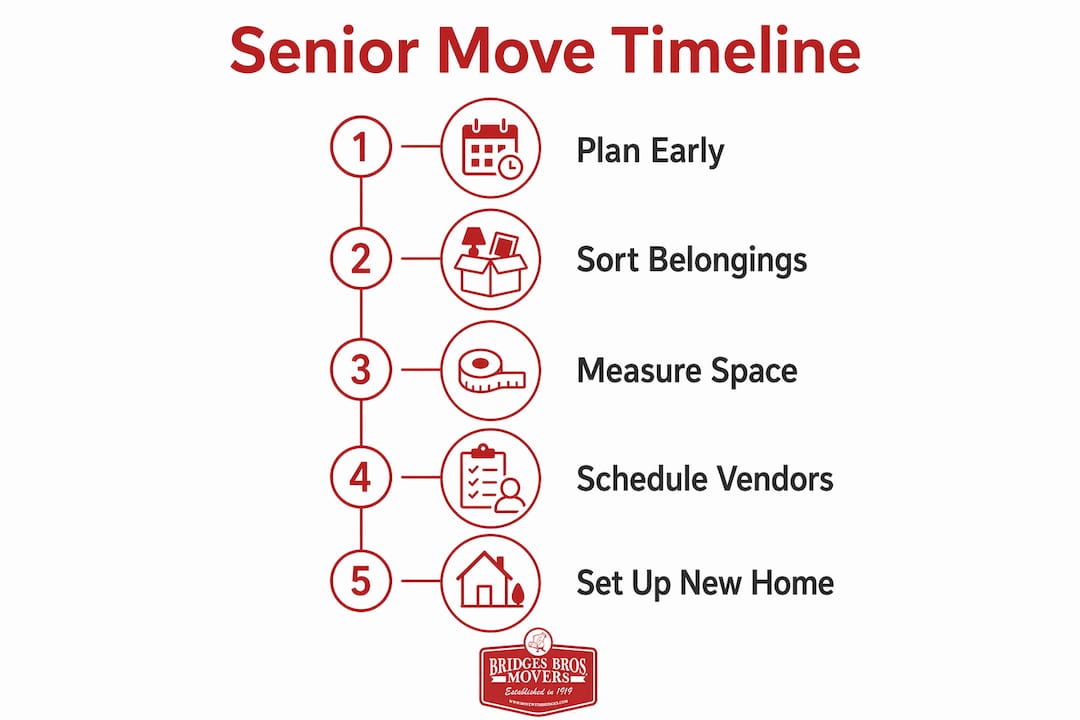
A practical timeline looks like this:
- Weeks 8 to 12: Consultation and sorting. Meet with a senior move manager, set a budget, and begin sorting belongings. Start with low-emotion areas like garages or guest rooms before moving to personal spaces.
- Week 6: Space planning and vendor scheduling. Measure the new living space and map out furniture placement. Schedule the moving company, estate sale coordinator, and any donation services. Many senior living communities impose narrow move-in windows, so locking in dates early is critical.
- Weeks 2 to 4: Packing and final decisions. Complete packing room by room. Finalize what items will not make the move and confirm all vendor appointments.
- Move week: Coordination and arrival setup. The move manager oversees the move day and arranges the new home before the senior walks through the door.
Pacing matters at every stage. Cognitive and emotional overload is real, and a well-structured timeline prevents it. Short daily sessions of sorting are far more effective than marathon weekend pushes.
Pro Tip: Measure the new living space before you begin downsizing. Families frequently skip this step and discover too late that beloved furniture does not fit, which creates avoidable grief and additional costs.
How do senior relocation services address emotional and cognitive challenges?
Emotional support is as important as physical moving in senior relocation. A move often means leaving a home of 30 or 40 years, and the grief attached to that is genuine. Treating a senior move as a generic logistics problem causes confusion, anxiety, and resistance.
Specialized providers use several techniques to reduce this burden:
- Familiar layouts at the destination. Placing furniture in arrangements that mirror the previous home gives the senior an immediate sense of orientation and safety.
- Comfort objects placed first. Photos, favorite chairs, and personal keepsakes are unpacked and positioned before the senior arrives. A well-planned arrival with familiar objects significantly reduces transition anxiety.
- First-night bags. A dedicated bag holds medications, toiletries, a phone charger, and any items needed for the first evening routine. This simple preparation prevents the disorientation that comes from searching through boxes on the first night.
- Paced decision-making. Seniors are never pressured to make quick decisions about belongings. The process respects their timeline, not the family’s schedule.
One of the most underappreciated benefits of hiring a senior move manager is their role as a neutral third party. Family members often disagree about what to keep or how fast to move. A professional reduces family conflict by guiding decisions calmly and without the emotional history that family members carry into the room.
“The goal is not just to get someone moved. The goal is to get them settled. Those are two very different things.”
Understanding the psychology of moving for older adults helps families approach the process with the patience it requires. Seniors who feel heard and respected during the move adjust to their new environment far more quickly.
How do you choose a qualified senior relocation provider?
NASMM membership is the primary credential to look for when selecting a senior move manager. NASMM enforces a strict code of ethics and safety standards for members working with vulnerable older adults. A provider without this credential has no verified accountability structure.
Beyond credentials, ask these questions before hiring:
- Do you carry liability insurance and background-check your staff?
- Can you provide references from families in similar situations?
- Do you have established relationships with local estate sale companies, donation organizations, and moving crews?
- What does your new home setup service include?
- How do you handle situations where the senior becomes distressed during sorting?
Pricing for senior relocation services varies by scope. Most providers charge either a flat project fee or an hourly rate. Project fees work well for full-service moves. Hourly rates suit families who only need help with specific phases like downsizing or setup.
Cost is a real barrier for some families, but subsidized options exist. Some U.S. cities offer programs with sliding-scale fees based on income. Chicago’s H.O.M.E. program, for example, offers moves with fees as low as $25 for qualifying seniors. That model shows what is possible when municipalities prioritize senior mobility.
| Evaluation criteria | What to look for |
|---|---|
| Professional credential | Active NASMM membership |
| Insurance | Liability coverage and background-checked staff |
| Vendor network | Established local relationships with movers, estate sale firms, and donation services |
| Pricing model | Clear flat or hourly fee with written scope of work |
| References | Verifiable testimonials from recent senior move clients |
Pro Tip: Call two or three of a provider’s references and ask specifically about how the manager handled difficult moments during sorting. That answer tells you more than any credential.
Key Takeaways
Successful senior relocation requires coordinated professional support that addresses both logistics and emotional wellbeing, not just transportation.
| Point | Details |
|---|---|
| Start planning early | Begin the senior relocation process 8–12 weeks out to avoid rushed decisions and emotional overload. |
| Verify NASMM credentials | Choose providers with active NASMM membership to confirm ethical standards and accountability. |
| Prioritize new home setup | Arrange familiar furniture and comfort objects before the senior arrives to reduce transition anxiety. |
| Use a first-night bag | Pack medications and daily essentials separately so the first night is calm and predictable. |
| Ask about subsidized programs | Income-based programs like Chicago’s H.O.M.E. service can reduce costs significantly for qualifying families. |
What I have learned after years of watching families navigate senior moves
The families who struggle most with senior relocation are not the ones with the most complicated logistics. They are the ones who underestimate how much emotion is packed into every drawer and bookshelf. I have seen families spend three weeks on a living room because every object carries a story. That is not a problem to fix. That is the process.
What experienced move managers understand, and what most families do not realize until they are in the middle of it, is that the sorting phase is grief work. Rushing it does not save time. It creates resistance, conflict, and regret that can last long after the move is done. The families who give themselves permission to go slowly almost always report a better outcome for the senior.
The other thing I would tell any family reading this: do not wait until a health crisis forces the move. The best senior relocations I have seen were planned months in advance, with the senior actively involved in decisions. When the move is reactive, the senior loses agency. When it is planned, they keep it. That difference shapes how well they adjust to their new home.
If you are supporting elderly parents through this process, give yourself credit for doing the research. Most families figure this out under pressure. You are ahead of that curve.
— Patrick
How Bridges Bros Movers supports families with senior moves
Bridges Bros Movers has served families across New Hampshire, Maine, and Massachusetts since 1919, and senior relocations are among the most personal moves the team handles. The company offers residential moving services tailored to older adults, including professional packing, careful labeling, and coordinated logistics that account for the specific constraints of senior living communities. The team also provides packing materials suited to fragile and sentimental items. Whether you need full-service support or help with a specific phase of the move, Bridges Bros Movers offers in-home and virtual consultations to build a plan that fits your family’s situation. Reach out for a quote and get a clear picture of what the process looks like before you commit to anything.
FAQ
What is a senior move manager?
A senior move manager is a credentialed professional who coordinates all phases of a senior’s relocation, including sorting, packing, vendor scheduling, and new home setup. NASMM membership is the primary credential that confirms ethical and safety standards.
How far in advance should you plan a senior move?
Planning 8 to 12 weeks ahead gives families enough time to sort belongings, measure the new space, schedule vendors, and pace the process to reduce stress on the senior.
Are senior relocation services covered by insurance or government programs?
Standard health insurance does not cover senior moving services. Some municipalities offer subsidized programs. Chicago’s H.O.M.E. program, for example, offers income-based sliding-scale fees as low as $25 for qualifying seniors.
What is a first-night bag and why does it matter?
A first-night bag holds medications, toiletries, and personal essentials needed for the first evening in a new home. This preparation prevents confusion and helps seniors maintain their normal routine on the most disorienting night of the move.
How do senior relocation services differ from standard moving companies?
Standard moving companies handle transportation. Senior relocation services also cover downsizing assistance, emotional support, vendor coordination, and new home setup designed to create familiarity and comfort from the moment the senior arrives.