
TL;DR:
- Proper planning and a detailed checklist reduce stress and prevent costly mistakes.
- Early booking and understanding seasonal factors are crucial in New England’s complex moving environment.
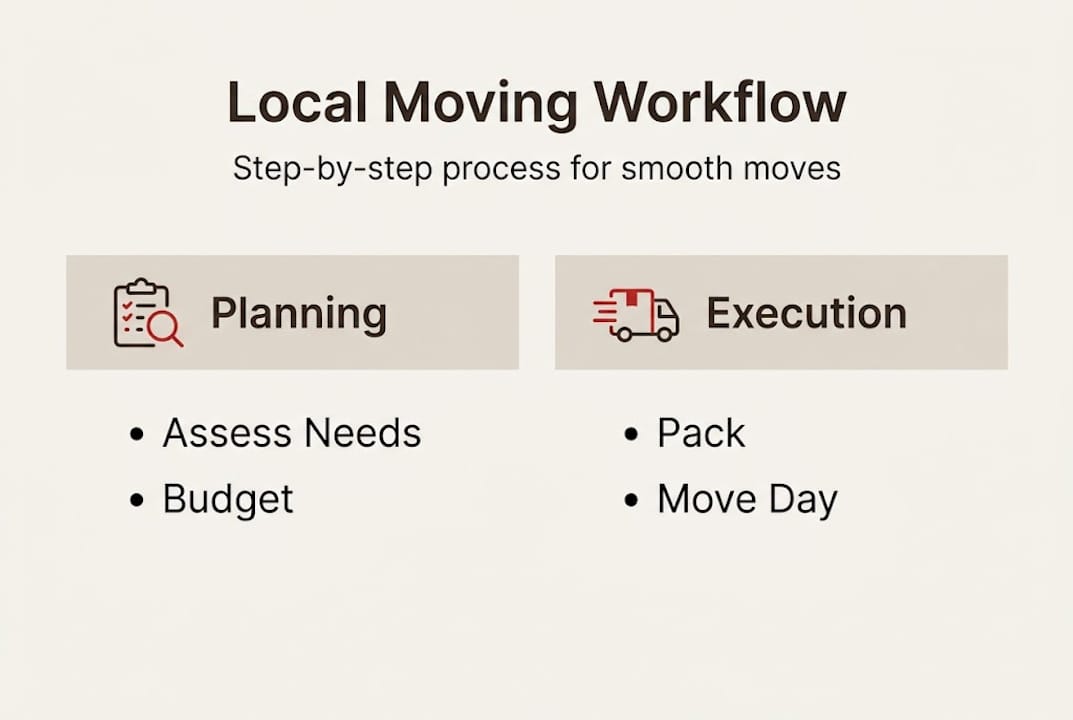
- Following a structured workflow ensures a smooth, efficient, and well-coordinated move.
Moving locally in New Hampshire, Maine, or Massachusetts sounds simple until you’re juggling packing deadlines, utility transfers, seasonal weather, and a moving company schedule all at once. Families often underestimate how many moving parts are involved, and small businesses face even more complexity when relocating equipment and records. The good news is that a well-structured workflow turns this chaos into a manageable sequence of clear steps. This guide walks you through every phase, from assessing your needs to verifying your post-move checklist, so you can relocate with confidence and far less stress.
Table of Contents
- Assess your needs and create a workflow checklist
- Budgeting and scheduling for a smooth move
- Packing efficiently and mitigating seasonal risks
- Execution: Moving day best practices and verification steps
- Why workflow precision outperforms last-minute hustle
- Get expert help with your local move
- Frequently asked questions
Key Takeaways
| Point | Details |
|---|---|
| Plan ahead | Early workflow planning reduces stress and prevents scheduling issues, especially in high-demand seasons. |
| Budget for cost changes | Expect moving costs to fluctuate and include extra funds for possible surges in labor and materials. |
| Mitigate seasonal risks | Address and prepare for winter weather delays with proactive packing and utility updates before moving day. |
| Follow step-by-step workflows | Detailed checklists and numbered steps help families and businesses stay organized and efficient. |
Assess your needs and create a workflow checklist
Before you book a truck or order a single box, take stock of exactly what you’re moving. Walk through your home or office and create a written inventory of all your belongings. Note any items that need special handling, such as antiques, large furniture, medical equipment, or fragile electronics. This inventory becomes the foundation of your entire moving workflow.
New England’s seasons add a layer of complexity that movers in warmer climates rarely face. A late-fall move in New Hampshire or Maine means shorter daylight hours, icy driveways, and the possibility of a sudden snowstorm. A summer move in Massachusetts means peak demand and calendars that fill up quickly. Factor these realities into your planning from the very start.
Use a moving checklist to organize every task you’ll need to complete before, during, and after moving day. Your checklist should cover:
- Packing timeline: Which rooms get packed first, and when
- Address changes: USPS, banks, subscriptions, employer records
- Utility transfers: Electric, gas, internet, water
- Mover booking: Dates, deposit, insurance confirmation
- Special item handling: Piano, artwork, server equipment
- School or business records: Transfer requests and notifications
Here’s a quick reference for essential tools and materials:
| Item | Purpose |
|---|---|
| Double-wall boxes | Heavy items like books and dishes |
| Bubble wrap | Fragile and breakable items |
| Color-coded labels | Room identification for fast unloading |
| Mattress covers | Moisture and dirt protection |
| Stretch wrap | Securing furniture drawers and doors |
| Dolly or hand truck | Reducing physical strain on moving day |
The moving industry has faced cost increases across nearly every operational input since 2020, which means your materials and labor costs may be higher than you expect. Planning ahead gives you more time to compare prices and avoid last-minute markups.
Pro Tip: Start your workflow planning at least six weeks before your target move date. This gives you enough time to secure preferred moving dates, lock in better rates, and avoid the scramble that leads to costly mistakes.
For specific guidance on protecting your belongings during the packing phase, review our packing tips for local moves before you buy your first roll of tape.
Budgeting and scheduling for a smooth move
Once you know what you’re moving and what you’ll need, the next step is figuring out what it will cost and when to do it. Budgeting for a local move requires more precision than most people expect, especially in today’s market.

Since 2020, multiple cost categories in the moving industry have seen increases of 30% to 80%, covering labor, fuel, equipment, and packing supplies. That kind of volatility means a quote from three years ago is not a reliable benchmark today. Always get current estimates.
Here’s how summer and winter moves compare across the key factors most families and businesses care about:
| Factor | Summer move | Winter move |
|---|---|---|
| Cost | Higher demand, premium pricing | Lower demand, potential savings |
| Availability | Limited, books fast | More scheduling flexibility |
| Weather risk | Heat, humidity | Snow, ice, short days |
| Best for | Families with school-year schedules | Flexible movers seeking value |
Follow these steps to build a budget and lock in your schedule with minimal risk:
- Get at least three quotes from licensed movers and compare them against current market rates.
- Add a 15% contingency buffer to your total estimate to cover unexpected costs.
- Identify your ideal move window based on school calendars, lease end dates, or business cycles.
- Book your mover as early as possible, especially if you’re targeting a summer or early fall date.
- Confirm deposit terms and cancellation policies before signing anything.
- Schedule utility disconnects and connections around your confirmed move date.
For tips on finding value without sacrificing reliability, read our guide on picking an affordable mover. And if you’re unsure which time of year makes the most sense for your situation, our resource on the best time to book movers breaks it down clearly.
Summer moves in New Hampshire, Maine, and Massachusetts fill up fast. If you want a Saturday in July or August, you need to act early. Winter moves offer more flexibility on dates and sometimes lower pricing, but require extra preparation for weather-related risks.
Packing efficiently and mitigating seasonal risks
With your budget set and your moving date confirmed, it’s time to shift your focus to packing. Efficient packing saves time on moving day and protects your belongings from damage during transit. In New England, seasonal conditions add one more variable you need to account for.
Here are the essential packing tasks to complete before moving day:
- Pack non-essential items first, starting four to six weeks out
- Label every box with its destination room and a brief contents description
- Use weatherproof plastic bins or double-bag boxes for items vulnerable to moisture
- Wrap all breakables individually and fill empty space in boxes with packing paper
- Disassemble large furniture and keep hardware in labeled zip-lock bags taped to the piece
- Set aside an essentials box with items you’ll need on day one: toiletries, chargers, medications, snacks
Pro Tip: Use a different color label for each room in your new home. Red for the kitchen, blue for the master bedroom, green for the living room. Your movers will know exactly where each box goes without asking, which speeds up unloading significantly.
Winter move reminder: Workflow risk rises sharply for New Hampshire, Maine, and Massachusetts families during winter months. Update your utilities and address before moving day, not after. Snow and ice can delay trucks by hours, so build extra time into your schedule and confirm driveway access at both locations.
For families moving in cold months, weatherproof packing is not optional. Use plastic wrap around upholstered furniture, waterproof mattress bags, and sealed plastic bins for electronics and documents. Our guide on protecting belongings in winter covers the specific techniques that hold up under New England conditions.
Small businesses should pay extra attention to packing servers, filing cabinets, and office equipment. Label all cables, photograph the back of your server rack before disconnecting anything, and move sensitive records in sealed, labeled boxes kept under your direct supervision.
Execution: Moving day best practices and verification steps
All the planning in the world only pays off if moving day runs smoothly. Execution is where your workflow either holds together or falls apart. Stay organized and stick to your plan.
Follow this moving day sequence to keep things on track:
- Confirm with your movers the morning of the move: Verify arrival time, truck size, and the list of services included.
- Do a final walkthrough of every room, closet, cabinet, and storage space before loading begins.
- Direct the loading process by keeping your inventory list handy and checking off items as they go on the truck.
- Protect floors and doorways at both locations to prevent damage during heavy furniture moves.
- Conduct a second walkthrough at your old location after the truck is loaded to make sure nothing is left behind.
- Be present at the new location to direct unloading and confirm each box goes to the right room.
Common moving day mistakes to avoid:
- Skipping the final walkthrough at your old address
- Forgetting to reserve a parking spot or elevator at either location
- Leaving valuables or documents on the truck overnight
- Waiting until moving day to confirm utility activation at the new address
- Underestimating how long the move will take, especially in winter
Pro Tip: Designate one person, whether a family member or an employee, as the move-day coordinator. This person communicates with the movers, manages the inventory list, and handles any surprises. Spreading that responsibility across multiple people leads to confusion.
After the move, run through your moving day checklist one final time to verify all utilities are active, your address has been updated with key contacts, and every box has been accounted for. Proper benchmarking against real-world costs also helps you confirm the final invoice matches your original quote. For a broader look at what works in this region, our resource on moving practices in New England is worth a read.
Why workflow precision outperforms last-minute hustle
Here’s an uncomfortable truth: most moving stress is self-inflicted. Many families and business owners assume that because a local move is short in distance, it’s also simple in execution. It isn’t.
New England throws specific obstacles at movers that you cannot improvise around. Weather windows close fast in February. Moving companies in Portsmouth, Portland, and Boston get booked solid by early spring. Fuel surcharges and supply costs shift with little warning. When you try to wing it, you’re betting against conditions that punish unpreparedness.
We’ve seen it happen repeatedly: a family skips the six-week runway, books late, pays premium rates, and loses two days to a snowstorm they didn’t account for. A small business skips the IT packing checklist and spends a week rebuilding server connections. The checklist and the workflow aren’t bureaucratic busywork. They’re what separates a move that costs $2,000 from one that costs $3,500 and takes twice as long.
The real differentiator isn’t just having a list. It’s sequencing that list correctly and building in flexibility for real-world conditions. Understanding what residential moving actually involves is the first step toward treating it with the respect it deserves.
Get expert help with your local move
At Bridges Bros Movers, we’ve been helping families and businesses across New Hampshire, Maine, and Massachusetts move with confidence since 1919. Whether you need full-service residential moving support or specialized commercial moving coordination, our team brings the experience and local knowledge to back it up. We handle packing, loading, transport, and even storage when your timeline requires it. You don’t have to figure this out alone. Start by reviewing our checklists and resources, then take the next step and get a free moving quote so you know exactly what to expect before moving day arrives.
Frequently asked questions
How far in advance should I book movers for a local move in New England?
Book at least four to six weeks ahead for most local moves, and even earlier for summer dates. Advanced planning is especially critical in winter, when weather risk can affect scheduling and availability.
What hidden costs should I plan for when moving locally?
Budget for labor, fuel, and supply fluctuations, since multiple cost categories have risen 30% to 80% since 2020. Adding a contingency buffer of at least 15% to your estimate protects you from surprise charges.
How should I prepare for a winter move in New Hampshire, Maine, or Massachusetts?
Update your address and utilities before moving day, use weatherproof packing materials, and plan for potential weather delays. Winter workflow risk is real in New England, so building extra time into your schedule is always the safer approach.
What’s the difference between a moving checklist and a moving workflow?
A checklist is simply a list of tasks to complete. A workflow sequences those tasks in the right order and at the right time, so nothing falls through the cracks and each step supports the next.
Recommended
- Top packing tips for local moves: stress-free relocation guide
- Downsizing or Moving? A step-by-step guide to conquering the obstacles in Exeter, NH | Bridges Bros. Movers
- Step-by-Step Guide to Hiring Movers for a Smooth Move
- Top commercial moving tips for a smooth office relocation
- Essential residential moving checklist: streamline your move