
Moving to a new home ranks among life’s most stressful events, especially for families juggling work, school, and daily routines across New Hampshire, Maine, and Massachusetts. Between sorting belongings, coordinating schedules, and worrying about damaged items, the process can feel overwhelming. This comprehensive guide walks you through every phase of a residential move, from initial planning through final unpacking, with practical strategies to minimize stress and ensure nothing gets overlooked. Whether you’re relocating across town or across state lines in New England, understanding each step helps you stay organized and confident throughout your transition.
Table of Contents
- Key takeaways
- Understanding the residential moving process
- Preparation essentials: organizing and choosing your movers
- Executing the move: packing, loading, and transport
- After the move: unpacking, inspection, and settling in
- Make your residential move hassle-free with Bridges Bros. Movers
- Frequently asked questions about residential moving
Key Takeaways
| Point | Details |
|---|---|
| Plan Early | Starting planning early helps secure preferred moving dates, set realistic timelines, and avoid premium rates during peak seasons. |
| Choose Right Movers | Research licensed and insured local or interstate movers with strong reviews to ensure reliable packing, loading, and transportation. |
| Pack and Declutter | Decluttering before packing can reduce moving volume by about 20 to 30 percent, which lowers costs and simplifies unpacking. |
| Post Move Verification | After arrival, verify all items against inventories to ensure nothing is lost or damaged and address discrepancies quickly with the mover. |
Understanding the residential moving process
A successful residential move unfolds in distinct phases, each requiring specific attention and planning. The journey typically includes planning and preparation, packing and organizing, loading and transportation, unloading and placement, and finally settling into your new space. Understanding the overall moving process helps set realistic expectations and reduces surprises, particularly when coordinating family schedules and managing the logistics of moving day.
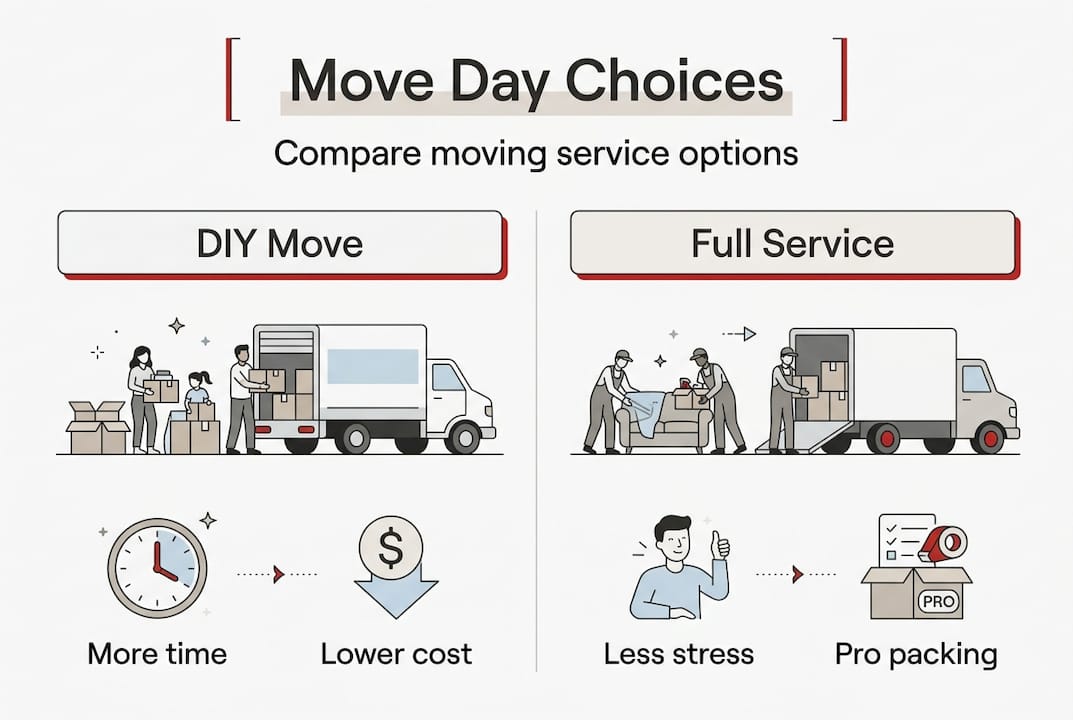
Local moves within New England generally take one to two days, while long-distance relocations require more complex coordination and extended timelines. Your moving timeline depends on factors like home size, distance, season, and whether you opt for full-service or partial assistance. Starting your planning early gives you leverage to compare options, secure preferred dates, and avoid the premium rates that come with last-minute bookings during peak summer months.
The scope of services available extends far beyond basic transportation. Modern moving companies offer comprehensive solutions that can transform your experience:
- Professional packing services that protect fragile items and save you days of preparation time
- Temporary or long-term storage solutions for items you’re not ready to move into your new home
- Junk removal services to dispose of unwanted furniture and belongings before or after your move
- Home cleaning options to leave your old residence spotless or prepare your new one for arrival
Making early decisions about which services you need allows you to budget accurately and coordinate all moving day activities smoothly. The more you understand upfront, the fewer surprises you’ll encounter when boxes start getting packed.
Preparation essentials: organizing and choosing your movers
Preparation separates chaotic moves from smooth transitions. Begin by sorting every room in your current home, creating three categories: items to keep, donate, or discard. This decluttering phase typically reduces your moving volume by 20 to 30 percent, directly lowering transportation costs and simplifying your unpacking process. Donate usable items to local charities in New Hampshire, Maine, or Massachusetts, and schedule bulk trash pickup for items beyond repair.
Next, assess your packing material needs based on your home size and belongings. Standard supplies include various box sizes, packing paper, bubble wrap, tape, and markers for labeling. Many families underestimate quantities and make multiple supply runs, wasting valuable time. Packing materials options from professional movers often prove more cost effective than piecing together supplies from multiple retail stores, plus materials designed for moving offer better protection than makeshift alternatives.
Choosing the right moving company significantly impacts your moving experience, so invest time in research and comparisons. Verify that any company you consider holds proper licensing and insurance for interstate moves. Read recent customer reviews on multiple platforms to identify consistent patterns in service quality. Request detailed written estimates from at least three companies, ensuring quotes include all services you need rather than bare-bones pricing that balloons with add-ons.
Compare the benefits and costs of different packing approaches:
| Approach | Time Investment | Cost Range | Damage Risk | Best For |
|---|---|---|---|---|
| DIY Packing | 20-40 hours | $200-500 materials | Moderate to high | Budget-conscious moves, minimal fragile items |
| Partial Professional | 10-20 hours | $500-1,200 | Low to moderate | Families wanting help with specific rooms or fragile items |
| Full-Service Packing | 2-5 hours | $1,200-3,000+ | Very low | Busy professionals, extensive fragile collections, time-sensitive moves |
Pro Tip: Label every box with its destination room and a brief contents list on at least two sides. This simple step cuts unpacking time in half and helps movers place boxes correctly, eliminating the need to shuffle heavy cartons between rooms after delivery.
Executing the move: packing, loading, and transport
Move day execution requires systematic packing strategies that protect your belongings while maximizing space efficiency. Start with items you use least frequently, typically seasonal decorations, books, and off-season clothing. Wrap fragile items individually in packing paper or bubble wrap, then cushion them in boxes with crumpled paper filling empty spaces. Never pack fragile items loosely, as shifting during transport causes most breakage.

For heavy items like books, use smaller boxes to keep weight manageable. Large boxes should contain lighter items like linens, pillows, and lampshades. Disassemble furniture when possible, keeping hardware in labeled bags taped to the corresponding piece. Professional movers follow proper packing and loading procedures that reduce damage risk during transport, using furniture pads, straps, and strategic placement to prevent shifting.
If you’re handling some packing yourself while movers handle loading and transport, follow this sequence:
- Pack and seal all boxes at least one day before moving day, leaving only essentials accessible
- Clear pathways through your home so movers can navigate safely with heavy items
- Designate a staging area near your entrance where packed boxes can be organized by room
- Remove or secure pets in a quiet room away from moving activity to prevent escapes or injuries
- Do a final walkthrough of every room, closet, and storage area before movers finish loading
- Keep important documents, medications, valuables, and first-night essentials with you rather than on the truck
On moving day at your current home, prepare by protecting floors with cardboard or plastic runners, especially if weather is wet or snowy. Ensure parking is available close to your entrance for the moving truck. At your destination, verify that utilities are connected and functioning before the truck arrives. Walk through your new home noting any pre-existing damage to avoid disputes later.
Pro Tip: Pack a clearly labeled first-night box containing toiletries, phone chargers, basic tools, paper plates, snacks, and a change of clothes for each family member. Keep this box in your personal vehicle so you can function comfortably even if unpacking takes longer than expected.
After the move: unpacking, inspection, and settling in
Once movers finish unloading, resist the urge to dismiss them before conducting a thorough inspection. Walk through your new home checking that all boxes and furniture arrived, and examine items for damage while the moving crew is present. A thorough post-move inspection helps identify lost or damaged items early, when documentation and resolution are simplest. Take photos of any damage and note missing items on your inventory sheet before signing final paperwork.
Unpack strategically by prioritizing rooms based on immediate needs. Most families benefit from this sequence:
- Bedrooms first so everyone has a comfortable place to sleep after an exhausting moving day
- Bathrooms second to establish basic hygiene and morning routines quickly
- Kitchen third to enable meal preparation and reduce expensive takeout reliance
- Living areas and remaining spaces as time and energy permit over the following week
Break down boxes as you empty them, flattening cardboard for recycling or arranging pickup with your moving company if they offer this service. Many professional movers provide box removal as an add-on that eliminates the hassle of dealing with mountains of cardboard.
If your move revealed unwanted furniture or items you decided not to keep, schedule junk removal service rather than letting clutter accumulate in your garage or basement. Similarly, consider professional home cleaning for your previous residence if required by your lease or sale agreement, or to prepare your new home if the previous owners left it less than spotless.
Address any issues with your moving company promptly and professionally. Document problems with photos and detailed descriptions, then contact the company’s customer service department within the timeframe specified in your contract, typically 24 to 72 hours. Most reputable movers work quickly to resolve legitimate concerns and maintain their reputation.
Finally, take time to settle into your new New England neighborhood. Introduce yourself to neighbors, locate essential services like grocery stores and pharmacies, and register your children at their new schools. Update your address with banks, insurance providers, and government agencies. Explore local parks, restaurants, and community events to help your family feel at home in your new surroundings.
Make your residential move hassle-free with Bridges Bros. Movers
Executing every step outlined in this guide becomes significantly easier when you partner with experienced local professionals who know New England moves inside and out. Bridges Bros. Movers has served families across New Hampshire, Maine, and Massachusetts since 1919, combining over a century of expertise with modern residential moving services designed to eliminate stress from your relocation.

Our comprehensive solutions include professional packing services that protect your belongings, flexible storage options, junk removal, and home cleaning to handle every aspect of your move. We customize each moving plan to your specific needs and timeline, whether you’re moving locally or across state lines. Request a moving quote today to discover how our family-owned team can transform your upcoming move into a smooth, organized transition.
Frequently asked questions about residential moving
How far in advance should I book a moving company in New England?
Booking your moving company four to eight weeks in advance provides the best balance of availability and planning time for most residential moves. Peak moving season runs from May through September when families relocate between school years, so summer moves often require booking two to three months ahead to secure your preferred date. Early booking also gives you leverage to compare multiple companies and potentially negotiate better rates. Choosing your moving company early reduces stress and ensures you’re not scrambling for last-minute options at premium prices.
What should I pack myself vs. leave to the professionals?
Pack personal items like important documents, jewelry, medications, and sentimental valuables yourself to maintain control and peace of mind throughout your move. Leave fragile items such as dishes, glassware, artwork, and electronics to professional packing services since trained movers use specialized materials and techniques that significantly reduce breakage risk. Heavy or bulky furniture, appliances, and items requiring disassembly are also safer in professional hands. The time you save and damage you avoid with professional packing typically justifies the investment, especially for families with busy schedules or extensive fragile collections.
How do I handle unexpected delays or moving day issues?
Communicate immediately with your moving company if delays or problems arise, as most issues resolve quickly with prompt discussion and flexibility. Keep your moving contract, the company’s emergency contact numbers, and your inventory list easily accessible throughout moving day. Build buffer time into your schedule rather than planning back-to-back commitments, and maintain a backup plan for overnight accommodations if your move spans multiple days. Professional movers work hard to stay on schedule, but weather, traffic, and unforeseen circumstances occasionally require adjustments. Handling moving day issues effectively comes down to clear communication, documented agreements, and reasonable expectations about the complexities of relocating an entire household.
What insurance or liability coverage should I expect from my movers?
Moving companies typically offer basic liability coverage at no additional charge, usually covering 60 cents per pound per item, which rarely covers the actual replacement value of damaged belongings. Full-value protection costs extra but covers repair, replacement, or cash settlement at current market value for damaged or lost items. Review your homeowner’s or renter’s insurance policy before moving, as some policies extend coverage to items in transit or during temporary storage. Always request written documentation of coverage options and choose the level that matches your belongings’ value and your risk tolerance.
Can moving companies transport plants, pets, or hazardous materials?
Most professional moving companies cannot transport houseplants on long-distance moves due to agricultural regulations between states, though local moves within New England often permit plants. Pets should always travel with you in your personal vehicle where you can monitor their comfort and safety rather than in the moving truck. Hazardous materials including paint, propane tanks, gasoline, cleaning chemicals, and ammunition are prohibited on moving trucks due to safety regulations. Plan to dispose of or personally transport these items, and consult your moving company about their specific prohibited items list during the estimate process.