
TL;DR:
- Planning a summer move into an NH apartment or condo requires early booking, detailed documentation, and understanding building rules. Scheduling movers four to six weeks in advance and completing a move-in inspection with photos can save money and prevent deposit disputes. Effective planning ensures a smooth relocation despite NH’s unique HOA regulations, narrow streets, and summer heat challenges.
A successful summer apartment or condo move in New Hampshire requires more than boxes and a truck. The state’s peak moving season brings rates 20–30% higher than off-peak months, driven by school-year timing and lease turnovers stacking up simultaneously. Apartment and condo moving tips for summer moves in NH start with understanding that building rules, tenant rights, and seasonal heat all shape your plan before move day arrives. Get ahead of these factors early, and your relocation becomes manageable rather than chaotic.
What are the essential preparations before moving into an NH apartment or condo in summer?
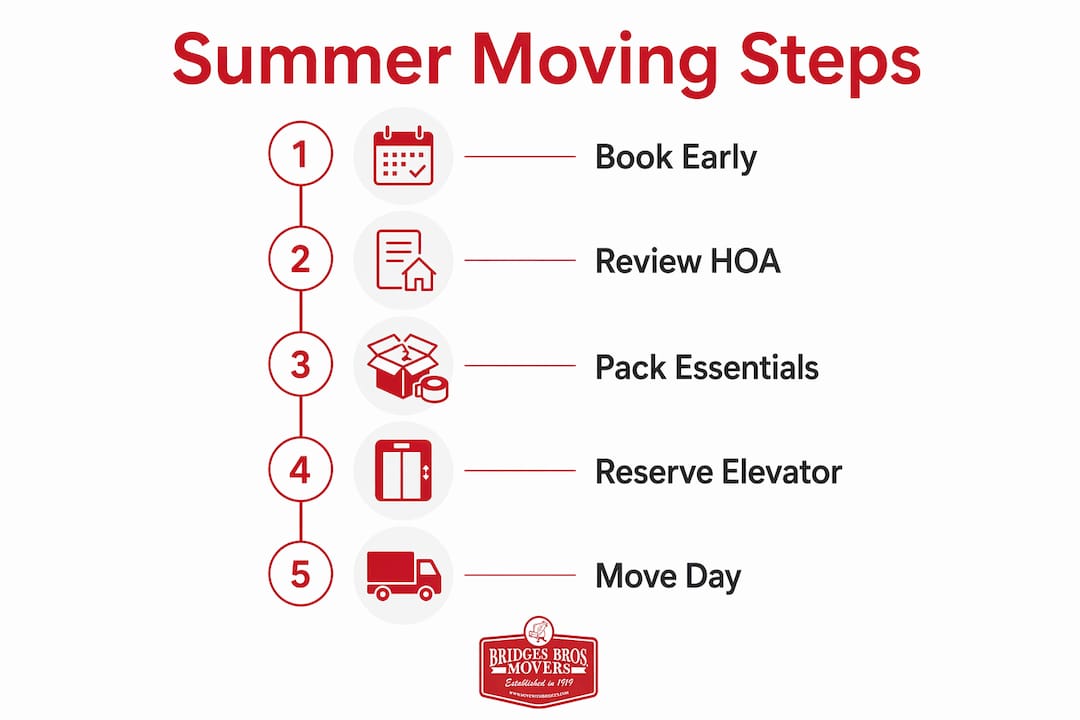
Booking your movers or rental truck early is the single most important step for a summer move. Calendars fill up quickly from june through august, and weekend and end-of-month dates carry premium pricing. Locking in your preferred date at least four to six weeks out gives you more choices and better rates.

Before you sign a lease, request your building’s HOA rules, CC&Rs, and any unit-specific move-in policies in writing. HOA rules affect move logistics like parking access, elevator use, and common area restrictions. Reviewing these documents before move day prevents surprises that can delay your entire schedule.
Schedule a joint move-in inspection with your landlord as soon as you get the keys. A signed inspection checklist with dated photos documents preexisting damage and protects your security deposit from wrongful deductions later. This step takes thirty minutes and can save you hundreds of dollars at move-out.
Start packing non-essential items and off-season clothing at least three to four weeks before your move date. Packing non-essentials early reduces last-minute stress and gives you time to sort, donate, or discard items you no longer need. Label every box with the destination room and a brief contents description.
- Book movers or trucks at least four to six weeks before your move date
- Request HOA rules, CC&Rs, and building move-in policies in writing before signing
- Complete a joint inspection with dated photos on move-in day
- Pack non-essentials and off-season items three to four weeks out
- Prepare a first-night essentials box with toiletries, a change of clothes, chargers, and basic kitchen items
Pro Tip: Pack your first-night essentials box last and load it into your personal vehicle, not the moving truck. You will have immediate access to everything you need without unpacking a single box.
How to execute a smooth move day in a New Hampshire apartment or condo during summer?
Move day execution in a summer NH apartment or condo comes down to timing, communication, and preparation for the unexpected. Start your move as early as 7:00 AM or 8:00 AM to avoid peak afternoon heat and give your crew maximum working time. New Hampshire summers can push temperatures into the upper 80s, and hidden dangers of summer moving include heat exhaustion for anyone doing heavy lifting.
- Confirm building logistics the day before. Call building management to verify elevator reservations, parking permits for the moving truck, and any move-in hour restrictions your HOA imposes.
- Dress for the heat. Wear lightweight, breathable clothing and closed-toe shoes. Keep sunscreen and a hat accessible.
- Hydrate constantly. Set out a cooler with water and sports drinks for your moving crew. Dehydration slows everyone down and increases the risk of injury.
- Protect delicate items. Use furniture pads, stretch wrap, and double-walled boxes for fragile pieces. Avoid stacking heavy boxes on top of lighter ones during transit.
- Communicate clearly with your moving team. Walk through the floor plan with your crew before loading begins so everyone knows where each item goes in the new unit.
- Plan for additional fees. Stair carry fees run $50–$100 per flight, and long-carry charges of approximately $50 apply when the truck cannot park near the entrance. Discuss these costs during your quote to avoid surprises on move day.
Pro Tip: Reserve the elevator for your move window in writing, not just verbally. Building managers deal with multiple move requests during summer, and a written confirmation protects your time slot.
Building-related logistics like elevator access, parking permits, and HOA move-in hour restrictions can cause serious delays if left unplanned. Contact building management in advance to schedule everything and confirm details the day before your move.
What unique challenges do NH apartment and condo moves present?
New Hampshire apartments and condos introduce layers of rules that single-family home moves do not. HOA boards control parking, common area access, noise levels, and sometimes the hours during which moves are permitted. Ignoring these rules can result in fines or a forced halt to your move mid-day.
- Parking restrictions: Cities like Manchester and Concord have narrow streets and limited loading zones. Confirm truck parking with both building management and local ordinances before move day.
- Elevator access: Many condo buildings require advance reservations and may charge a deposit for elevator use during moves.
- Noise rules: Some HOAs restrict move activity to weekday business hours, which affects scheduling if you planned a weekend move.
- CC&R compliance: Tenants should request CC&Rs in writing and keep copies throughout their tenancy. These documents define what is and is not permitted in common areas.
New Hampshire security deposit law gives landlords 30 days after move-out to return the deposit with an itemized statement. Failure to return within 30 days allows tenants to recover double the withheld amount in small claims court for disputes up to $10,000. Knowing this rule before you move in changes how carefully you document the unit’s condition on arrival.
| Challenge | Solution |
|---|---|
| Elevator access conflicts | Reserve in writing at least two weeks before move day |
| Parking restrictions | Confirm truck permit with building and city ordinances |
| HOA move-hour limits | Schedule your crew start time to comply with building rules |
| Security deposit disputes | Complete joint inspection with dated photos on move-in day |
| Narrow road access in cities | Request a site visit from your mover to assess truck access |
What packing and moving timeline works best for summer NH moves?
A well-structured timeline is the difference between a calm move and a frantic one. Begin sorting and downsizing at least four to five weeks before your move date. Donate, sell, or discard anything you have not used in the past year. Less volume means lower moving costs and less unpacking at the new unit.
- Five weeks out: Sort every room. Donate or discard unwanted items. Begin collecting packing supplies.
- Four weeks out: Pack off-season clothing, books, décor, and non-essential kitchen items. Label every box clearly.
- Three weeks out: Confirm your moving date and crew. Notify utilities of your transfer date. Submit your change of address with USPS.
- Two weeks out: Pack remaining non-daily items. Confirm elevator reservations and parking permits with building management.
- One week out: Pack daily-use items except what you need for the final days. Prepare your first-night essentials box.
- Move day: Load the first-night box into your personal vehicle. Walk through both units with your crew and landlord.
Timing your move for a midweek date in the middle of the month delivers real cost advantages. Summer peak season rates are highest on weekends and at month-end when leases turn over. A tuesday or wednesday move in mid-july, for example, often costs less and gives you more scheduling flexibility with movers.
| Timing | Cost impact | Availability |
|---|---|---|
| Weekend, end of month | Highest rates | Very limited |
| Weekend, mid-month | Moderate rates | Limited |
| Weekday, end of month | Moderate rates | Moderate |
| Weekday, mid-month | Lowest rates | Best availability |
A tenant packing guide built around room-by-room deadlines keeps you on track without the last-minute scramble that derails most summer moves.
How do you troubleshoot common problems during a summer NH condo move?
Even well-planned moves hit unexpected obstacles. Knowing how to respond quickly keeps your day on track.
- Elevator conflict: If another resident booked the same window, speak calmly with building management. Having your reservation in writing gives you priority. Use stairwells for smaller items while the conflict resolves.
- Sudden heat advisory: Reschedule heavy lifting to early morning or late afternoon. Keep your crew hydrated and take breaks every 45–60 minutes. Summer moving safety depends on recognizing heat stress before it becomes a medical issue.
- Security deposit dispute: If your landlord withholds part of your deposit without cause, your dated move-in photos and signed inspection checklist are your strongest evidence. New Hampshire law gives you the right to recover double the withheld amount if the landlord misses the 30-day return deadline.
- Last-minute schedule conflict: Contact your moving company as soon as you know about the conflict. Most professional movers can adjust start times within a few hours if given enough notice.
- Parking blocked: Have a backup parking plan ready, such as a nearby lot or street. Discuss this scenario with your mover during the quote process.
Proactive communication with your building manager, landlord, and moving crew before move day eliminates most of the problems that catch tenants off guard. A five-minute phone call the day before is worth more than an hour of problem-solving on move day itself.
Key Takeaways
Summer apartment and condo moves in New Hampshire succeed when you book early, document everything, and understand your tenant rights before move day arrives.
| Point | Details |
|---|---|
| Book early, save money | Summer rates run 20–30% higher; secure your date four to six weeks out. |
| Document the unit on arrival | A joint inspection with dated photos protects your security deposit from wrongful deductions. |
| Know NH deposit law | Landlords have 30 days to return deposits; tenants can recover double if that deadline is missed. |
| Confirm building logistics in writing | Elevator reservations, parking permits, and move-hour rules must be confirmed before move day. |
| Pack by timeline, not by urgency | A room-by-room packing schedule starting five weeks out prevents last-minute chaos. |
What I have learned from watching NH summer moves go wrong
Every summer, I see the same pattern repeat. A tenant books a mover two weeks out, skips the move-in inspection, and never reads the HOA rules. By september, they are fighting over a security deposit with no documentation to back them up.
The tenants who move well are not necessarily more organized by nature. They just treat the move as a project with deadlines, not an event that happens to them. They request the CC&Rs before signing. They photograph every scuff and scratch on move-in day. They ask their mover about stair carry and long-carry fees during the quote call, not after the bill arrives.
New Hampshire’s tenant protections are genuinely strong. The 30-day deposit return rule and the right to recover double the withheld amount are real tools, but they only work if you have the documentation to support your claim. A signed inspection checklist is worth more than any verbal agreement.
My honest advice: treat the pre-move paperwork with the same attention you give to packing. Read the stress-free move tips that apply to your specific building type. Ask your mover every question you can think of before move day. The moves that go smoothly are the ones where nothing on move day is a surprise.
— Patrick
Bridges Bros Movers: your partner for summer apartment relocations in NH
Bridges Bros Movers has served New Hampshire families since 1919, and summer apartment and condo moves are a core part of that work. The team understands HOA move-in rules, building access logistics, and the scheduling demands of peak season. Bridges Bros Movers offers professional packing crews, quality packing materials, and experienced movers who discuss stair carry and long-carry fees upfront so your final bill matches your quote. For families planning a summer relocation across New Hampshire, the residential moving services page is the right place to request a quote and lock in your preferred date before the summer calendar fills.
FAQ
When is the best time to move in NH during summer?
Midweek dates in the middle of the month offer the lowest rates and best availability. Summer weekend and end-of-month moves carry the highest demand and pricing.
How do I protect my security deposit during an NH apartment move?
Complete a joint move-in inspection with your landlord and document all preexisting damage with dated photos. New Hampshire law requires landlords to return deposits within 30 days of move-out.
What are stair carry and long-carry fees?
Stair carry fees typically run $50–$100 per flight, and long-carry fees of approximately $50 apply when the moving truck cannot park near the building entrance. Ask about these charges during your initial quote.
Do I need to review HOA rules before moving into a condo in NH?
Yes. HOA rules govern parking, elevator use, move-in hours, and common area access. Request the CC&Rs in writing before signing your lease and keep copies throughout your tenancy.
How far in advance should I book movers for a summer NH move?
Book at least four to six weeks before your move date. Summer is peak moving season in New Hampshire, and preferred dates fill quickly, especially on weekends and at month-end.