
TL;DR:
- Proper preparation and right materials prevent common moving packing problems for tenants.
- Strategic, room-by-room packing and labeling ease unpacking and avoid damage.
- Professional packing services are recommended for fragile, large, or complex moves in New England.
Moving out of a rental feels manageable until the boxes start piling up and you realize just how much needs to be packed, protected, and transported without a single item going missing. For tenants in New Hampshire, Maine, and Massachusetts, that challenge often gets complicated by narrow staircases, unpredictable weather, and older building layouts that make every box count. The good news is that most packing problems are preventable with the right preparation. This guide walks you through exactly what you need, how to pack step by step, what mistakes to avoid, and when to call in the professionals.
Table of Contents
- What tenants need for effective packing
- Step-by-step packing process for tenants
- avoiding common packing mistakes
- When to use professional packing and moving support
- A smarter approach to tenant packing: what most guides miss
- Ready to pack smarter? Let local experts help
- frequently asked questions
Key Takeaways
| Point | Details |
|---|---|
| Plan your packing early | Gather supplies and begin organizing weeks ahead to minimize stress. |
| Use the right materials | Quality boxes, scales, and specialty wraps protect your belongings and make moving smoother. |
| Avoid common errors | Steer clear of overloading boxes or skipping essentials by following expert tips. |
| Get help when needed | Professional packing services offer convenience and peace of mind for complex moves. |
What tenants need for effective packing
Before you touch a single item in your apartment, you need the right materials ready to go. Walking into a move without supplies is one of the fastest ways to turn a manageable task into a stressful scramble. Stock up early, and the whole process moves more smoothly.
Here is a breakdown of the core materials you will need:
| Material | Purpose | Priority level |
|---|---|---|
| Small, medium, and large boxes | General packing for all room types | Essential |
| Heavy-duty packing tape | Box sealing and reinforcement | Essential |
| bubble wrap and packing paper | Protection for fragile items | Essential |
| markers and labels | Room sorting and priority identification | Essential |
| leakproof bags | Contains liquids and bathroom items | High |
| specialty wraps or foam | Protection for antiques and artwork | Medium |
| luggage scale | Monitor box weight to prevent overloading | Medium |
Beyond the table above, a few extra tools make the physical process easier and safer. A box cutter, a furniture dolly, and a roll of stretch wrap for furniture legs can save a lot of effort. If you have packing materials from a previous move, check their condition before reusing them.
One area that many tenants overlook is the essentials bag. This is a separate, clearly labeled bag or small box that contains everything you need for your first night in the new place: phone charger, toiletries, a change of clothes, medications, snacks, and anything your children or pets need immediately. According to experts, common packing mistakes include waiting until the last minute, overloading boxes, and forgetting to pack an essentials bag. Having it ready before moving day removes a huge amount of stress.
Families should also consider packing a separate bag for kids that includes a favorite toy, a tablet or book, and snacks. This gives children something familiar to focus on while the chaos of moving day unfolds around them.
Pro tip: Label every box with both the destination room and a priority level such as “open first” or “can wait.” This saves enormous time during unpacking and prevents the frustration of searching ten boxes for your coffee maker.
If you would rather skip the supply hunting entirely, exploring professional packing services is a practical option that brings everything to your door, handled by trained movers.
Step-by-step packing process for tenants
With your supplies ready, it is time to pack strategically. The order in which you pack matters just as much as how you pack. A methodical approach prevents re-opening boxes, reduces damage, and keeps you on schedule.
- Start with storage areas and off-season items. Pack items from closets, attics, and garages first. These are things you will not miss for weeks.
- Move through rooms you use least. Guest rooms, formal dining rooms, and decorative shelves come before kitchens and bedrooms.
- Pack room by room, not category by category. It keeps boxes organized for unpacking and reduces cross-contamination of fragile items.
- Save the kitchen and bedrooms for last. These rooms contain items you use daily, so packing them too early creates unnecessary disruption.
- Pack your essentials bag the night before. Do not leave this until moving morning.
For tenants in walk-up apartments, which are common throughout Boston, Portsmouth, and Portland, the staircase is your biggest physical challenge. Edge cases like walk-ups are best handled by using luggage for heavy items rather than bulky boxes. Rolling a suitcase down stairs is far safer than carrying an overloaded box, and it protects both you and your belongings.
Here is how DIY packing compares to a guided approach for common tenant situations:
| Moving situation | DIY approach | Expert-guided approach |
|---|---|---|
| Studio apartment, few items | Works well with basic prep | Optional |
| Family home, multiple rooms | Time-consuming and complex | recommended |
| Walk-up building with stairs | High physical strain | strongly recommended |
| antiques or fragile valuables | High risk without training | essential |
| Long-distance relocation | Complex logistics | strongly recommended |
For families, antiques, or fragile goods, the risk of DIY packing increases significantly. Professional-grade wrapping for antiques is different from bubble wrap off the shelf, and using expert packing steps can protect items that cannot be replaced.
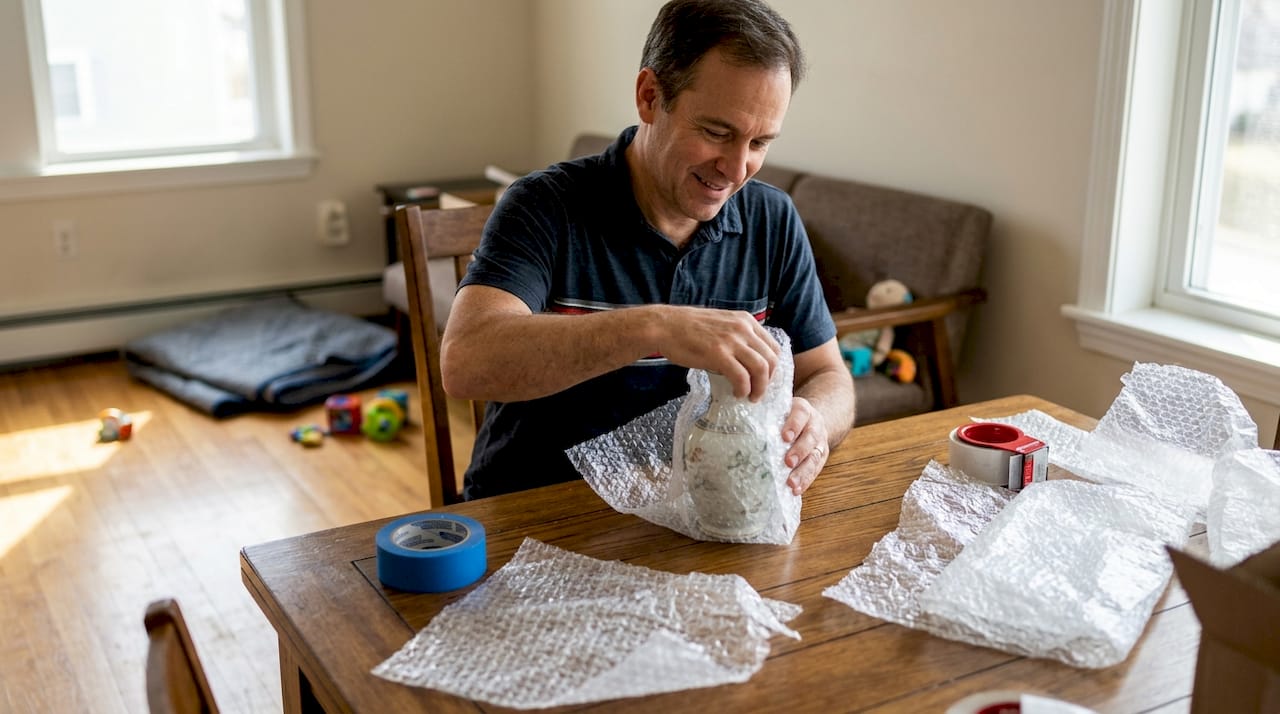
Pro tip: Use luggage for the heaviest items when navigating stairs. Rolling bags protect your back, move more easily through tight spaces, and reduce the number of trips you need to make.
For local moves across New Hampshire, Maine, and Massachusetts, reviewing local move packing tips specific to the region can help you plan for narrow hallways, older door frames, and unpredictable spring weather.
avoiding common packing mistakes
With the step-by-step roadmap in hand, it is just as important to recognize the packing errors that trip up so many tenants. Some of these mistakes feel minor in the moment but cause real problems on moving day.
Here are the most frequent packing mistakes and how to fix them:
- overloading boxes. A box packed too heavy risks breaking at the bottom and injuring whoever is carrying it. Keep boxes under 30 to 50 pounds and use a luggage scale to check.
- waiting until the last minute. Starting too late creates panic packing, which leads to mixed-room boxes, forgotten items, and damaged goods.
- skipping labels. An unlabeled box is a mystery that slows down every step of your move and unpacking process.
- packing leaky liquids without protection. One leaking shampoo bottle can damage everything around it. leakproof bags are a simple, inexpensive fix.
- not protecting valuables separately. Electronics, jewelry, and documents should be packed in a dedicated bag you carry personally.
Experts note that top packing errors consistently include last-minute packing, box overloading, and lack of preparation for essentials. These are not random mistakes. They happen because tenants underestimate how long packing actually takes.
“The tenants who have the smoothest moves are the ones who treat packing like a project, not a chore. They plan, they stage, and they start weeks early. The ones who struggle almost always started too late.”
When mistakes do happen, the cost goes beyond stress. You may face delays, damage claims, or the need to replace broken items. According to a review of best moving companies of 2026, full-service movers that include packing consistently receive better customer satisfaction scores than self-managed moves, largely because professional packing reduces damage and delays.
If you want support to avoid these pitfalls entirely, understanding how packing services help your move succeed is a great place to start.
When to use professional packing and moving support
For some moves, a bit of DIY works fine. For others, professional support provides peace of mind, protects your belongings, and actually saves you money in the long run.
Here are the situations where hiring professionals makes the clearest sense:
- You have antiques, artwork, or fragile items that require specialized wrapping and handling beyond standard bubble wrap.
- You are moving a large household with multiple rooms, where the sheer volume makes DIY packing impractical within a reasonable timeline.
- You have physical limitations or injuries that make lifting and hauling unsafe.
- Your move involves a walk-up building or complex access points that require extra planning and physical skill.
- You are relocating long-distance, where improper packing creates a much higher risk of damage over hundreds of miles.
When comparing options, here is a realistic look at what each path involves:
| Factor | DIY packing | full-service professional |
|---|---|---|
| Time investment | High, often 2 to 3 weeks | Low, often 1 to 2 days |
| Material cost | You source everything | included |
| Risk of damage | moderate to high | Low with trained packers |
| Insurance coverage | Limited | Available through mover |
| Local knowledge | None unless you know the area | Built-in with regional movers |
A review of the best movers in 2026 shows that full-service companies, including options that specialize in packing, unpacking, and storage, consistently outperform partial-service options in customer satisfaction. That includes metrics around quote accuracy, damage rates, and scheduling reliability.
For tenants in New Hampshire, Maine, and Massachusetts, local knowledge matters. A mover familiar with Portsmouth’s historic narrow staircases or the dense parking restrictions in Cambridge brings practical insight that no national chain can replicate. Before booking, always confirm your provider can handle the specific items and situations in your household by reviewing their moving guide for full details.
Pro tip: If you have specialty items like a piano, wine collection, or antique furniture, always confirm in writing that your mover is equipped to handle them. Not every company is. For cross-state moves, reviewing an interstate packing checklist helps ensure nothing gets missed.
A smarter approach to tenant packing: what most guides miss
Most packing guides hand you a generic list and send you on your way. But if you are moving in New Hampshire, Maine, or Massachusetts, that cookie-cutter advice can let you down.
New England presents real conditions that most packing guides simply do not account for. Spring moves mean mud season and surprise rain that soaks cardboard boxes left on stoops. Winter moves involve frozen driveways, tight timing around snowstorms, and buildings where exterior doors cannot stay open long without damaging the heating system. Summer moves in older Boston-area apartment buildings mean tight hallways, window-unit air conditioners that need removal, and moving days that overlap with every other tenant’s lease end date.
Generic advice says “start early and label your boxes.” That is true, but it is not enough. What actually separates a smooth move from a stressful one in this region is understanding your specific building, your neighborhood’s access challenges, and what time of year brings which risks.
The tenants who move well are the ones who blend smart technique with real-world awareness. They pack for their actual conditions, not some imagined perfect moving day. For a genuinely stress-free New England move, regional experience and practical preparation go hand in hand. That combination is something no generic checklist can fully provide.
Ready to pack smarter? Let local experts help
Putting this guide into practice is a strong start, but you do not have to do it all alone. At packing services from a local team, you get trained professionals who understand New England’s unique moving challenges, from narrow colonial staircases to unpredictable April weather. We also offer the full range of packing materials so you are never caught short on supplies. Whether you want full-service packing or just need guidance on what to tackle yourself, we are ready to help. Take the next step and get your free quote today to plan a move that goes exactly as it should.
frequently asked questions
What are the top packing mistakes tenants make?
The most common are overloading boxes, last-minute packing, and forgetting to prepare an essentials bag before moving day.
How early should tenants start packing before moving day?
Start packing non-essentials three to four weeks before your move so you avoid the rushed decisions and careless errors that come with packing in a hurry.
What professional packing solutions do movers offer?
Full-service movers typically offer packing, unpacking, and storage options, with additional coverage for specialty items like antiques, electronics, and fragile goods.
Should I pack valuables and antiques myself as a tenant?
For fragile or high-value items, use professional-grade materials or ask your mover about specialized wrapping to make sure nothing gets damaged in transit.
Are there packing strategies for walk-up apartments?
Yes. Use luggage for heavy items on stairs, plan for smaller loads per trip, and avoid oversized boxes that are difficult to maneuver through tight landings.