
TL;DR:
- A moving estimate is a preliminary quote based on shipment size, distance, and requested services that helps plan your budget. Different estimate types offer varying levels of price protection, with binding not-to-exceed estimates providing the strongest consumer safeguards. Accurate quotes depend on detailed inventories, timing, location, and verifying credentials, reducing the risk of surprise charges at delivery.
A moving estimate is a preliminary price projection that movers calculate based on your shipment size, move distance, and requested services. It is the foundation of your moving budget, and knowing how to read one correctly separates a smooth relocation from a costly surprise. Understanding moving estimates means knowing which cost drivers matter most, which estimate type protects you best, and how timing affects your final bill. Bridges Bros Movers, serving New Hampshire, Maine, and Massachusetts since 1919, has helped thousands of families decode these numbers before signing a single contract.
What factors drive your moving cost breakdown?
Labor is the single largest cost in any professional move, typically making up 30%–70% of a local move bill. That wide range reflects real differences in crew size, hours worked, and the complexity of your home. Transportation adds another 25%–35%, and packing services contribute 15%–25% on top of that.

The pricing method changes based on distance. Local movers charge by the hour, with two movers running $100–$150 per hour in 2026. Long-distance moves shift to a weight-and-mileage model, where a 3-bedroom home averaging 7,500 pounds costs roughly $0.80–$1.20 per pound. That means a 500-mile move for a 3-bedroom home could land between $6,000 and $9,000 in transportation costs alone before any add-ons.
Here is how total estimated costs break down by home size and move type in 2026:
| Home Size | Local Move Estimate | Long-Distance Estimate |
|---|---|---|
| Studio / 1 Bedroom | $400–$900 | $1,500–$3,500 |
| 2–3 Bedrooms | $1,200–$2,600 | $4,200–$7,800 |
| 4+ Bedrooms | $2,800–$5,000 | $7,500–$12,000+ |
These 2026 cost ranges represent full-service professional moves. DIY moves typically run 40%–60% less, but that gap shrinks fast once you factor in truck rental, fuel, and the physical toll of moving heavy furniture yourself.
Pro Tip: Always disclose heavy specialty items before your estimate is finalized. Pianos add roughly 700 pounds, safes add 400–800 pounds, and pool tables add about 500 pounds. Disclosing these items upfront prevents surprise charges at delivery.
You can also explore typical moving expenses for a more detailed look at how individual line items add up across different move scenarios.
What are the three types of moving estimates?
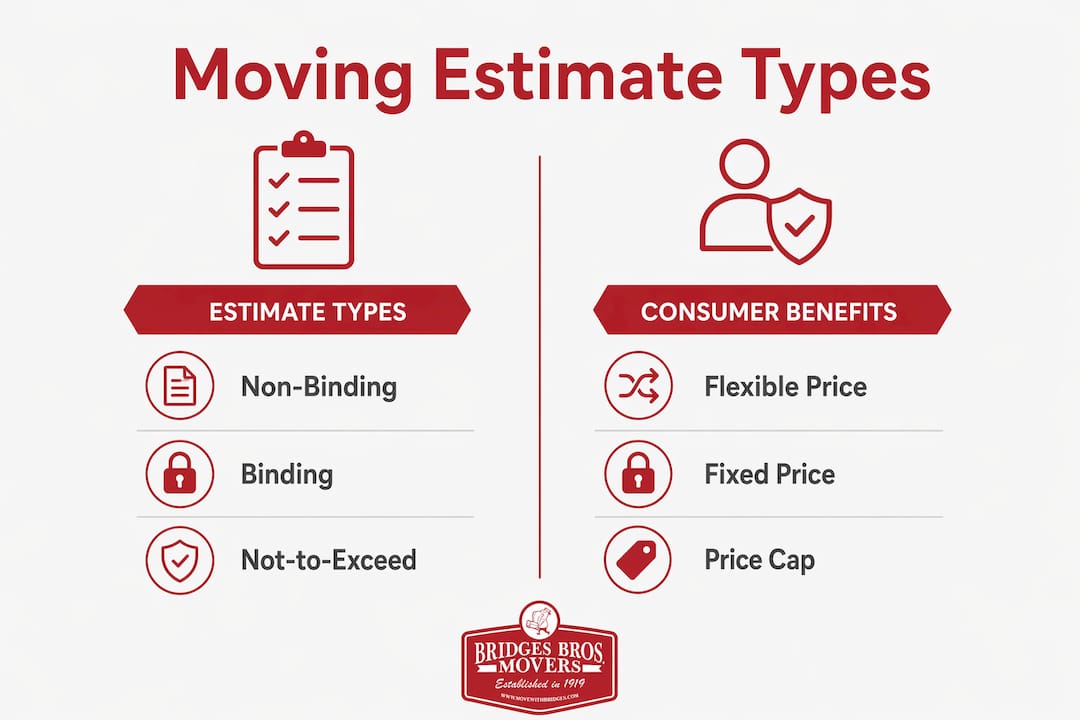
The moving industry uses three distinct estimate types, and the one you choose determines how much price protection you have. Most consumers do not realize these types exist until they are already holding a contract.
| Estimate Type | Price Locked? | Consumer Protection | Best For |
|---|---|---|---|
| Non-Binding | No | 110% federal cap at delivery | Short local moves with predictable loads |
| Binding | Yes | Fixed price regardless of weight | Moves where budget certainty matters |
| Binding Not-to-Exceed | Yes (maximum) | Pay less if weight comes in lower | Best overall consumer protection |
A non-binding estimate is the most common type you will receive, especially from phone or online quotes. The price can change based on actual shipment weight. Federal regulations do offer protection here: the 110% rule caps your payment at delivery to 110% of the original estimate. Any amount above that cap is billed within 30 days, giving you time to manage cash flow rather than scrambling at the door.
A binding estimate locks in a fixed price. If your shipment weighs more than estimated, you pay nothing extra. If it weighs less, you still pay the full quoted amount. This works well when you have a precise inventory and want budget certainty.
A binding not-to-exceed estimate is the strongest option for consumers. This estimate type caps the maximum price while allowing you to pay less if your actual shipment weight falls below the estimate. Many movers do not offer it unless you ask directly. That single sentence is worth remembering.
How the estimate is delivered also matters. In-person or virtual surveys produce far more accurate quotes than phone-only estimates. Phone quotes tend to be non-binding and frequently underestimated, which sets up a frustrating conversation at delivery. For a deeper breakdown of each type, the moving estimate types guide from Bridges Bros Movers covers protections in plain language.
Pro Tip: Always request a binding not-to-exceed estimate in writing before your move date. If a mover cannot or will not provide one, ask why and consider that answer carefully before signing.
How do timing and location affect moving quotes?
When you move matters almost as much as what you move. June and July prices run 28%–35% above average, driven by peak demand from families trying to relocate before the school year starts. January and February sit 18%–20% below average, making winter the most affordable window for flexible movers.
Geography adds another layer. California and New York origins carry about 22% higher costs compared to Midwest origins, reflecting higher local labor rates, fuel costs, and regulatory overhead. New England falls in a similar higher-cost bracket, which is why understanding regional pricing is especially relevant if you are moving within or out of states like New Hampshire, Maine, or Massachusetts.
Here are the key timing and location factors that directly affect your quote:
- Peak season surcharges: Summer moves (june through august) carry the highest rates. Book at least 6–8 weeks in advance or expect limited availability.
- Mid-week and mid-month discounts: Moving on a Tuesday or Wednesday, or between the 10th and 20th of the month, often yields lower hourly rates because demand drops.
- Local labor rates: Urban markets like Boston or Portland, Maine carry higher crew costs than rural areas, even for the same distance.
- Fuel costs: Long-distance moves are sensitive to fuel price swings. Some movers include a fuel surcharge as a separate line item.
- Flexibility pays off: Giving your mover a two-week window instead of a fixed date can reduce your bill by 10%–15% in competitive markets.
Understanding the difference between local and long-distance pricing models helps you ask better questions when comparing quotes across companies.
How do you get accurate, fair moving estimates?
Accurate quotes start with accurate information. The more detail you give a mover, the more reliable their estimate will be. Vague inventories produce vague prices, and vague prices lead to disputes.
Follow these steps to get quotes you can actually compare:
- Create a room-by-room inventory. List every item you plan to move, including furniture dimensions and any specialty pieces. The “room multiplier method,” which assigns average weight to each room’s contents, is a practical starting point for estimating shipment weight before your survey.
- Request at least three estimates. Getting multiple quotes from licensed movers gives you a realistic price range and exposes any outliers. A quote that comes in 30%–40% below the others is a red flag, not a bargain.
- Verify USDOT credentials. Licensed movers carry a USDOT number verifiable through the FMCSA SAFER database. This takes two minutes and confirms the company is legally authorized to operate.
- Insist on an in-person or virtual survey. Phone-only quotes are almost always non-binding and frequently underestimated. A proper survey, whether in your home or via video call, produces a far more accurate number.
- Compare line by line, not just total price. Check whether packing services, packing materials, insurance, and fuel surcharges are included or excluded. Two quotes at the same total price can represent very different levels of service.
- Confirm the estimate type in writing. Before you sign anything, confirm whether you are receiving a non-binding, binding, or binding not-to-exceed estimate. Get it in writing.
Transparent moving estimates significantly improve customer confidence and reduce complaints related to surprise charges. That finding reflects a simple truth: movers who explain their pricing clearly earn more trust and generate fewer disputes.
Key takeaways
Accurate moving estimates depend on the type of estimate you request, the detail of your inventory, and when and where you move.
| Point | Details |
|---|---|
| Labor drives local costs | Labor makes up 30%–70% of a local move bill, making crew size a key variable. |
| Estimate type determines protection | Binding not-to-exceed estimates offer the strongest consumer protection available. |
| Timing changes your price | Summer moves cost 28%–35% more; winter moves run 18%–20% below average. |
| Verify credentials before signing | Always confirm a mover’s USDOT number through the FMCSA SAFER database. |
| Detailed inventories produce accurate quotes | Disclosing all items, including heavy specialty pieces, prevents surprise charges at delivery. |
What i’ve learned after years of watching moves go wrong
Most moving disputes I have seen trace back to one moment: the customer accepted a phone quote without asking what type of estimate it was. They assumed the number was locked in. It was not. When the bill at delivery came in higher, they had no legal ground to stand on beyond the 110% federal cap.
My honest advice is this: treat the estimate type as the most important detail on any quote, more important than the total price itself. A binding not-to-exceed estimate from a slightly more expensive mover is almost always a better deal than a non-binding estimate from the cheapest option in town. The math works out when you factor in the risk of a surprise charge at delivery.
I also think people underestimate how much a detailed inventory changes the conversation. Movers who receive a precise room-by-room list give sharper quotes. Movers who receive a vague description give themselves room to adjust later. You control that variable entirely.
Bridges Bros Movers has built its reputation on transparent, in-person and virtual surveys that produce binding estimates customers can rely on. That approach, consistent since 1919, is why the company has earned “Best Mover in NH” recognition. Ask hard questions before you sign. The right mover will welcome them.
— Patrick
Let bridges bros movers give you a quote you can count on
Bridges Bros Movers provides binding estimates backed by in-person and virtual surveys across New Hampshire, Maine, and Massachusetts. Whether you need full-service packing, professional packing services, or junk removal before your move date, the team builds your quote around a complete picture of your move. Explore the full range of moving services from Bridges Bros Movers and request your estimate today. With over a century of experience and a family-owned commitment to honest pricing, you will know exactly what to expect before moving day arrives.
FAQ
What is a moving estimate?
A moving estimate is a price projection provided by a moving company based on your shipment size, move distance, and requested services. It serves as the foundation for budgeting your relocation.
What is the difference between binding and non-binding estimates?
A binding estimate locks in a fixed price regardless of actual shipment weight, while a non-binding estimate can change based on weight at delivery. Federal regulations cap non-binding estimate payments at 110% of the original quote at delivery.
When is the cheapest time to move?
January and february are typically 18%–20% below average in cost, making winter the most affordable season for flexible movers. Mid-week and mid-month dates also tend to carry lower rates year-round.
How do i verify a moving company is legitimate?
Check the mover’s USDOT number through the FMCSA SAFER database before accepting any estimate. Licensed interstate movers are required by law to carry this registration.
Why do moving estimates vary so much between companies?
Estimates vary because companies use different pricing models, include different services, and assess shipment weight differently. Comparing quotes line by line, rather than by total price alone, reveals what each quote actually covers.