
Moving to a new state or across hundreds of miles sounds straightforward until you realize it involves far more than packing boxes and hiring a truck. Long-distance moving encompasses complex logistics, regulatory requirements, and careful planning that many families underestimate. This guide clarifies what long-distance moving truly entails, breaks down the key components for stress-free relocation, and provides actionable insights for individuals and families planning moves in New Hampshire, Maine, and Massachusetts in 2026. You’ll learn how to choose the right services, manage costs, and prepare effectively for a smooth transition.
Table of Contents
- Understanding Long-Distance Moving: What It Really Means
- Key Components of a Stress-Free Long-Distance Move
- Costs, Timing, and Service Options: What to Expect for 2026 Moves
- Choosing the Right Mover and Preparing for Your Long-Distance Move in New England
- Discover Full-Service Long-Distance Moving Solutions With Bridges Bros. Movers
Key takeaways
| Point | Details |
|---|---|
| Distance and regulations define long-distance moves | Moves exceeding 100 miles or crossing state lines involve different logistics and compliance requirements than local relocations. |
| Planning and professional services reduce stress | Early preparation, comprehensive checklists, and experienced movers streamline the entire process. |
| Costs vary based on multiple factors | Distance, volume, service level, and timing all influence your final moving expenses. |
| Choosing the right mover is critical | Verifying credentials, reading reviews, and asking detailed questions ensure you hire a reliable company. |
Understanding long-distance moving: What it really means
Long-distance moving refers to relocations that typically exceed 100 miles or cross state boundaries, distinguishing them from local moves within the same city or region. Local and long-distance moves differ primarily by distance and regulatory requirements, affecting logistics and cost. While local moves often charge by the hour, long-distance relocations usually price based on weight, distance, and services selected. This fundamental difference impacts everything from how you budget to which company you hire.
Many people mistakenly believe long-distance moving is simply about transporting belongings farther. In reality, it involves navigating interstate regulations, coordinating precise timing across multiple locations, and managing more complex packing and loading procedures. Interstate moves require movers to hold specific licenses and insurance, ensuring they meet federal safety and liability standards. Local movers may not possess these credentials, making them unsuitable for cross-state relocations.
Long-distance moves present unique challenges compared to local relocations. Transit times extend from hours to days, requiring careful planning for perishables, valuables, and essentials you’ll need immediately upon arrival. Weather conditions, traffic patterns, and fuel costs across multiple states introduce variables that don’t affect local moves. You also face potential delays at state borders or weigh stations, making flexible scheduling essential.
Understanding these distinctions early helps you set realistic expectations and avoid costly surprises. Families moving from New Hampshire to Maine or Massachusetts to another region need to account for these complexities from the start. Recognizing that long-distance moving involves more than just distance prepares you to ask the right questions, choose appropriate services, and plan a timeline that accommodates the additional logistics.
Pro Tip: Start researching movers at least two months before your planned move date to secure the best rates and availability, especially during peak moving season from May through September.
Key factors that make long-distance moves more complex include:
- Regulatory compliance with federal and state transportation laws
- Extended transit times requiring careful inventory management
- Higher stakes for damage or loss due to longer transport distances
- Need for precise coordination between pickup and delivery windows
- Greater importance of insurance coverage and liability protection
Key components of a stress-free long-distance move
Successful long-distance relocations depend on managing several interconnected elements that work together to create a smooth experience. Effective preparation and selecting services are critical to reducing stress. Breaking down your move into manageable phases helps you stay organized and avoid last-minute chaos.

The planning timeline forms the foundation of your entire move. Start by establishing your move date, then work backward to create deadlines for tasks like decluttering, packing, and finalizing mover contracts. Most successful long-distance moves begin planning 8 to 12 weeks in advance, allowing time to research companies, gather quotes, and address unexpected issues. This timeline also gives you flexibility to schedule services during less expensive periods if your move date is flexible.
Professional packing services offer significant advantages for long-distance relocations. Trained packers use specialized materials and techniques that protect your belongings during extended transit. They understand how to cushion fragile items, distribute weight properly in boxes, and label everything for easy identification at your destination. While packing yourself saves money upfront, professional services often prevent damage that costs more to repair or replace. Full-service moving solutions handle every aspect from packing to unpacking, letting you focus on other relocation tasks.
Managing documentation and permits becomes crucial for interstate moves. You’ll need to update driver’s licenses, vehicle registrations, voter registration, and insurance policies. Some states require specific permits for moving trucks or have restrictions on transporting certain items like plants or firearms. Keeping organized records of your inventory, contracts, and receipts protects you if disputes arise and helps you track tax-deductible moving expenses if relocating for work.
Communication and timing coordination between your current home and new destination prevent common problems. Arrange utility shutoffs and startups to avoid paying for services you’re not using while ensuring your new home has power, water, and internet when you arrive. Schedule elevator reservations if moving into or out of apartments, and confirm parking permits for moving trucks at both locations. Clear communication with your moving company about access restrictions, stairs, or narrow doorways helps them prepare appropriate equipment.
Pro Tip: Create a “first night” box with essentials like toiletries, medications, phone chargers, basic kitchen items, and a change of clothes so you don’t need to unpack everything immediately upon arrival.
Follow these steps for a well-organized long-distance move:
- Research and book your moving company 6 to 8 weeks before your move date
- Begin decluttering and selling or donating items you won’t transport
- Gather packing materials or schedule professional packing services
- Notify utilities, postal service, and important contacts of your address change
- Pack non-essential items first, leaving everyday necessities for last
- Confirm all details with your mover one week before the scheduled pickup
- Conduct a final walkthrough of your old home before departing
Costs, timing, and service options: What to expect for 2026 moves
Understanding the financial aspects of long-distance moving helps you budget accurately and avoid unexpected expenses. Various factors like distance, volume, and services affect the cost of long-distance moves. The primary cost drivers include the total distance traveled, the weight or volume of your belongings, and the level of service you choose.
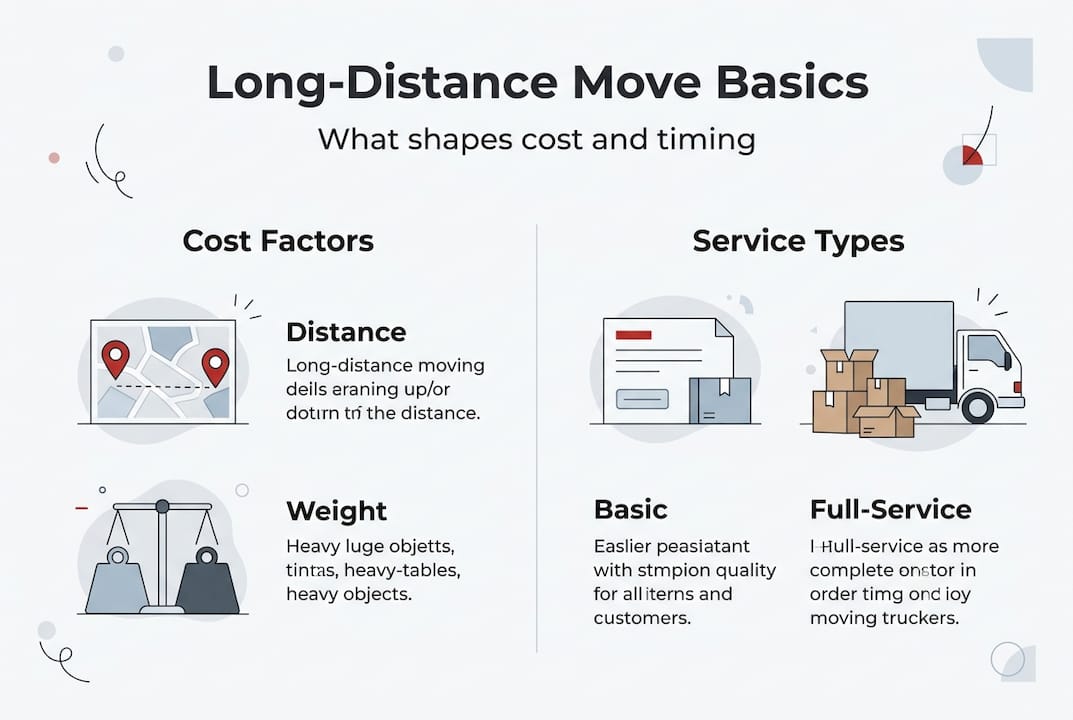
Distance directly impacts fuel costs, driver time, and vehicle wear, making it a significant factor in your quote. A move from New Hampshire to Maine costs considerably less than relocating from Massachusetts to Florida. Weight matters because moving companies must comply with Department of Transportation regulations requiring trucks to pass through weigh stations. Heavier loads mean higher fuel consumption and more labor for loading and unloading. Volume affects how much truck space your belongings occupy, which determines whether you’ll pay for a dedicated truck or share space with other customers’ items.
Service levels range from basic transport-only options to comprehensive full-service packages. Basic service means you pack everything yourself, and movers only load, transport, and unload your boxes. Partial service adds professional packing for fragile or complex items while you handle the rest. Full-service packages include packing, loading, transport, unloading, unpacking, and even debris removal. Each tier increases convenience but also raises costs. Most families find partial or full service worth the investment for long-distance moves due to the complexity and time involved.
Timing from booking to completion varies based on distance and scheduling. Booking typically happens 4 to 8 weeks before your move date, though peak season may require earlier reservations. The actual move process involves pickup day, transit time ranging from one day to a week depending on distance, and delivery within a predetermined window. Interstate moves to neighboring states like moving within New England often complete within 2 to 4 days total. Cross-country relocations can take 7 to 14 days from pickup to final delivery.
Budgeting effectively requires understanding potential additional fees. Many companies charge extra for stairs, long carries from the truck to your door, bulky items like pianos, or storage if there’s a gap between your move-out and move-in dates. Requesting a binding estimate rather than a non-binding quote protects you from surprise charges. Binding estimates guarantee the price won’t increase unless you add services or items. Get quotes from at least three companies and compare what each includes to identify the best value.
| Service Level | What’s Included | Best For | Typical Cost Range |
|---|---|---|---|
| Basic Transport | Loading, transport, unloading only | Budget-conscious movers who can pack themselves | $2,000 to $4,000 |
| Partial Service | Professional packing for fragile items plus transport | Families with some valuable or complex items | $3,500 to $6,000 |
| Full Service | Complete packing, transport, unpacking, debris removal | Busy professionals or those wanting minimal stress | $5,000 to $10,000+ |
Pro Tip: Schedule your move for mid-month or mid-week when possible, as rates often drop compared to month-end or weekend moves when demand peaks.
Common ways to control costs without sacrificing quality:
- Declutter aggressively before moving to reduce weight and volume
- Supply your own packing materials if doing partial packing yourself
- Be flexible with your move dates to take advantage of lower-demand periods
- Ask about discounts for seniors, military members, or off-season moves
Choosing the right mover and preparing for your long-distance move in New England
Selecting a qualified mover in your region ensures compliance with regulations and personalized service. The process starts with verifying that potential movers hold proper licenses and insurance. Interstate movers must register with the Federal Motor Carrier Safety Administration and display a USDOT number. You can check this number on the FMCSA website to review the company’s safety record, complaint history, and insurance status. Never hire a mover who can’t provide this information or seems evasive about credentials.
Insurance coverage protects your belongings during transit. Federal regulations require movers to offer basic liability coverage at no extra cost, but this minimal protection only reimburses 60 cents per pound per item. A damaged television weighing 50 pounds would net you just $30 under basic coverage. Full-value protection costs more but covers repair, replacement, or cash settlement at current market value. For long-distance moves involving valuable furniture, electronics, or family heirlooms, full-value protection provides essential peace of mind.
Asking the right questions during consultations helps you identify reliable movers and avoid scams. Inquire about their experience with moves similar to yours, especially routes between New Hampshire, Maine, and Massachusetts. Request references from recent customers and actually contact them to ask about their experience. Find out whether the company uses its own trucks and employees or subcontracts to third parties, which can complicate accountability. Clarify exactly what’s included in the quote and what costs extra to avoid surprise charges.
Customer reviews and referrals offer valuable insights into a company’s reliability and service quality. Check multiple platforms including Google, Yelp, and the Better Business Bureau to get a balanced view. Look for patterns in reviews rather than focusing on isolated complaints. Companies with consistently high ratings for punctuality, care with belongings, and professional communication typically deliver better experiences. Professional moving services provide expertise that DIY approaches cannot match. Personal referrals from friends or family who recently completed similar moves often lead to trustworthy movers.
Preparing your belongings and documents streamlines the moving process. Create a detailed inventory of everything you’re moving, noting the condition of valuable items with photos. This documentation proves invaluable if you need to file insurance claims. Gather important documents like birth certificates, passports, financial records, and medical files in a folder you’ll transport personally rather than loading on the truck. Use a moving checklist to track tasks and ensure nothing falls through the cracks.
New England long-distance moves involve specific regional considerations. Winter weather can delay moves or make them more challenging, so plan accordingly if relocating between November and March. Some historic homes in the region have narrow staircases or doorways requiring special equipment or techniques. Parking restrictions in urban areas like Boston or Portsmouth may require permits secured in advance. Understanding best moving practices for New England in 2026 helps you anticipate and address these regional factors.
Pro Tip: Schedule an in-home or virtual consultation rather than relying solely on phone estimates, as accurate assessments of your belongings lead to more precise quotes and prevent disputes later.
Essential questions to ask potential movers:
- What is your USDOT number and how can I verify your licensing?
- Do you use your own trucks and employees or subcontract the work?
- What insurance options do you offer and what are the coverage limits?
- Can you provide references from customers who completed similar moves?
- What is your policy for delays, damage claims, or disputes?
- Are there additional fees for stairs, long carries, or bulky items?
Discover full-service long-distance moving solutions with Bridges Bros. Movers
Bridges Bros. Movers brings over a century of moving expertise to families and individuals across New Hampshire, Maine, and Massachusetts. Our comprehensive residential moving services handle every aspect of your long-distance relocation, from careful packing with professional packing materials to secure transport and efficient unpacking at your new home. We understand the unique challenges of New England moves and tailor our approach to your specific needs.

Our award-winning team combines personalized service with proven systems that reduce stress and protect your belongings throughout the journey. Whether you’re moving within the region or heading across the country, we provide transparent pricing, flexible scheduling, and the peace of mind that comes from working with a trusted, family-owned company. Use our detailed moving checklist to stay organized, and contact us for a personalized quote that fits your timeline and budget. Let us handle the heavy lifting while you focus on settling into your new home.
FAQ
What is the difference between local and long-distance moving?
Local moves typically cover distances under 100 miles and stay within the same state, while long-distance moves exceed 100 miles or cross state lines. Local and long-distance moves involve different regulations, with interstate relocations requiring federal licensing and compliance. Pricing structures also differ, as local moves usually charge hourly rates while long-distance moves base costs on weight, distance, and services.
How do I estimate the cost of a long-distance move?
Costs depend on the distance traveled, total weight of your belongings, and the service level you select. Using a moving cost calculator provides accurate estimates by factoring in these variables. Request binding estimates from multiple companies and compare what each quote includes to identify hidden fees and find the best value for your specific needs.
What are the best practices to reduce stress during a long-distance move?
Start planning at least two months in advance, use comprehensive checklists to track tasks, and hire experienced movers with verified credentials. Preparing for your long-distance move systematically by decluttering early, packing room by room, and maintaining clear communication with your moving company prevents last-minute chaos. Keep essential documents and valuables with you rather than loading them on the truck.
When is the best time to schedule a long-distance move in 2026?
Mid-week and mid-month dates typically offer lower rates and better availability compared to weekends and month-end periods when demand peaks. Avoid the busy summer season from May through September if possible, as rates increase and scheduling becomes more competitive. Winter moves in New England require weather contingency planning but often come with discounted pricing and more flexible scheduling options.
What items should movers not transport during long-distance moves?
Movers cannot legally transport hazardous materials including propane tanks, gasoline, paint, cleaning chemicals, or ammunition. Perishable food, plants, and pets require separate arrangements as they don’t survive well during extended transit. Irreplaceable items like family photos, important documents, jewelry, and medications should travel with you personally rather than on the moving truck to prevent loss or damage.