
TL;DR:
- Family-owned moving companies provide greater accountability, local knowledge, and personalized service compared to large chains. Their owner involvement and community reputation lead to higher care, better communication, and fewer surprises during moves. Verifying licensing, written estimates, and understanding valuation coverage are essential steps for a trustworthy, tailored moving experience.
Moving is one of the most logistically demanding experiences a family can go through, and the company you hire shapes the entire outcome. Why a family-owned moving company can make a difference is a question worth asking carefully, because not all movers operate the same way. The industry term here is “independent regional mover,” and family-owned operations make up a significant portion of that category. Many families assume that bigger brands mean better service. In reality, the opposite is often true. Family-owned movers bring personal accountability, local knowledge, and a community reputation that large national chains simply cannot replicate.
Table of Contents
- Key Takeaways
- Why a family-owned moving company stands apart from big chains
- Personal accountability and the customer experience
- Understanding valuation coverage and your protection
- Customizable services that fit how your family actually lives
- How to choose the right family-owned mover
- My take on why family-owned movers deliver real peace of mind
- Move with confidence with Bridges Bros Movers
- FAQ
Key Takeaways
| Point | Details |
|---|---|
| Local roots reduce surprises | Family-owned crews know neighborhood layouts, traffic patterns, and building restrictions that national chains often miss. |
| Owner involvement improves quality | Direct owner oversight on moves leads to more consistent crews and better care for your belongings. |
| Valuation coverage matters | Understanding released value vs. full value protection is critical before you sign any moving contract. |
| Customized service fits your needs | Family-run movers tailor packing, timing, and specialty handling in ways one-size-fits-all chains typically do not. |
| Verify before you hire | Check licensing, written estimates, and crew consistency regardless of how trusted a company’s branding appears. |
Why a family-owned moving company stands apart from big chains
The formal distinction between a family-owned mover and a large corporate chain comes down to ownership structure and daily management. In a family-run operation, the people whose name is on the truck are usually the same people who plan your move, assign your crew, and follow up after the job is done. That direct line of accountability changes everything about how the work gets done.
Owners’ direct involvement in family-run moving companies drives accountability and better quality control on every move, which contrasts sharply with large chains where management is often detached from daily operations. When something goes wrong on moving day at a national company, you are talking to a customer service representative who was not there. With a family-owned company, you can often reach the owner directly.
Local knowledge is another major advantage that does not get enough attention. Community-rooted moving crews emphasize neighborhood details as the key reason customers experience fewer moving-day surprises. Here is what that looks like in practice for a New England move:
- Knowing which streets in Portsmouth flood during spring thaw and need alternate routing
- Understanding which apartment complexes in Boston require elevator reservations and loading dock permits
- Recognizing that narrow historic streets in Exeter or Newburyport need smaller trucks and adjusted crew sizes
- Anticipating seasonal traffic patterns near the Maine coast during summer peak weeks
These details are not in any corporate training manual. They come from years of doing the work in the same towns.
Pro Tip: Ask any moving company you consider whether their crew regularly works in your specific neighborhood. A local crew that has moved families on your street before will be faster, more careful, and less likely to encounter surprises.
Personal accountability and the customer experience
One of the clearest local moving company advantages is that family-owned companies have a powerful incentive to get every job right: their community reputation. A negative review in a small town carries far more weight for a local business than for a national chain with thousands of locations. That reality motivates a level of care that is very hard to manufacture.
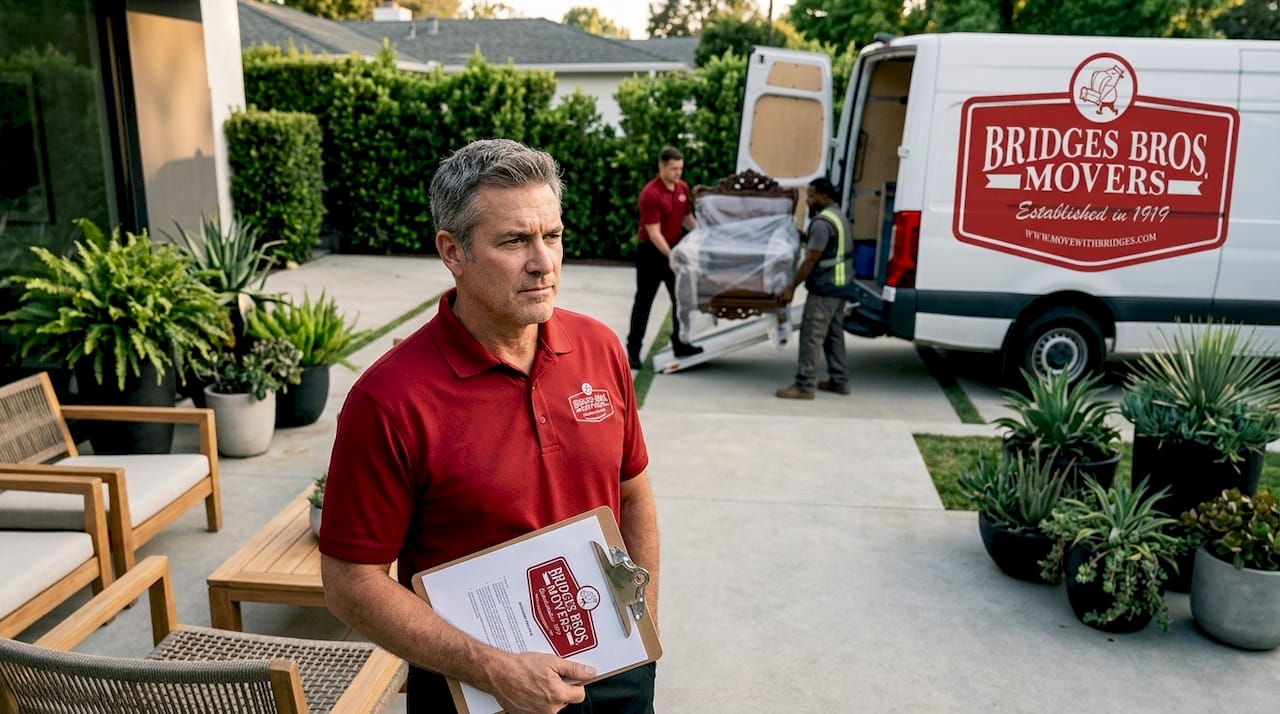
Family-owned moving companies often receive consistently higher customer ratings due to care, communication, and reliability, with reputation tied directly to owner involvement and consistent crews. Consistent crews matter more than most people realize. When the same team handles your pack day and your move day, they remember where they placed your fragile items, they recognize your grandmother’s antique dresser as something requiring extra protection, and they work together with practiced efficiency.
Communication also becomes noticeably easier. You are not bouncing between a sales rep, a dispatcher, and a crew that has never read your notes. With a family-run operation, the person who took your call often knows your name when the truck arrives.
“The difference between a family-owned mover and a corporate one is most obvious when something unexpected happens. A family company fixes the problem. A corporate company files a report.” — Bridges Bros Movers customer feedback
Smaller, more consistent teams also reduce the likelihood of miscommunication between crew members. Fewer handoffs mean fewer mistakes, fewer damaged items, and a smoother experience overall.
Understanding valuation coverage and your protection
This is the section most moving articles skip over, and it is genuinely the most financially consequential part of hiring any mover. Valuation coverage is not the same as moving insurance, and understanding the difference can save you from a very unpleasant surprise after a damage claim.
There are two primary protection options:
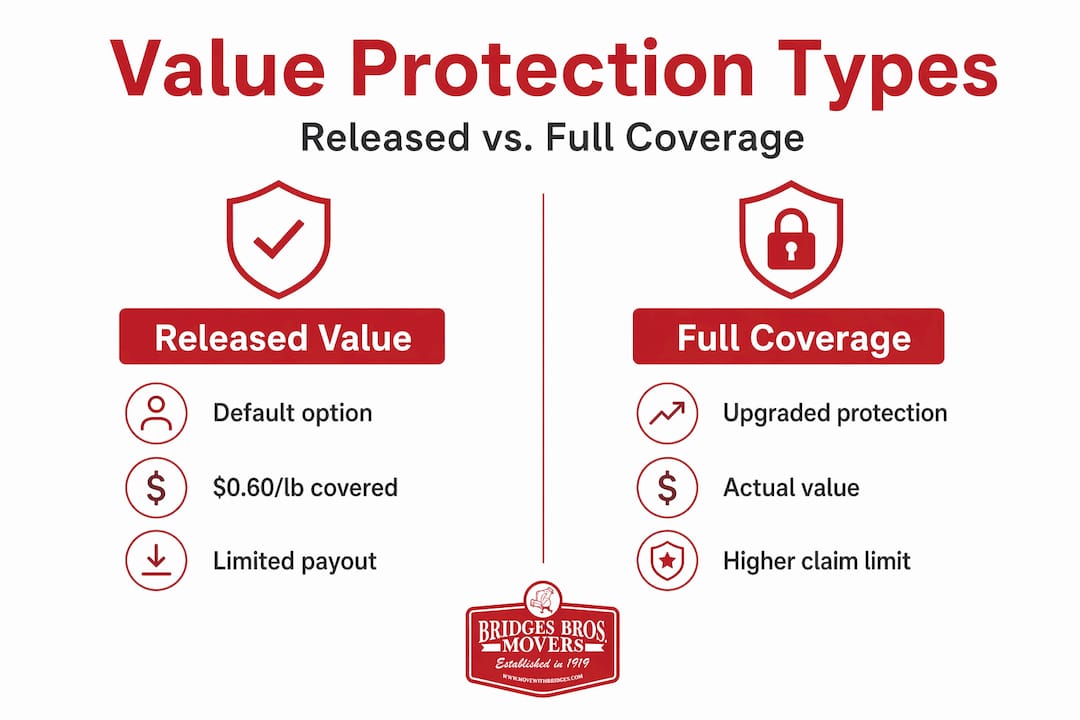
| Coverage Type | How it works | What you actually receive |
|---|---|---|
| Released value protection | Default coverage included at no extra charge | $0.60 per pound per article damaged or lost — regardless of actual value |
| Full value protection | Optional upgrade with additional fee | Repair, replacement at current market value, or cash settlement up to declared value |
To put the default option in perspective: a 50-pound flat-screen television would be covered for $30.00 under released value, no matter what it cost you. Released value coverage is default for interstate moves but is usually insufficient for actual replacement costs. Most families do not realize this until they file a claim.
This is where family-owned movers tend to be more transparent. Because their reputation is on the line in their local community, they have a genuine interest in making sure you understand what you are signing. They are more likely to walk you through valuation options clearly and answer questions honestly rather than bury the details in fine print.
Pro Tip: Before signing any moving contract, ask for the valuation coverage section specifically. Confirm in writing which option you have selected, what the claims process looks like, and how long you have to report damage. Documenting your valuation selection and damage immediately after a move is the single most effective way to protect yourself financially.
Families should confirm written terms and the claims process before hiring any mover, since contract language and valuation selection drive financial risk more than branding or reputation alone.
Customizable services that fit how your family actually lives
National moving chains are built for volume. Their systems are optimized to move as many households as possible per week, which means their service offerings tend to be standardized. Family-owned movers operate differently because their business model depends on solving your specific problem well, not just completing a transaction.
Family-owned companies can tailor services such as packing, specialty item handling, and timing flexibility to fit customer needs in ways that larger chains typically cannot match. What does that flexibility look like in real terms?
- Scheduling a partial pack for just your kitchen and fragile items while you handle the rest yourself
- Arranging storage between your move-out and move-in dates when closings do not align
- Handling specialty items like upright pianos, gun safes, or oversized artwork with specific equipment and expertise
- Timing your move around a child’s school schedule or a remote work deadline
Relationship-based service models prioritize community trust and long-term reputation, which creates a customer experience focused on genuine care and responsiveness rather than throughput. When you call a family-owned mover with an unusual request, the answer is usually a thoughtful conversation rather than a scripted “that is not part of our standard package.”
This matters most for families with complex situations. Blended households, multi-stop moves, antique collections, or tight urban delivery windows all require the kind of problem-solving that comes naturally to a team that treats each job as its own situation.
How to choose the right family-owned mover
Knowing the benefits of family-owned movers is one thing. Verifying that a specific company actually delivers on those benefits is another. Here is a practical checklist to use before you commit:
- Confirm licensing and insurance. Check that the company holds a valid USDOT number for interstate moves and appropriate state licensing for local moves. Ask to see proof of liability and cargo insurance.
- Ask about owner involvement. Find out whether an owner or senior manager will be on-site or reachable on moving day, not just during the sales process.
- Request a written estimate. A reputable mover will provide a binding or not-to-exceed estimate in writing. Be wary of verbal quotes or unusually low figures that may change on delivery.
- Verify crew consistency. Ask whether the same crew handles both packing and moving days. High crew turnover is a warning sign for any company, family-owned or not.
- Read reviews with a specific focus. Look for mentions of communication, care with belongings, and how the company handled problems, not just whether the move was completed on time.
Pro Tip: Search the company name alongside words like “damage claim” or “late delivery” to find reviews that go beyond the five-star highlights. How a mover responds to problems tells you far more than how they perform when everything goes smoothly.
My take on why family-owned movers deliver real peace of mind
Over the years, I have had the chance to observe a lot of moves, and one pattern stands out clearly. The moves that go smoothly are almost always the ones where the people doing the work have a personal stake in the outcome.
I have seen large corporate moves where the crew was different from what was promised, the estimator had never visited the property, and the claims process took months. I have also seen family-owned companies send the owner out on a Saturday to fix a problem that was not even entirely their fault, simply because their name was on the side of that truck.
What I find most interesting is that the biggest financial surprises in moves usually come from contract and valuation terms, not from mover reputation. Even a great family-owned company cannot protect you if you sign a contract without reading it. So my honest advice is this: choose a family mover for the accountability, the local knowledge, and the genuine care. Then do your homework on the paperwork anyway.
A family business’s standing in its community is not just marketing. It is the reason those owners answer the phone on a Sunday and the reason they train their crews the way they do. That kind of motivation is real, and it shows up in how your belongings are treated.
— Patrick
Move with confidence with Bridges Bros Movers
Bridges Bros Movers has been a family-owned operation since 1919, serving families across New Hampshire, Maine, and Massachusetts with the local expertise and personal accountability this article describes. Every move is backed by transparent pricing, written estimates, and a team that has built its reputation one household at a time across more than a century of service in the region.
You can explore the full range of moving and specialty services including residential moves, packing, storage, junk removal, and specialty item handling. Whether you need a full-service pack or just a careful crew for moving day, Bridges Bros Movers builds the plan around your schedule and your needs. The team also offers in-home and virtual consultations so you get an accurate estimate before any commitment. Request a no-obligation quote today and experience the difference that a family-owned company with deep community roots can make for your move.
FAQ
What makes a family-owned moving company different from a national chain?
Family-owned movers typically involve direct owner oversight on every job, consistent crews, and a community reputation that motivates higher care standards. This contrasts with large chains where management is often disconnected from daily operations.
Is released value protection enough to cover my belongings?
Released value protection compensates only $0.60 per pound per damaged item, which is rarely enough to cover actual replacement costs. Upgrading to full value protection is strongly recommended for any move involving electronics, furniture, or valuables.
How do I verify that a family-owned mover is trustworthy?
Check for valid licensing and insurance, request a written binding estimate, confirm crew consistency, and read reviews focused on communication and damage handling. Looking beyond a company’s branding to its contract terms and valuation options is the most reliable way to protect yourself.
Can a family-owned mover handle specialty items like pianos or antiques?
Most reputable family-owned movers offer specialty item handling as part of their customizable service options, including equipment and experience for pianos, safes, and fragile antiques. Always confirm specialty capabilities and any associated costs in writing before your move date.
Why do family-owned movers often know the local area better than larger companies?
Local crews have firsthand experience with neighborhood-specific details like narrow streets, building permit requirements, seasonal traffic, and gated community access. This neighborhood access knowledge directly reduces moving-day complications that out-of-area crews typically encounter.