
TL;DR:
- Choosing the right storage solution depends on your specific needs, timeline, and budget to ensure convenience and cost-effectiveness.
- Decluttering before selecting storage reduces costs by minimizing the required space, making your move more efficient.
Whether you’re preparing for a move, downsizing your home, or simply running out of room, picking the right place to put your stuff is trickier than it sounds. A good storage options list does more than name your choices. It helps you match the right solution to your actual situation, budget, and timeline. This guide covers everything from self-storage units and portable containers to room-by-room furniture upgrades and cloud storage for documents, so you can make a confident, informed decision without second-guessing yourself.
Table of Contents
- Key takeaways
- What to look for in any storage options list
- 1. Self-storage units
- 2. Portable storage containers
- 3. Full-service storage
- 4. Home-based DIY storage
- 5. Closet organization systems
- 6. Kitchen storage solutions
- 7. Garage storage systems
- 8. Bedroom furniture with built-in storage
- 9. Cloud and digital storage
- 10. Storage option comparison at a glance
- My honest take on picking storage
- Ready to simplify your move and storage plan?
- FAQ
Key takeaways
| Point | Details |
|---|---|
| Declutter before storing | Removing items you no longer need reduces the size and cost of storage you actually require. |
| Match duration to type | Short-term needs favor flexible self-storage units; long-term downsizing may call for full-service storage. |
| Think room by room | Organizational furniture and accessories solve everyday overflow without renting outside space. |
| Cloud storage fills gaps | Digital storage handles documents, photos, and files at little to no cost alongside physical solutions. |
| Compare before committing | Cost, access, security, and convenience all vary widely across storage types. |
What to look for in any storage options list
Before choosing a specific solution, you need a clear set of criteria. Every type of storage involves trade-offs, and knowing what matters most to you makes the decision much faster.
Here are the six factors worth evaluating for any option:
- Size and scalability. Self-storage unit sizes range most commonly from 5x5 to 10x30 feet, giving you a lot of room to right-size your choice.
- Duration. Are you storing for a few weeks during a move, or several years after downsizing? Temporary storage is typically defined as three months or less, and short-term flexibility changes which option makes sense.
- Accessibility. Some facilities offer 24/7 access. Others require scheduling. If you need to retrieve items regularly, access hours matter a lot.
- Security. Look for electronic gate access and video surveillance as baseline features. Climate control matters for furniture, documents, or electronics.
- Convenience. Will you transport items yourself, or does the provider handle logistics? This single factor can shift your budget and time commitment significantly.
- Cost and hidden fees. Monthly rent, insurance requirements, move-in fees, and late payment penalties can all inflate the real price of a unit.
Pro Tip: Measure your space and identify specific needs before committing to any option. Guessing leads to renting a unit too large or buying furniture that does not fit.
1. Self-storage units
Self-storage is the most widely used option for families in transition. You rent a unit at a facility, move your items in yourself, and access the space on your own schedule.
The biggest advantage is flexibility. Self-storage units usually operate month-to-month, so you are not locked into a long contract. Sizes range widely, meaning you can start small and upgrade if your needs grow. Costs are generally lower than full-service alternatives, making this one of the more affordable storage solutions available.
The trade-off is that you handle all the logistics. You will likely need a rental truck, and moving heavy furniture yourself takes time and physical effort. If mobility is a concern or your schedule is tight, that extra work adds up.
Self-storage works best for moves with a defined gap between properties, seasonal storage of gear, or keeping items during a home renovation.
2. Portable storage containers
Portable containers are delivered to your driveway, filled at your own pace, then picked up and transported to a storage facility or your new home. The convenience factor here is real. You do not need to rent a truck or make multiple trips.
The downside is cost. Portable containers typically run higher than traditional self-storage units, especially if you need the container stored at a facility for several months. You also need outdoor space for the container to sit during the loading period.
This option fits well if you are moving locally and want to simplify logistics, or if you need a few days to pack without the pressure of a single moving day. It functions almost like a stress-free relocation tool when time and access are the biggest concerns.
3. Full-service storage
Full-service storage means a company picks up your items, stores them at their facility, and returns them when you are ready. You never touch a truck or a loading dock.
The clear benefit is convenience. This is the most hands-off option on any types of storage options list. Full-service storage costs more and limits control compared to self-storage, but for people who are managing a long-distance move or have physical limitations, it can be worth every dollar.
Where it falls short is flexibility. Retrieval often requires advance notice and scheduling, so spontaneous access is usually not possible. If you anticipate needing specific items back quickly, factor that into your decision.
4. Home-based DIY storage
Not every storage challenge requires renting outside space. Your home likely has untapped capacity in closets, under beds, and in furniture that does not pull double duty.
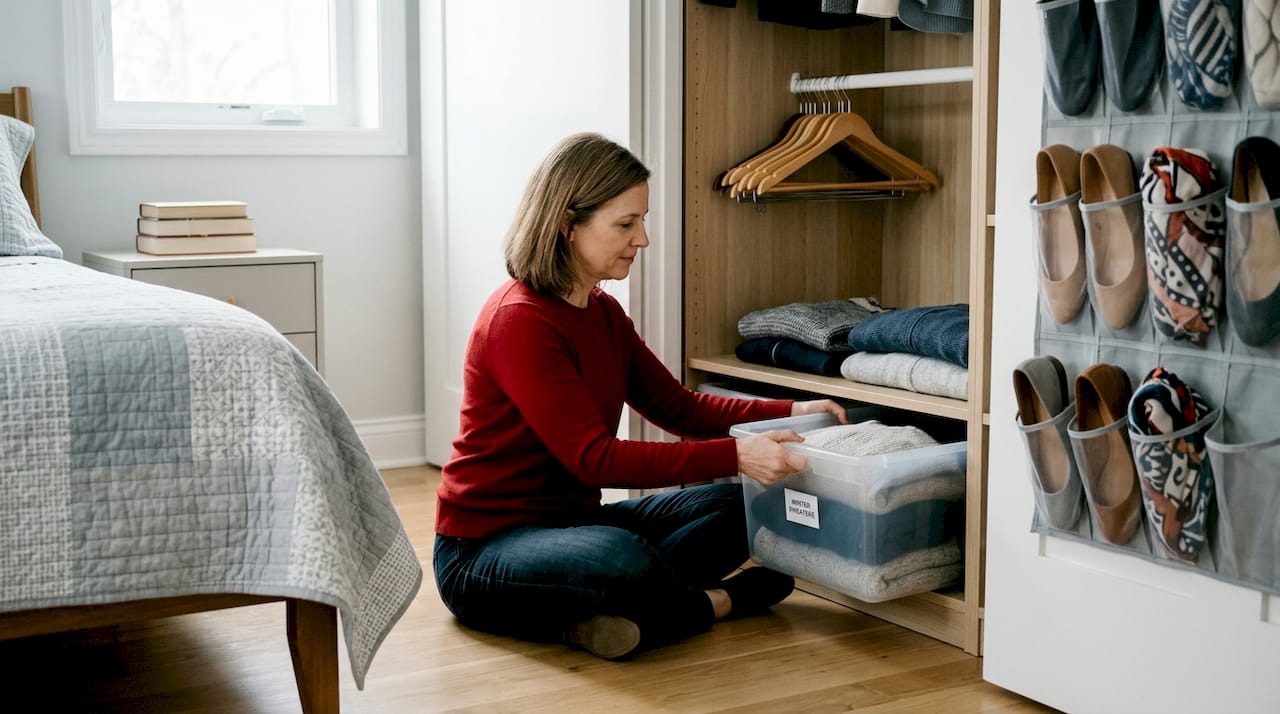
Under-bed bins, over-door organizers, and vacuum storage bags can reclaim surprising amounts of space. Shelf dividers, over-the-door organizers, and pull-out shelves are proven to significantly increase usable space, with most products priced between $10 and $60.
This approach works best for managing overflow before a move, reducing clutter without outside costs, or organizing belongings you access regularly. It is the lowest-cost option on this storage options list and often the most underused.
5. Closet organization systems
Closets are the first place most people try to add storage, and they almost always have more potential than it looks. Modular shelving systems let you configure vertical and horizontal space precisely. Hanging racks and shelf dividers separate categories of clothing and gear so everything stays visible and reachable.
Focusing on one space at a time when organizing storage greatly increases long-term success and reduces the chance of clutter returning quickly. Start with the closet closest to your front door or the one causing the most daily frustration.
A well-organized closet frequently eliminates the need for outside storage for soft goods entirely, saving you real money each month.
6. Kitchen storage solutions
Kitchens collect clutter fast, and the fix is usually better use of cabinet and pantry depth. Pull-out cabinet shelves are one of the most cost-effective upgrades available. Pull-out shelves cost between $25 and $60, require minimal installation, and dramatically improve access to deep cabinets.
For installation, measure your cabinet interior width and subtract at least one inch for clearance around hinges. Choose slides rated for at least 50 pounds for durability under real kitchen loads.
Magnetic spice racks on the inside of cabinet doors, stackable pantry containers, and drawer organizers all contribute to a kitchen that functions better with the same footprint. These small upgrades often replace the need for external storage when the core issue is poor use of existing space.
7. Garage storage systems
Garages rank among the most disorganized spaces in most homes, yet they offer some of the highest storage density of any room. Wall-mounted pegboards put tools within reach and off the floor. Ceiling-mounted racks hold seasonal items like holiday bins or camping gear without taking up valuable floor space. Tool cabinets keep power tools safe and sorted.
The key to garage storage is getting items off the floor. Once floor space is cleared, garages can absorb a significant volume of belongings that would otherwise fill a rented storage unit.
Pro Tip: Label every bin and shelf clearly. Garage storage systems fail most often not because of space, but because people cannot find what they stored and end up buying duplicates.
8. Bedroom furniture with built-in storage
Bedroom furniture that doubles as storage is especially useful in smaller spaces. Storage beds and ottoman beds use the dead space under the mattress effectively. Ottoman beds are ideal for small spaces and work best when built with strong hinges and at least 30 centimeters of depth for bulky items like blankets and pillows.
Benches at the foot of the bed, nightstands with drawers, and wardrobes with adjustable shelving all multiply your bedroom’s storage capacity without requiring additional square footage.
When downsizing into a smaller home, swapping standard furniture for storage-integrated pieces often offsets the loss of square footage in a practical and affordable way.
9. Cloud and digital storage
Physical clutter is not the only kind. Documents, photos, tax records, and media files take up digital space that can feel just as overwhelming during a move or reorganization.
Here is a quick storage option comparison for major cloud services:
| Service | Free Storage | Paid 100GB Plan |
|---|---|---|
| Google Drive | 15 GB | ~$2.99/month |
| MEGA | 20 GB | ~$4.99/month |
| OneDrive | 5 GB | ~$1.99/month |
| iCloud | 5 GB | ~$0.99/month |
Cloud storage paid plans start as low as $1.99 per month for 100GB, which is more than enough for most households’ documents and photos.
Scan and upload important moving documents, insurance papers, leases, and inventories before your move. If anything gets lost in transit, you have a retrievable backup. For privacy-sensitive files, look for services with end-to-end encryption.
10. Storage option comparison at a glance
Here is a side-by-side view of the best storage choices on this list:
| Storage Type | Avg. Monthly Cost | Access | Best For |
|---|---|---|---|
| Self-storage unit | $50–$200 | 24/7 or business hours | Moving transitions, seasonal storage |
| Portable container | $100–$300 | During loading only | Local moves, flexible packing timeline |
| Full-service storage | $150–$400 | Scheduled retrieval | Hands-off, long-distance moves |
| Home DIY storage | $10–$100 one time | Immediate | Daily organization, low-cost overflow |
| Cloud storage | $0–$10/month | Any device, any time | Documents, photos, digital files |
Pro Tip: When deciding how to select storage, match the option to how soon you need access. If you need items within days, avoid full-service storage. If you need items in six months, avoid paying for portable container delivery twice.
The most common mistake people make is choosing storage based on price alone, then realizing the option is inconvenient enough that they stop using it. A slightly more expensive solution that you actually use is better value than a cheap one you avoid.
My honest take on picking storage
I have helped a lot of families work through storage decisions during moves, and the pattern I keep seeing is the same: people choose storage before they decide what to actually keep.
Decluttering before purchasing storage is the single most effective way to reduce your storage costs. Fewer items mean smaller units, cheaper options, and less long-term commitment. Skipping that step first is like buying a bigger closet without removing the clothes you never wear.
What I have also noticed is that people overestimate how long they will need outside storage. They rent a unit “temporarily” and keep it for two years because returning items requires effort they keep deferring. If you are in that situation, the solution is rarely more storage. It is a harder conversation about what you actually need in your life.
The best storage system is the one with the least friction. If a solution makes daily life harder, adjust it within two weeks rather than waiting to get used to it. Storage should reduce stress, not add a recurring task to your mental checklist.
And if you are downsizing, treat it as an opportunity. You are gaining clarity about what matters, not losing space.
— Rich
Ready to simplify your move and storage plan?
If you are facing a move across New Hampshire, Maine, or Massachusetts and the storage side of things feels complicated, Movewithbridges has been helping families work through exactly this since 1919. From residential moving services to packing materials and storage-focused moving support, the team handles the logistics so you can focus on settling in. Whether you need short-term storage during a gap between homes or help coordinating a full household move, get a free quote and talk through your options with people who have seen every storage situation imaginable.
FAQ
What is the cheapest storage option for moving?
Self-storage units are generally the most affordable option for temporary moving storage, with flexible month-to-month contracts and no pickup or delivery fees.
How do I choose between short-term and long-term storage?
If you need storage for three months or less during a move, a self-storage unit or portable container works well. For longer periods or hands-off management, full-service storage is worth the higher cost.
Should I declutter before renting a storage unit?
Yes. Decluttering before storing reduces the size and cost of the unit you need, often by one or two size tiers, which saves money every month.
What is the best home storage solution for small spaces?
Ottoman beds and under-bed bins are among the most effective options for small spaces, using otherwise wasted space under the mattress for bulky items like bedding and seasonal clothing.
Is cloud storage worth using during a move?
Cloud storage is a low-cost way to back up important documents, photos, and moving paperwork during a relocation. Free tiers from services like Google Drive offer up to 15GB at no charge, which covers most household documents easily.