
TL;DR:
- A structured, phased moving process divides tasks into manageable weekly steps to reduce stress and chaos. Starting planning six to eight weeks early and assigning a single coordinator helps ensure a smooth relocation. Using labeling, digital inventory, and contingencies prevents lost items and last-minute problems.
A stress-free moving workflow is a structured, phased process that breaks a complex relocation into manageable weekly tasks, replacing last-minute chaos with steady, predictable progress. The average American moves 11.7 times in a lifetime, and each move involves more than 50 individual tasks. Starting your planning at least 6–8 weeks out can reduce moving-related stress by up to 40%. That number reflects a simple truth: most moving anxiety comes from compressed timelines, not from the physical work itself. A well-built relocation planning guide turns a daunting event into a project you can actually control.
What does a stress-free moving workflow require to start?
The foundation of any smooth relocation process is an early start and the right tools in place before you pack a single box. Waiting until two weeks before moving day forces every decision into a frantic rush. Planning delays compress all your decisions into the final 14 days, which is the single biggest source of moving stress.

The recommended planning timeline
A 6–8 week runway gives you room to spread tasks across manageable weekly milestones. Here is how to structure that time:
- 8 weeks out: Confirm your move date, research moving companies, and create your master task list.
- 6 weeks out: Sort belongings into keep, donate, and discard piles. Begin collecting packing supplies.
- 4 weeks out: Start packing non-essential rooms. Notify your landlord if renting.
- 2 weeks out: Pack remaining rooms except daily essentials. Confirm logistics with your movers.
- Moving week: Pack your essentials box, do a final walkthrough, and hand off keys.
Renters have an added legal step. Written notice to landlords must be given 30–60 days before your move-out date and include your forwarding address and move-out date. Missing this window can result in financial penalties that blow your moving budget.
Tools and supplies you need
Your moving toolkit should include a comprehensive moving checklist, sturdy boxes in multiple sizes, packing tape, bubble wrap, markers, and color-coded labels. Digital tools like a shared spreadsheet or a notes app let everyone in your household track progress in real time. A printed room-by-room inventory sheet works just as well if you prefer paper.
Budgeting is part of the toolkit too. Experts recommend setting aside a 10–15% budget buffer for unforeseen costs like extra supplies, short-term storage, or last-minute schedule changes. Build that buffer in from the start so surprises do not derail your plan.
Pro Tip: Assign one person in your household as the “project manager.” This person owns the master checklist, tracks completed tasks, and is the single point of contact for movers and utility companies. Assigning a single coordinator eliminates conflicting instructions and missed steps.
How do you execute each phase of the moving workflow?
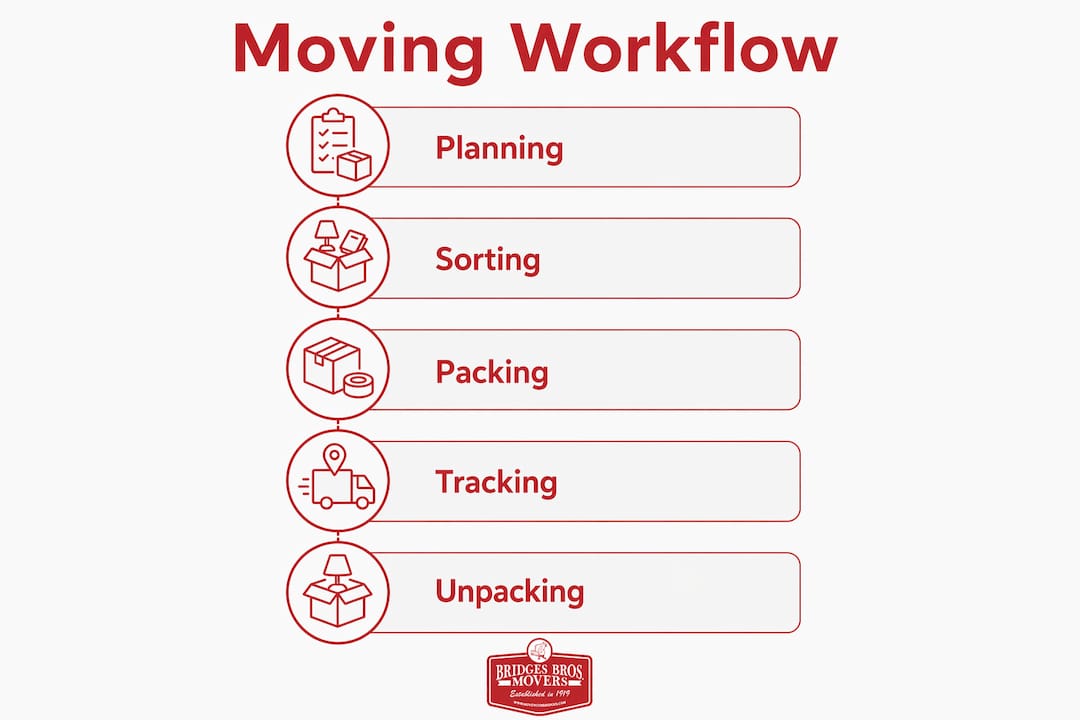
A smooth relocation process follows five distinct phases: planning, sorting, packing, tracking, and unpacking. Each phase builds on the last. Skipping one creates problems in the next.
Phase 1: Planning and sorting
Start by creating a room-by-room inventory of everything you own. Decide what moves with you, what gets donated, and what gets discarded. This step reduces the volume you pack and cuts both time and cost. Use your easy moving checklist to assign tasks to specific weeks so nothing falls through the cracks.
Phase 2: Packing by priority
Most people underestimate how long packing takes. Phased, room-by-room packing starting four weeks before moving day prevents the last-minute scramble that damages items and spikes stress. Pack low-priority rooms first: guest bedrooms, storage areas, seasonal closets, and decorative items. Leave daily-use rooms like the kitchen and bathrooms for the final week.
Here is a simple comparison of packing approaches:
| Approach | How it works | Outcome |
|---|---|---|
| All-at-once packing | Pack everything in the final week | High stress, frequent damage, lost items |
| Room-by-room phased packing | Pack one room per week starting 4 weeks out | Steady progress, lower damage risk |
| Priority-based packing | Pack non-essentials first, essentials last | Smooth daily life during the move |
The priority-based approach within a phased room-by-room system delivers the best results for most families.
Phase 3: Labeling and tracking
Label every box on at least three sides: the top and two faces. Include the destination room, a brief contents description, and a fragile indicator where needed. Color-coded labels by room cut unloading time significantly because movers can place boxes in the right room without asking. Moving organization systems that add QR codes and photo inventories reduce lost items and speed up unpacking by letting you search for any item digitally before opening a single box.
Phase 4: Moving day execution
Number every box and keep a master list. Cross off each number as it loads onto the truck and again as it unloads. This two-checkpoint system catches missing boxes before the truck leaves your driveway.
Phase 5: Unpacking with structure
Structured unpacking follows the reverse of your packing priority. Essentials come out first, seasonal and decorative items come out last. Mark each box as unpacked in your tracking system so you always know what remains.
Pro Tip: Pack one clearly labeled “essentials box” last, so it rides on top of the truck and comes off first. Fill it with phone chargers, a basic toolkit, toilet paper, medications, a change of clothes, and snacks. This single box prevents frantic searching through dozens of boxes on your first night.
What challenges does an organized workflow actually solve?
Moving stress comes from four specific problems: rushed packing, decision compression, lost items, and unclear logistics. A structured workflow addresses each one directly.
- Rushed packing causes damage and forces you to throw away items you meant to keep. Starting four weeks early eliminates the rush entirely.
- Decision compression happens when planning is delayed and every choice piles up in the final two weeks. Spreading decisions across eight weeks means you never face more than a handful at once.
- Lost items result from unlabeled or poorly labeled boxes. A color-coded, numbered labeling system with a digital inventory makes every item traceable.
- Unclear logistics create confusion on moving day when multiple people give conflicting instructions. A single project manager with a shared checklist removes that confusion.
Budget surprises are another common stressor. A 10–15% contingency fund covers storage unit rentals, extra packing materials, or a delayed closing date that forces an overnight hotel stay. Building that buffer into your initial budget means you handle surprises calmly instead of reactively.
“Treating your move as a project with milestones, a timeline, and a designated coordinator changes the entire experience. The physical work stays the same. The stress does not.”
Professional moving companies bring expertise and resources that reduce damage risk and logistical uncertainty. Hiring a trusted mover is not a luxury. For families with complex moves, it is the most reliable way to protect both your belongings and your schedule.
How do you adapt the workflow for families and individuals?
A generic workflow needs adjustment to fit your specific circumstances. Families with children, pet owners, and long-distance movers all face unique variables that a one-size approach misses.
- Families with children: Assign age-appropriate tasks to kids, like packing their own toys and books. This gives children a sense of control and reduces anxiety about the move. Keep their bedroom setup as the first unpacking priority so they feel settled quickly.
- Pet owners: Arrange pet care for moving day so animals stay calm and out of the way. Pack their food, bedding, and toys in a dedicated bag that travels in your car, not the moving truck.
- Long-distance moves: Add logistics steps for long-distance move planning including vehicle transport, utility setup timelines at the new address, and an overnight bag for travel days. Confirm your mover’s delivery window in writing at least two weeks before moving day.
- Specialty items: Artwork, antiques, pianos, and electronics need custom packing. Use purpose-built boxes, extra padding, and climate considerations. Bridges Bros Movers offers specialty item packing guidance for exactly these situations.
- Emotional preparation: Moving is one of life’s most significant transitions. Build in one or two buffer days before moving day with no packing tasks scheduled. Use that time to say goodbye to neighbors, take photos of your old home, and mentally prepare for the change.
Families in New England face additional seasonal considerations. A stress-free move for New England families accounts for winter weather, peak summer demand, and regional utility transfer timelines that differ from other parts of the country.
Key Takeaways
A stress-free moving workflow requires an early start, a phased packing system, a single project coordinator, and a budget buffer to keep the entire relocation on track.
| Point | Details |
|---|---|
| Start 6–8 weeks early | Early planning spreads tasks evenly and prevents last-minute decision overload. |
| Pack room by room | Begin with non-essential rooms four weeks out to protect daily routines. |
| Use a labeling system | Color-coded, numbered boxes with a digital inventory prevent lost items. |
| Assign a project manager | One coordinator with a shared checklist eliminates conflicting instructions. |
| Build a budget buffer | Set aside 10–15% of your moving budget for unforeseen costs and changes. |
What I’ve learned after watching hundreds of moves go sideways
The moves that fall apart almost never fail because of the physical work. They fail because someone decided to “figure it out closer to the date.” I have seen families pack an entire four-bedroom house in three days. The result is always the same: broken items, missing boxes, and a level of exhaustion that poisons the first week in the new home.
The single change that makes the biggest difference is treating the move as a project with a real start date, real milestones, and one person accountable for the whole thing. That is not corporate thinking. That is just how complex tasks get done without chaos.
Digital tools help, but they are not magic. A shared Google Sheet with weekly tasks works better than an elaborate app nobody updates. The goal is visibility. Everyone in the household should be able to see what is done and what is not at any moment.
The essentials box is the most underrated tactic in moving. I cannot count how many families have arrived at their new home at 8 p.m., exhausted, and spent an hour digging through boxes to find a phone charger. Pack that box last, label it in red, and put it in your car. You will thank yourself immediately.
Finally, do not skip the emotional buffer days. Moving is a life event, not just a logistics problem. Give yourself permission to feel the transition. The workflow handles the tasks. You still have to handle the feelings.
— Patrick
Bridges Bros Movers and your relocation plan
Bridges Bros Movers has supported families and individuals across New Hampshire, Maine, and Massachusetts since 1919. Every phase of the workflow described here maps directly to a service the team provides. From professional packing services that protect your belongings through the phased packing approach, to residential moving with transparent pricing and flexible scheduling, Bridges Bros Movers covers the full relocation process. The team also supplies packing materials so you have the right boxes, tape, and padding from day one. Request a quote or review the full range of moving services to see how professional support fits your specific move.
FAQ
How early should I start planning my move?
Start your planning 6–8 weeks before moving day. This timeline gives you enough room to spread tasks evenly and avoid last-minute pressure.
What goes in an essentials box?
Your essentials box should hold phone chargers, basic tools, toilet paper, medications, a change of clothes, and snacks. Pack it last so it unloads first and is immediately accessible on moving day.
How do I prevent lost boxes during a move?
Number every box and keep a master list. Use color-coded labels by room and a digital photo inventory so every item is traceable before you open a single box.
Do renters need to do anything extra when planning a move?
Yes. Renters must give written notice to their landlord 30–60 days before moving out. The notice must include the move-out date, the rental address, and forwarding information to avoid penalties.
Is hiring a professional mover worth it for a local move?
Professional movers reduce damage risk, handle logistics, and free you to focus on other tasks. For families with large households or specialty items, professional moving expertise pays for itself in time saved and stress avoided.